

black fur rug for bedroom Performance Analysis
Introduction
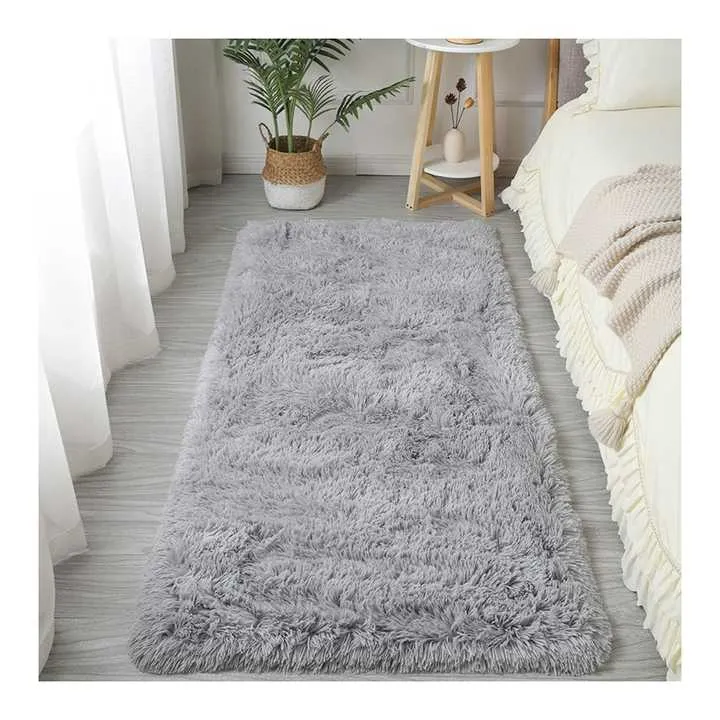
Black fur rugs for bedrooms represent a significant segment of the interior textile market, bridging the gap between aesthetic appeal and tactile comfort. These rugs are typically constructed from synthetic fibers mimicking natural fur, offering a cost-effective and often more durable alternative to genuine animal pelts. Their primary function is to provide localized thermal insulation, noise reduction, and visual softening within a bedroom environment. Technical performance is defined by pile height, fiber denier, backing material, and the processes used to achieve a consistent and luxurious texture. Core to their industrial positioning is the ability to consistently meet flammability standards, provide colorfastness against abrasion and UV exposure, and maintain structural integrity under prolonged compressive loads – addressing key concerns within the home furnishings supply chain. This guide provides an in-depth analysis of black fur rugs for bedroom applications, covering material science, manufacturing processes, performance characteristics, potential failure modes, and relevant industry standards.
Material Science & Manufacturing
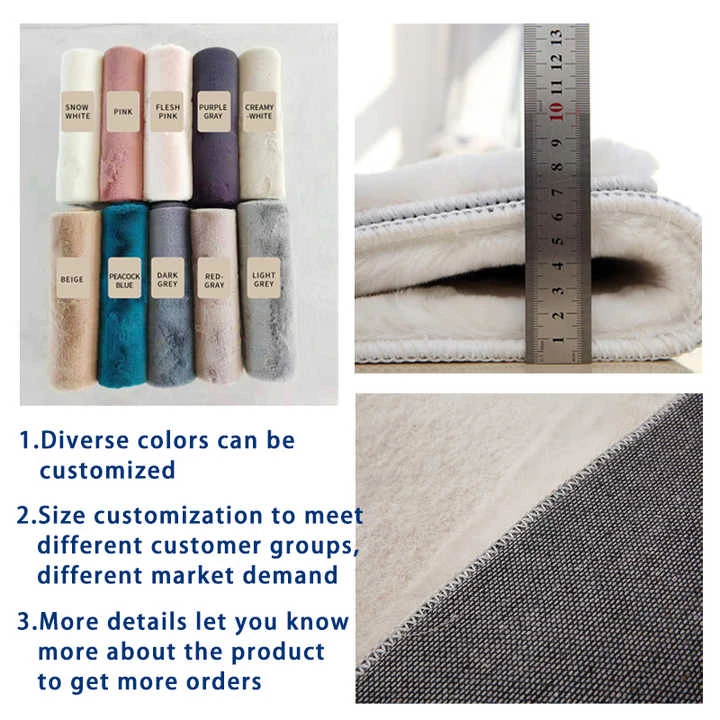
The vast majority of black fur rugs are constructed using synthetic fibers, primarily polypropylene (PP) and polyester (PET). Polypropylene is favored for its inherent stain resistance, low cost, and ability to be texturized into a variety of pile heights and densities. Its lower melting point (~160°C) facilitates thermoforming and sculpting processes crucial for achieving a realistic fur-like appearance. Polyester offers superior resilience, UV resistance, and dye uptake, contributing to richer color saturation and longevity. The choice between PP and PET hinges on the desired balance of cost, performance, and aesthetic properties. Manufacturing begins with polymer extrusion, creating filaments of varying denier (fiber thickness). These filaments undergo crimping and cutting to define staple length, influencing pile density and softness. The 'fur' effect is achieved through specialized tufting or weaving techniques. Tufting involves inserting yarn loops into a primary backing material, typically polypropylene or jute, followed by coating with a secondary backing (often latex or polyurethane) for dimensional stability. Weaving, while less common for high-pile 'fur' effects, provides superior durability and pattern complexity. Critical parameters during manufacturing include yarn tension, loop density, and backing adhesive application rate. Uneven tension leads to pile distortion; inadequate adhesive compromises structural integrity; and improper loop density affects both appearance and compressive resilience. Dyeing is predominantly performed at the filament stage (solution dyeing) to ensure colorfastness and minimize dye migration. Black pigments, often carbon black, require careful dispersion to prevent fiber embrittlement and maintain UV resistance.
Performance & Engineering
Performance evaluation of black fur rugs centers around several key engineering principles. Compressive resilience – the rug’s ability to recover its shape after being subjected to sustained pressure – is paramount for maintaining aesthetic appeal and comfort. This is dictated by fiber properties (denier, crimp, and modulus of elasticity) and backing stiffness. Force analysis reveals that higher pile heights distribute load over a wider area, reducing pressure concentration and improving resilience, but also increasing susceptibility to matting. Abrasion resistance, quantified by the Taber abrasion test (ASTM D3886), determines the rug's ability to withstand foot traffic and maintain pile integrity. Fiber choice significantly impacts abrasion resistance, with polyester generally outperforming polypropylene. Flammability is a critical safety concern, governed by standards such as California Technical Bulletin 117 and similar regulations worldwide. Black coloration can exacerbate flammability due to increased heat absorption. Therefore, flame retardant treatments are commonly applied, typically involving halogenated or phosphorus-based compounds, although concerns regarding environmental impact are driving the development of alternative, inherently flame-resistant materials. Static electricity build-up can be problematic, particularly in dry climates. Antistatic treatments are often incorporated into the fiber or backing to dissipate static charge. Environmental resistance encompasses resistance to UV degradation (color fading), moisture-induced mildew growth, and chemical staining. UV stabilizers are essential for preserving black coloration, and moisture-wicking properties of the fiber and backing contribute to mildew prevention.
Technical Specifications
| Parameter | Polypropylene (PP) | Polyester (PET) | Typical Range |
|---|---|---|---|
| Fiber Denier (dtex) | 220-550 | 330-880 | 200-1200 |
| Pile Height (mm) | 20-60 | 25-75 | 20-100 |
| Pile Weight (g/m²) | 500-1200 | 700-1500 | 400-2000 |
| Backing Material | Polypropylene/Jute | Polypropylene/Latex | Polypropylene, Latex, Polyurethane |
| Abrasion Resistance (Taber Cycles) | 500-1500 | 1000-3000 | 300-5000 |
| Flammability (Pass/Fail - e.g. California TB 117) | Typically Requires Treatment | May Pass Without Treatment | Pass/Fail - Region Specific |
Failure Mode & Maintenance
Black fur rugs are susceptible to several failure modes. Pile shedding is a common occurrence, especially during initial use, resulting from loose fibers and manufacturing imperfections. Matting, or pile compression, arises from prolonged foot traffic and insufficient resilience. Fiber degradation, particularly in polypropylene rugs exposed to UV radiation, manifests as discoloration and embrittlement. Backing delamination, caused by adhesive failure between the primary and secondary backing layers, leads to structural instability and potential unraveling. Staining, particularly from oil-based substances, poses a significant aesthetic challenge. Oxidation of the fibers can occur over time, altering the color and texture. Maintenance to mitigate these issues includes regular vacuuming (avoiding beater bars that can damage fibers), prompt spot cleaning with appropriate detergents, and periodic professional cleaning. Rotating the rug periodically helps to distribute wear evenly and prevent localized matting. For delamination, professional re-gluing is recommended. Preventative measures include using rug pads to protect the backing, minimizing direct sunlight exposure, and promptly addressing spills. When fiber degradation is significant, replacement is the only viable option.
Industry FAQ
Q: What is the difference between polypropylene and polyester fur rugs in terms of longevity?
A: Polyester generally exhibits superior longevity due to its higher resilience, better UV resistance, and greater resistance to abrasion. Polypropylene, while cost-effective, is more prone to fading and degradation over time, especially with exposure to sunlight. However, advancements in PP stabilization technologies are narrowing this performance gap.
Q: How important is rug backing material in preventing delamination and overall rug stability?
A: The backing material is critically important. Latex backings provide good adhesion but can become brittle with age. Polyurethane backings offer superior flexibility and durability. The quality and application of the adhesive used to bond the primary and secondary backing layers are also crucial. A well-constructed backing significantly extends the rug's lifespan.
Q: Are flame retardant treatments on black fur rugs environmentally safe?
A: Traditionally, halogenated flame retardants were commonly used, but concerns regarding their environmental and health impacts have led to increased scrutiny. Phosphorus-based alternatives are gaining traction, but their efficacy can vary. The industry is actively researching and adopting inherently flame-resistant fibers to minimize reliance on chemical treatments.
Q: What is the best method for cleaning a black fur rug to prevent color fading and pile damage?
A: Regular vacuuming with a suction-only attachment is essential. For spot cleaning, use a mild detergent specifically designed for synthetic fibers and test in an inconspicuous area first. Avoid harsh chemicals and excessive water. Professional cleaning, using a low-moisture method, is recommended for deep cleaning.
Q: How does pile height affect the performance and comfort of a black fur rug?
A: Higher pile heights generally provide greater softness and comfort, but they are also more prone to matting and require more frequent cleaning. Lower pile heights are more durable and easier to maintain but offer less cushioning. The optimal pile height depends on the intended use and desired aesthetic.
Conclusion
Black fur rugs for bedrooms represent a complex interplay of material science, manufacturing precision, and performance engineering. The selection of appropriate fibers (polypropylene or polyester) and backing materials, coupled with stringent quality control during tufting or weaving, dictates the rug's long-term durability, aesthetic appeal, and compliance with safety standards. Addressing potential failure modes, such as pile shedding, matting, and delamination, requires proactive maintenance and careful consideration of environmental factors.
Looking forward, innovation in fiber technology – focusing on inherently flame-resistant and UV-stable materials – will be crucial for enhancing the sustainability and performance of black fur rugs. Furthermore, advancements in backing adhesive formulations and tufting techniques will contribute to improved structural integrity and longevity. A continued emphasis on rigorous testing and adherence to international standards will ensure the consistent delivery of high-quality, safe, and comfortable products to consumers.