

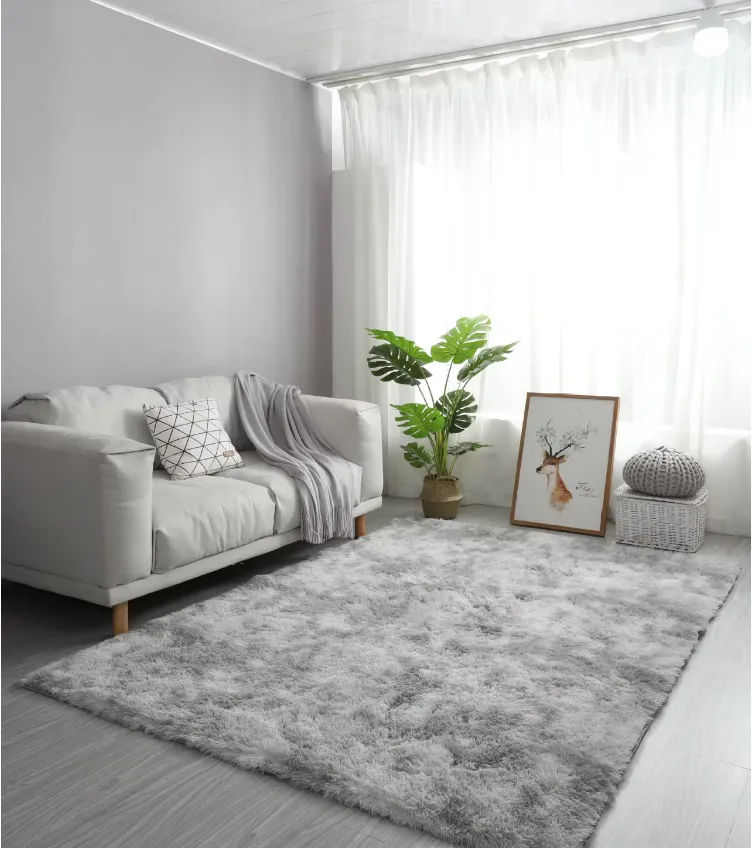
double pelt faux sheepskin rug Technical Analysis

Introduction
Double pelt faux sheepskin rugs represent a significant development in the floor covering and textile industry, offering a synthetic alternative to natural sheepskin. Positioned within the decorative textiles supply chain, these rugs are primarily valued for their aesthetic appeal, softness, and perceived luxury. Technically, they are engineered composites comprised of a backing material and a pile layer mimicking the fleece of a sheep. Core performance characteristics center around durability, tactile comfort, resistance to shedding, and ease of maintenance. Unlike natural sheepskin, which requires specialized cleaning and is susceptible to moth damage, faux sheepskin rugs are designed for broader accessibility and simplified care. This guide will provide an in-depth technical overview of double pelt faux sheepskin rugs, covering material science, manufacturing processes, performance characteristics, potential failure modes, and relevant industry standards.
Material Science & Manufacturing
The construction of a double pelt faux sheepskin rug typically involves two primary material classes: the backing and the pile. The backing is commonly constructed from materials like jute, polypropylene (PP), or polyester. Jute provides a natural fiber base, contributing to structural stability and a degree of breathability, but is susceptible to moisture-related degradation. Polypropylene and polyester offer superior moisture resistance and durability. The pile layer, responsible for the sheepskin aesthetic and tactile feel, is predominantly composed of acrylic or modacrylic fibers. Acrylic offers good bulk and a soft hand, while modacrylic exhibits improved flame retardancy and resistance to pilling. The ‘double pelt’ designation signifies a significantly higher pile density, typically achieved through increased fiber weight and a denser weaving or tufting pattern.
Manufacturing begins with the production of the backing material, which is often woven or needle-punched. The pile fibers are then attached to the backing through several methods. Tufting involves inserting loops of fiber through the backing, followed by shearing to achieve the desired pile height. Weaving interlaces the pile fibers with the backing creating a more robust structure. A latex or polyurethane coating is often applied to the backing to secure the fibers and provide additional structural integrity. A crucial parameter control during manufacturing is fiber denier (fineness) which directly impacts the softness and drape of the rug. Fiber crimp, referring to the wave-like structure of the fiber, also significantly influences the pile’s loft and bulk. Consistent dye penetration is essential for colorfastness and aesthetic uniformity, requiring precise control of dye concentration, temperature, and dwell time during the dyeing process. Finally, a finishing process often involves brushing or combing the pile to enhance its aesthetic appeal and simulate the natural lay of sheep’s wool.
Performance & Engineering
The performance of a double pelt faux sheepskin rug is governed by several key engineering principles. Static load bearing capacity is primarily determined by the backing material's tensile strength and the density of the pile. High-traffic areas require a more robust backing (e.g., polypropylene) and a tightly woven or tufted pile to resist compression and matting. Pile recovery, the ability of the fibers to return to their original shape after compression, is directly related to fiber resilience and crimp. Dimensional stability, i.e., resistance to stretching or shrinking, is crucial for maintaining the rug’s shape and preventing warping. This is influenced by the backing material’s weave structure and the fiber’s thermal properties.
Environmental resistance is a critical performance factor. Exposure to ultraviolet (UV) radiation can cause fiber degradation, leading to fading and reduced strength. Acrylic and modacrylic fibers exhibit varying degrees of UV resistance, with modacrylic generally offering superior performance. Moisture resistance is essential to prevent mold and mildew growth, especially in humid environments. Polypropylene and polyester backings are inherently hydrophobic, while acrylic pile fibers offer moderate water repellency. Flame retardancy is a safety concern, and compliance with flammability standards (see section 7) is paramount. Modacrylic fibers are inherently flame retardant, while acrylic fibers often require chemical treatment to meet safety regulations. Compliance with VOC (Volatile Organic Compound) emission standards is also increasing, driving the adoption of low-VOC latex and polyurethane adhesives. Force analysis under simulated foot traffic loads highlights shear stress distribution within the pile layer. Optimizing pile density and fiber interlock minimizes shear deformation and enhances durability.
Technical Specifications
| Parameter | Unit | Typical Value (Low End) | Typical Value (High End) |
|---|---|---|---|
| Pile Fiber Material | - | Acrylic | Modacrylic |
| Backing Material | - | Jute | Polypropylene |
| Pile Height | mm | 20 | 60 |
| Pile Weight | g/m² | 800 | 2000 |
| Overall Thickness | mm | 25 | 75 |
| Tensile Strength (Backing) | N/mm | 10 | 30 |
| UV Resistance (Pile) | Hours to 50% Degradation | 50 | 200 |
Failure Mode & Maintenance
Double pelt faux sheepskin rugs are susceptible to several failure modes. Pile shedding is a common issue, particularly with lower-quality acrylic fibers. This is exacerbated by abrasion and repeated foot traffic. Fiber fatigue, resulting from continuous bending and flexing, can lead to breakage and reduced pile density over time. Delamination, the separation of the pile from the backing, can occur due to inadequate adhesive bonding or prolonged exposure to moisture. Compression set, a permanent deformation of the pile fibers under sustained load, causes matting and loss of loft. Oxidation of the fibers, particularly acrylic, can lead to discoloration and reduced strength, especially when exposed to UV radiation.
Preventative maintenance is crucial for extending the lifespan of the rug. Regular vacuuming, using a suction-only attachment, removes loose debris and minimizes abrasion. Spot cleaning with a mild detergent and water is recommended for spills, avoiding harsh chemicals that can damage the fibers. Professional cleaning, using dry cleaning methods, should be performed periodically to remove embedded dirt and restore the pile’s loft. Avoid prolonged exposure to direct sunlight to minimize UV degradation. Rotate the rug periodically to distribute wear evenly. If delamination occurs, professional re-gluing may be possible, but the long-term effectiveness is limited. In cases of severe fiber fatigue or compression set, replacement of the rug is typically the most cost-effective solution. Storing the rug in a dry, well-ventilated area when not in use helps prevent mold and mildew growth.
Industry FAQ
Q: What is the primary difference between acrylic and modacrylic pile fibers in terms of durability?
A: While both acrylic and modacrylic offer good softness, modacrylic generally exhibits superior durability and resistance to pilling. Its molecular structure provides enhanced fiber strength and resilience, leading to a longer lifespan under repeated abrasion. Acrylic, while cost-effective, is more prone to fiber breakage and shedding over time.
Q: How does the backing material affect the rug’s performance in high-traffic areas?
A: A polypropylene backing provides significantly better performance in high-traffic areas compared to jute. Polypropylene is more resistant to compression, moisture, and abrasion, maintaining structural integrity under sustained load. Jute, while offering a natural aesthetic, is more susceptible to wear and tear and can degrade when exposed to moisture.
Q: What are the key considerations regarding flammability compliance for faux sheepskin rugs?
A: Flammability compliance is critical and varies by region. Regulations such as California Proposition 65 (USA) and EN 14001 (Europe) specify requirements for flame retardancy and allowable VOC emissions. Modacrylic fibers inherently meet many flammability standards, while acrylic fibers often require chemical treatment. Testing and certification by accredited laboratories are essential.
Q: What cleaning methods are recommended to prevent damage to the pile fibers?
A: Regular vacuuming with a suction-only attachment is the most important preventative measure. For spot cleaning, use a mild detergent diluted in cool water and blot gently. Avoid harsh chemicals, abrasive cleaners, and excessive moisture. Professional dry cleaning is recommended for deep cleaning.
Q: How does UV exposure affect the longevity of a faux sheepskin rug, and what mitigation strategies can be employed?
A: UV exposure can cause the pile fibers to degrade, leading to fading, reduced strength, and discoloration. Mitigation strategies include minimizing direct sunlight exposure, using UV-blocking window films, and selecting modacrylic fibers which offer inherently better UV resistance than acrylic. Regular rotation of the rug also helps to distribute UV exposure evenly.
Conclusion
Double pelt faux sheepskin rugs represent a sophisticated balance between aesthetic appeal, tactile comfort, and practical functionality. The material selection, particularly the choice between acrylic and modacrylic pile fibers and jute or polypropylene backing, significantly influences the rug’s performance characteristics, including durability, environmental resistance, and flammability. Understanding the manufacturing processes and potential failure modes is crucial for optimizing rug design and ensuring long-term performance.
The continued development of synthetic fiber technologies and adhesive formulations promises further enhancements in the quality and longevity of faux sheepskin rugs. Future research may focus on incorporating recycled materials, improving UV resistance, and developing more sustainable manufacturing processes. Ultimately, a comprehensive understanding of the technical aspects outlined in this guide is essential for both manufacturers and consumers seeking to maximize the value and lifespan of these increasingly popular floor coverings.