


faux sheepskin pelt Performance Analysis
Introduction
Faux sheepskin pelt, a synthetic material engineered to replicate the aesthetic and tactile properties of natural sheepskin, has become a ubiquitous component across diverse industrial and consumer applications. This technical guide will provide an in-depth examination of faux sheepskin pelt, tracing its material origins, manufacturing processes, performance characteristics, potential failure modes, and relevant industry standards. Positioned within the broader textiles market, faux sheepskin serves as a cost-effective and ethically sourced alternative to genuine sheepskin, finding application in automotive interiors, upholstery, apparel, medical textiles, and decorative goods. Its core performance attributes revolve around thermal insulation, comfort, aesthetic appeal, and durability, albeit with distinct characteristics compared to its natural counterpart. Understanding these nuances is crucial for optimized material selection and product longevity.
Material Science & Manufacturing
The foundation of faux sheepskin pelt lies in the manipulation of polymeric fibers, primarily utilizing acrylic, polyester, or modacrylic compositions. Acrylic fibers, favored for their wool-like texture and inherent bulk, are produced through the polymerization of acrylonitrile. Polyester, renowned for its strength, resilience, and resistance to stretching, is derived from petroleum-based monomers. Modacrylic fibers offer a blend of acrylic's softness and polyester's durability, often incorporating vinylidene chloride for enhanced flame retardancy. The manufacturing process typically commences with fiber production, followed by a non-woven or knitted fabric formation. Non-woven techniques involve the entanglement of fibers through mechanical, chemical, or thermal bonding, resulting in a more porous and drapable structure. Knitting, conversely, creates a more robust and stable fabric with defined loops and wales. Critical parameters during fiber production include denier (fiber thickness), crimp frequency (fiber waviness), and tenacity (fiber strength). In fabric formation, pile height, fiber density, and bonding strength dictate the final texture and performance characteristics. Following fabric construction, a shearing or brushing process is employed to create the characteristic long, dense pile of sheepskin. This is followed by dyeing and finishing treatments, which can include water-repellent coatings, anti-static agents, and antimicrobial treatments. Quality control focuses on fiber uniformity, fabric weight, pile density, colorfastness, and dimensional stability. The use of environmentally friendly dyes and manufacturing processes is an increasing industry focus to address sustainability concerns.

Performance & Engineering
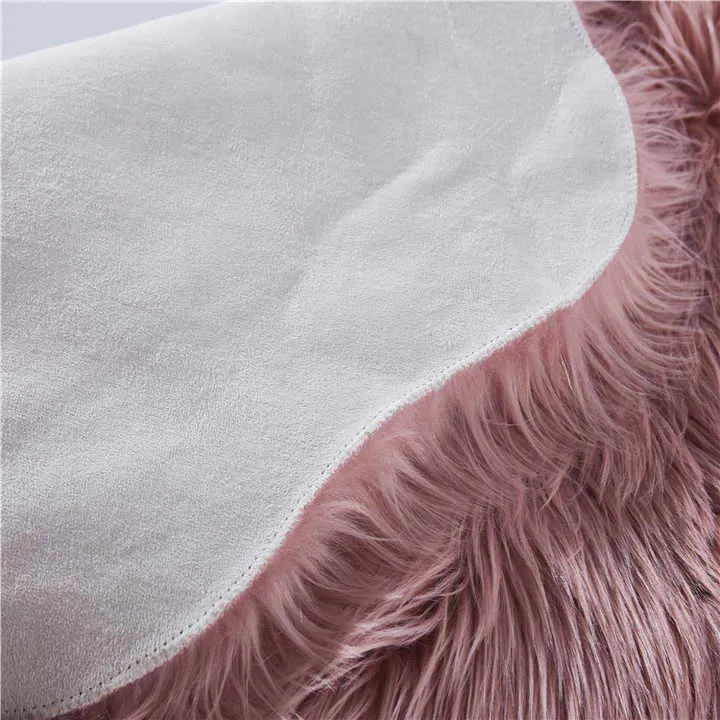
The performance of faux sheepskin pelt is governed by a complex interplay of material properties and structural characteristics. Thermal insulation, a key attribute, is directly correlated with pile height and fiber density. Longer, denser piles trap air, reducing convective heat transfer and maintaining surface temperature. However, excessive pile height can compromise breathability, leading to moisture accumulation. Mechanical properties, including tensile strength, tear strength, and abrasion resistance, are determined by the fiber type and fabric construction. Polyester-based faux sheepskin generally exhibits superior tensile and tear strength compared to acrylic-based variants. Abrasion resistance is crucial for applications subjected to frequent wear and tear, such as automotive seating. Force analysis reveals that the pile fibers undergo bending and compressive stresses during use, requiring adequate resilience to prevent permanent deformation. Environmental resistance is another critical consideration. Prolonged exposure to ultraviolet (UV) radiation can cause fiber degradation, leading to color fading and reduced mechanical strength. Water absorption can compromise thermal insulation and promote microbial growth. Compliance requirements vary depending on the intended application. For automotive interiors, flammability standards (e.g., FMVSS 302 in the US) mandate specific fire-retardant properties. For medical textiles, biocompatibility testing (e.g., ISO 10993) ensures the material does not elicit adverse biological responses. Durability is further impacted by the backing material used. A robust backing prevents delamination and maintains structural integrity over time. Careful consideration of these factors is vital for engineering faux sheepskin pelt into demanding applications.
Technical Specifications
| Parameter | Acrylic Faux Sheepskin | Polyester Faux Sheepskin | Modacrylic Faux Sheepskin |
|---|---|---|---|
| Fiber Composition | 80-100% Acrylic | 80-100% Polyester | 60-80% Modacrylic, 20-40% Acrylic |
| Pile Height (mm) | 20-40 | 20-30 | 25-35 |
| Fabric Weight (g/m²) | 200-400 | 250-450 | 220-380 |
| Tensile Strength (N/5cm) | 150-250 | 200-350 | 180-300 |
| Tear Strength (N) | 50-100 | 80-150 | 60-120 |
| Abrasion Resistance (cycles to breakdown) | 5,000-10,000 | 10,000-20,000 | 7,000-15,000 |
Failure Mode & Maintenance
Faux sheepskin pelt, while durable, is susceptible to several failure modes. Fatigue cracking of the pile fibers, induced by repeated bending and compression, is common in high-wear areas. Delamination, or separation of the pile from the backing material, occurs due to inadequate bonding strength or exposure to harsh chemicals. UV degradation leads to color fading and embrittlement of the fibers, particularly in outdoor applications. Oxidation, accelerated by exposure to heat and oxygen, can cause fiber discoloration and reduced strength. Microbial growth, fueled by moisture and organic contaminants, results in odor development and material decay. Compression set, or permanent deformation under sustained load, is prevalent in cushioning applications. Maintenance strategies are crucial for extending product lifespan. Regular vacuuming removes dust and debris, preventing fiber matting and abrasion. Spot cleaning with mild detergents addresses localized stains. Avoidance of harsh chemicals, such as bleach and strong solvents, preserves fiber integrity. UV protectant sprays mitigate photodegradation in outdoor settings. Proper ventilation and humidity control inhibit microbial growth. For significant damage, professional cleaning or repair is recommended. Preventative measures, such as rotating cushions and avoiding direct sunlight, can further minimize wear and tear. Regular inspection for signs of deterioration allows for timely intervention, preventing catastrophic failure.
Industry FAQ
Q: What are the primary differences in flammability performance between acrylic and polyester faux sheepskin pelts, and how do these differences impact selection for automotive interiors?
A: Polyester generally exhibits superior inherent flame retardancy compared to acrylic. While both can be treated with flame-retardant chemicals, polyester requires lower concentrations to achieve comparable performance. Automotive interiors are subject to stringent flammability standards (FMVSS 302), mandating self-extinguishing behavior. Therefore, polyester faux sheepskin often requires less chemical treatment, potentially reducing VOC emissions and improving long-term air quality within the vehicle cabin. Acrylic formulations necessitate more aggressive chemical treatments, which can compromise fiber durability and potentially release harmful byproducts.
Q: How does the choice of backing material affect the overall durability and longevity of a faux sheepskin pelt product?
A: The backing material plays a critical role in resisting delamination, maintaining structural integrity, and preventing dimensional instability. Woven backings, typically polyester or polypropylene, provide superior strength and resilience compared to non-woven backings. A higher backing weight (g/m²) indicates greater robustness. The bonding agent used to adhere the pile to the backing is equally important; polyurethane-based adhesives offer excellent flexibility and adhesion, while latex-based adhesives are more cost-effective but less durable. The compatibility of the backing material with the pile fibers is also crucial to prevent chemical degradation and promote long-term adhesion.
Q: What testing methods are commonly employed to assess the abrasion resistance of faux sheepskin pelts, and what are acceptable performance thresholds for different applications?
A: Taber abrasion testing, utilizing a rotating abrasive wheel, is the most prevalent method for evaluating abrasion resistance. The test results are typically expressed as the number of cycles to reach a predetermined level of material loss or appearance change. For upholstery applications, a minimum of 10,000 cycles is generally considered acceptable. Automotive seating requires higher thresholds, typically exceeding 20,000 cycles. Martindale abrasion testing, which employs a reciprocating abrasion head, provides a complementary assessment. Visual inspection of the abraded surface is essential to evaluate the severity of fiber damage and color loss.
Q: Can faux sheepskin pelts be effectively cleaned and disinfected for use in healthcare settings, and what cleaning agents are recommended or prohibited?
A: Faux sheepskin pelts can be suitable for certain healthcare applications, provided they are constructed from materials compatible with common disinfectants and cleaning protocols. Polyester-based pelts generally exhibit better resistance to chemical degradation. Recommended cleaning agents include diluted isopropyl alcohol (70%) and quaternary ammonium compounds. Harsh chemicals, such as bleach, hydrogen peroxide, and strong solvents, should be avoided, as they can damage the fibers and compromise their protective properties. Steam cleaning is generally not recommended, as the high temperatures can cause shrinkage and distortion. Following cleaning, thorough drying is essential to prevent microbial growth.
Q: What are the key considerations when evaluating the environmental impact of faux sheepskin pelts, and what sustainable alternatives are emerging in the market?
A: The environmental impact of faux sheepskin pelts stems primarily from the reliance on petroleum-based raw materials (polyester and acrylic) and the energy-intensive manufacturing processes. The use of dyes and finishing treatments can also contribute to water pollution. Sustainable alternatives include faux sheepskin pelts made from recycled polyester (rPET) and bio-based materials, such as corn fiber (PLA). Manufacturers are also adopting more environmentally friendly dyeing and finishing processes, utilizing low-VOC chemicals and reducing water consumption. Life cycle assessments (LCAs) are increasingly employed to quantify the environmental footprint of different faux sheepskin products.
Conclusion
Faux sheepskin pelt represents a versatile and cost-effective alternative to natural sheepskin, offering a compelling combination of aesthetic appeal, thermal comfort, and durability. However, its performance characteristics are intricately linked to the fiber composition, fabric construction, and finishing treatments. Understanding these nuances is critical for informed material selection and optimized product design. The continued development of sustainable materials, such as recycled polyester and bio-based fibers, coupled with advancements in manufacturing processes, promises to further enhance the environmental profile of faux sheepskin pelts.
Ultimately, successful implementation of faux sheepskin in diverse applications requires a holistic approach, considering not only the material's inherent properties but also the specific demands of the intended environment and the long-term maintenance requirements. Rigorous testing and adherence to relevant industry standards are essential to ensure product reliability, safety, and longevity, solidifying its position as a valuable material in a broad spectrum of industrial and consumer applications.