

luxury faux sheepskin rug Performance Analysis
Introduction
Luxury faux sheepskin rugs represent a significant advancement in textile engineering and interior design. Positioned within the broader flooring and home furnishings industry, these rugs offer a compelling alternative to natural sheepskin, addressing ethical concerns and often providing superior performance characteristics regarding durability, stain resistance, and hypoallergenic properties. The core performance of a luxury faux sheepskin rug hinges on replicating the tactile softness and visual appeal of genuine sheepskin while mitigating its inherent drawbacks. This is achieved through sophisticated fiber technology, specialized manufacturing processes, and stringent quality control measures. Demand is driven by consumer preferences for animal-free products, ease of maintenance, and consistent quality, placing a premium on materials demonstrating high resilience and aesthetic longevity. The market is increasingly segmented by pile height, fiber composition, and backing materials, demanding a nuanced understanding of performance trade-offs and material science principles.
Material Science & Manufacturing
The foundation of a luxury faux sheepskin rug lies in its synthetic fiber composition. Predominantly, these rugs utilize microfibers of polyester (particularly polyethylene terephthalate - PET) and acrylic (polyacrylonitrile). Polyester is favored for its inherent strength, resilience, and resistance to stretching and shrinking. Acrylic fibers, while softer, offer improved drape and a closer approximation to the visual texture of natural wool. The production process begins with the extrusion of these polymers into fine filaments. Denier – the unit of measurement for fiber fineness – is a critical parameter, typically ranging from 0.5 to 2.0 denier for achieving a luxuriously soft hand. Following extrusion, these fibers undergo crimping, a process that introduces a wave-like structure, enhancing bulk and improving the ability to trap air for insulation. This crimping is achieved through mechanical means (stuffer box crimping) or chemical texturizing. The crucial step involves knitting or weaving these crimped fibers into a base fabric. Two primary methods dominate: warp knitting and weft knitting. Warp knitting creates a more stable and durable structure, while weft knitting offers greater stretch and softness. Following fabric creation, a deep pile is created through a shearing process. This involves cutting the fibers to a uniform length, often mimicking the curly texture of sheepskin. The precision of this shearing directly impacts the rug’s aesthetic appeal. Finally, a backing material, typically a non-woven polypropylene or jute fabric, is applied using a latex adhesive to provide structural integrity and prevent slippage. Quality control parameters include fiber tenacity (measured by tensile strength testing – ASTM D2256), pile density (grams per square meter), and dimensional stability (shrinkage after washing – ISO 3001).
Performance & Engineering
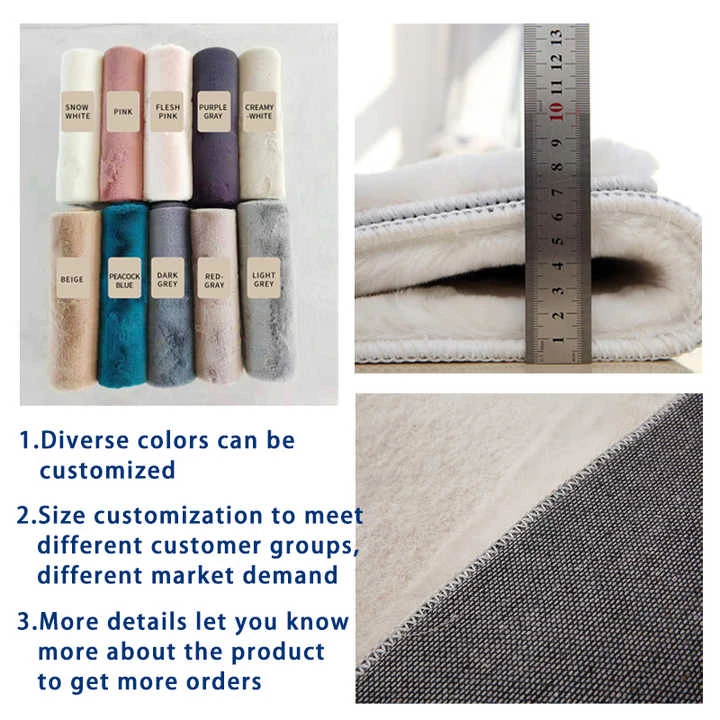
The performance of a luxury faux sheepskin rug is evaluated based on several critical engineering principles. Pile resilience, the rug’s ability to recover its original shape after compression, is paramount. This is directly linked to the fiber's inherent elasticity and the structural integrity of the knit or woven base. Force analysis demonstrates that higher pile weights (grams per square meter) generally correlate with improved resilience, as the increased fiber density provides greater support. Environmental resistance is another key factor. Polyester and acrylic fibers exhibit good resistance to sunlight fading (UV degradation – ASTM D4459), although prolonged exposure can cause discoloration. Moisture resistance is also important; while both fibers are hydrophobic, prolonged exposure to moisture can promote mildew growth within the backing material. Therefore, proper ventilation and occasional cleaning are essential. Compliance requirements include flammability testing (ASTM E84) and the absence of harmful chemicals (REACH and RoHS compliance). The backing material’s tensile strength (ASTM D4157) is crucial for preventing delamination and ensuring the rug remains intact under stress. Static electricity build-up is a potential issue with synthetic fibers; anti-static treatments are often applied during manufacturing to mitigate this. Furthermore, the structural design must account for pedestrian traffic. Finite element analysis (FEA) can be employed to model stress distribution under load, optimizing the backing material and fiber density to prevent premature wear and tear. The thermal resistance (R-value) of the rug, while not as significant as in thermal insulation materials, contributes to underfoot comfort and energy efficiency.
Technical Specifications
| Parameter | Polyester Faux Sheepskin | Acrylic Faux Sheepskin | High-End Blend (Polyester/Acrylic) |
|---|---|---|---|
| Fiber Denier (dtex) | 0.8 - 1.2 | 0.9 - 1.5 | 0.7 - 1.0 |
| Pile Height (mm) | 30-60 | 40-80 | 50-70 |
| Pile Weight (g/m²) | 800-1200 | 600-1000 | 900-1400 |
| Tensile Strength (N/cm) | 60-80 | 40-60 | 65-85 |
| Colorfastness to Light (Rating 1-5) | 4-5 | 3-4 | 4-5 |
| Moisture Absorption (%) | 0.4-0.8 | 1.0-1.5 | 0.5-0.9 |
Failure Mode & Maintenance
Luxury faux sheepskin rugs, while durable, are susceptible to specific failure modes. Pile matting, caused by repeated compression, is a common issue. This reduces the rug’s plushness and aesthetic appeal. Fiber breakage, particularly in acrylic variants, can occur due to abrasion and UV exposure. Delamination of the backing material from the pile is a more severe failure, often resulting from substandard adhesive application or excessive moisture ingress. Oxidation of the polymer fibers, though slow, can lead to discoloration and brittleness over extended periods. Stain penetration, even with stain-resistant treatments, can occur with oil-based substances or strong dyes. Maintenance is critical to prolonging the rug’s lifespan. Regular vacuuming (at least twice weekly) removes loose dirt and debris, preventing abrasive damage. Spot cleaning with a mild detergent and water is recommended for spills; avoid harsh chemicals or abrasive cleaners. Professional cleaning, using a low-moisture extraction method, should be performed annually. Avoid direct sunlight exposure for prolonged periods. Rotate the rug periodically to distribute wear evenly. In cases of significant delamination, professional re-gluing is possible, but the long-term effectiveness depends on the severity of the damage and the quality of the adhesive used. Preventive measures, such as using rug pads, can significantly reduce wear and tear by cushioning the pile and preventing slippage.
Industry FAQ
Q: What are the key differences between polyester and acrylic faux sheepskin rugs in terms of durability?
A: Polyester generally exhibits superior durability due to its higher tensile strength and resilience. Acrylic fibers, while softer, are more prone to breakage and abrasion, leading to a shorter lifespan under heavy use. However, advancements in acrylic fiber technology are continuously improving its durability.
Q: How does the pile weight (gsm) impact the overall quality and longevity of the rug?
A: Higher pile weight (gsm) typically indicates a denser, more luxurious rug. A denser pile provides greater support, improves resilience, and enhances the rug's ability to withstand foot traffic. This translates to a longer lifespan and better overall performance.
Q: What stain resistance treatments are commonly used and how effective are they?
A: Most luxury faux sheepskin rugs employ fluorocarbon-based stain resistance treatments. These treatments create a barrier that repels water and oil-based stains. While highly effective against common spills, they are not foolproof and can degrade over time with repeated cleaning or exposure to harsh chemicals.
Q: What backing materials are considered the most durable and what are their respective advantages and disadvantages?
A: Non-woven polypropylene is a common and cost-effective backing material offering good durability and moisture resistance. Jute backing provides a more natural feel but is less resistant to moisture and can deteriorate over time. A combination of polypropylene and jute offers a balance of performance characteristics.
Q: How important is the rug's compliance with flammability standards like ASTM E84?
A: Compliance with flammability standards like ASTM E84 is critical for safety, especially in residential and commercial settings. The standard measures flame spread and smoke development, ensuring that the rug will not contribute to the rapid spread of fire and minimize smoke inhalation hazards.
Conclusion
Luxury faux sheepskin rugs represent a significant evolution in synthetic textile design, effectively bridging the gap between ethical considerations and aesthetic demands. Their performance is dictated by a complex interplay of material science principles, manufacturing processes, and rigorous quality control. The selection of appropriate fiber composition, pile construction, and backing material is crucial for achieving optimal durability, resilience, and aesthetic appeal.
Future advancements will likely focus on developing more sustainable fiber sources, enhancing stain resistance technologies, and improving the overall longevity of these rugs through innovative polymer formulations and manufacturing techniques. Continued research into fiber morphology and surface treatments will be essential for replicating the nuanced tactile properties of natural sheepskin while exceeding its performance characteristics.