


machine washable fur rug Performance Analysis
Introduction
Machine washable fur rugs represent a significant advancement in the textile flooring market, bridging the aesthetic appeal of traditional fur rugs with the practicality demanded by modern consumers. Positioned as a premium alternative to synthetic pile rugs and natural, non-washable fur, these rugs leverage specialized fiber construction and bonding techniques to withstand the mechanical and thermal stresses of a domestic washing machine. Their core performance characteristics center around durability, ease of maintenance, hypoallergenic properties (dependent on fiber composition), and aesthetic versatility. The increasing demand is driven by pet ownership, families with young children, and a general trend towards convenient, hygienic home furnishings. The primary challenge in their manufacture lies in maintaining the luxurious texture and pile density after repeated washing cycles. This guide provides a comprehensive technical overview of machine washable fur rugs, encompassing material science, manufacturing processes, performance characteristics, potential failure modes, and relevant industry standards.
Material Science & Manufacturing
The foundation of a machine washable fur rug lies in its constituent materials. The ‘fur’ component typically utilizes microfibers, predominantly polyester or polypropylene, chosen for their inherent softness, resilience, and cost-effectiveness. Polyester offers superior dye uptake and UV resistance, while polypropylene excels in moisture resistance and stain repellency. The backing is critical for dimensional stability and washability; common materials include thermoplastic elastomers (TPE), styrene-butadiene rubber (SBR) latex, or a non-woven polypropylene fabric.
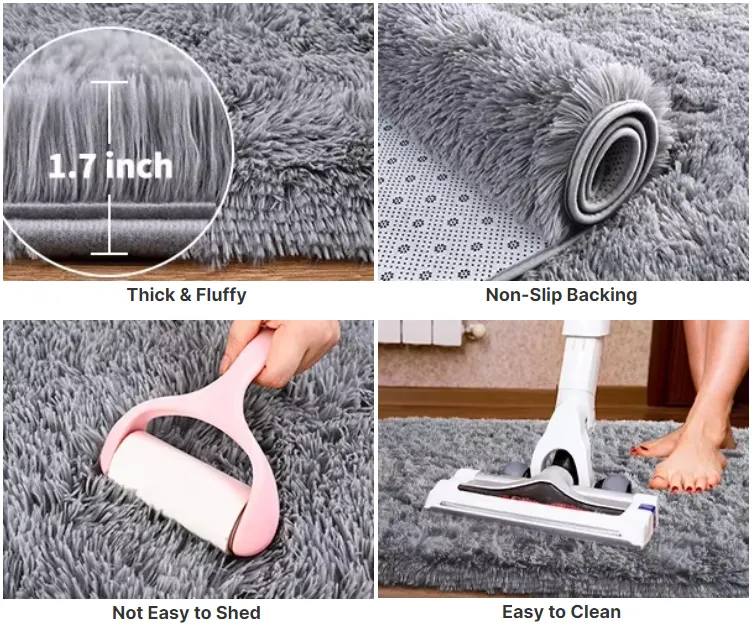
Manufacturing generally proceeds in several stages. First, the microfiber yarn is produced via melt spinning. Precise control over the polymer extrusion rate and cooling process dictates fiber diameter and uniformity, impacting the final texture. This yarn is then knitted or woven into a base fabric. The critical step is the 'flocking' process. Here, the microfibers are adhered to the backing material using an adhesive—typically a hot melt adhesive composed of polyamide or polyester. The adhesive must exhibit excellent bond strength, flexibility, and resistance to degradation during washing. The density and angle of fiber implantation dictate the rug’s pile height, density, and overall appearance. Following flocking, a secondary backing layer is often applied for added durability and to prevent adhesive bleed-through. Parameter control during the flocking process is paramount. Temperature, adhesive viscosity, and electrostatic charge (in electrostatic flocking) must be precisely monitored to achieve consistent fiber adhesion and prevent fiber loss during washing. Quality control involves assessing pile density, fiber adhesion strength (pull-out tests), and dimensional stability post-flocking.
Performance & Engineering
The performance of machine washable fur rugs is evaluated based on several engineering principles. Tensile strength, assessed according to ASTM D4157, dictates the rug’s resistance to tearing and stretching, particularly during washing and drying. Pile retention force (ASTM D6578) measures the bond strength between the fibers and the backing – a crucial indicator of wash durability. Dimensional stability (ISO 2326) determines the rug’s ability to maintain its shape after repeated wash cycles. Environmental resistance is tested via exposure to UV radiation (ASTM G154) and simulated weathering to assess colorfastness and material degradation.
The washing process itself introduces significant mechanical stress. Turbulent flow within the washing machine generates shear forces that act to dislodge fibers. Thermal stress from warm water can also weaken the adhesive bond. The rug's construction must withstand these forces. The backing material's elasticity plays a vital role in absorbing shock and preventing fiber detachment. Furthermore, the rug must exhibit adequate water permeability to facilitate efficient rinsing and minimize detergent residue. Considerations around drainage and drying are also critical. A poorly designed rug can retain excessive moisture, leading to mildew growth and material breakdown. Compliance requirements vary by region, with flammability standards (e.g., California Proposition 65) and chemical content restrictions (e.g., REACH regulations in Europe) being particularly important.
Technical Specifications
| Parameter | Unit | Polyester Microfiber Rug | Polypropylene Microfiber Rug |
|---|---|---|---|
| Pile Height | mm | 25-30 | 20-25 |
| Pile Density | g/m² | 800-1200 | 600-900 |
| Backing Material | - | TPE/Non-woven PP | SBR Latex/Non-woven PP |
| Tensile Strength (Warp/Weft) | N/5cm | >200/>180 | >150/>140 |
| Pile Retention Force | N | >0.8 | >0.6 |
| Dimensional Stability (After 5 Washes) | % Change | ±2% | ±3% |
Failure Mode & Maintenance
Machine washable fur rugs are susceptible to several failure modes. Delamination, the separation of the fibers from the backing, is a common issue, particularly after repeated washing. This is often caused by adhesive failure due to thermal or mechanical stress. Fiber shedding, while expected to some degree, can become excessive if the fibers are not adequately anchored or if the adhesive degrades. Matting and crushing of the pile can occur due to compression during washing and drying, reducing the rug’s aesthetic appeal and comfort. Color fading is another potential issue, especially with polyester fibers exposed to prolonged UV radiation. Oxidation of polypropylene fibers can lead to brittleness and cracking over time.
Preventative maintenance includes following the manufacturer’s washing instructions carefully. Using a mild detergent, avoiding high water temperatures, and tumble drying on a low setting can minimize stress on the rug. Regular vacuuming helps to remove loose fibers and debris, preventing matting. Addressing spills promptly can prevent staining and degradation. For rugs exhibiting delamination, adhesive re-application (using a compatible hot melt adhesive) may provide a temporary repair, but complete replacement is often necessary for severe cases. Avoid harsh chemicals or abrasive cleaning agents, as these can damage the fibers and adhesive. Periodic inspection for loose fibers or signs of wear and tear can enable proactive maintenance and extend the rug’s lifespan.
Industry FAQ
Q: What is the primary difference between polyester and polypropylene microfiber used in these rugs, and how does it affect washability?
A: Polyester generally offers better resilience and dye uptake, leading to a more vibrant and longer-lasting color. However, polypropylene exhibits superior moisture resistance and is less prone to staining. In terms of washability, polypropylene is slightly more durable to repeated washing cycles due to its inherent chemical inertness, while polyester might show slight degradation of the fiber over time, though modern polyester formulations mitigate this issue significantly.
Q: How does the type of adhesive used impact the rug's performance after multiple washes?
A: The adhesive is crucial. Polyamide and polyester-based hot melt adhesives are preferred due to their flexibility and bond strength. Lower-quality adhesives can become brittle after washing, leading to delamination. Adhesive viscosity and application rate also play a role – insufficient adhesive leads to weak bonding, while excessive adhesive can bleed through the backing.
Q: What water temperature and washing cycle are recommended for optimal cleaning and longevity?
A: A cool or lukewarm water temperature (below 30°C/86°F) is highly recommended. A gentle cycle with a mild detergent is ideal. Avoid using bleach or fabric softeners, as they can damage the fibers and adhesive. Spin speed should be kept relatively low to minimize mechanical stress.
Q: How does the backing material contribute to the overall durability and washability of the rug?
A: The backing provides dimensional stability and prevents the rug from distorting during washing. TPE and SBR latex backings offer good elasticity and resilience, absorbing shock and preventing fiber detachment. Non-woven polypropylene provides structural support and prevents adhesive bleed-through. The backing needs to be resistant to water absorption to prevent mildew growth.
Q: What industry standards are most relevant to evaluating the quality and performance of machine washable fur rugs?
A: Key standards include ASTM D4157 (tensile strength), ASTM D6578 (pile retention force), ISO 2326 (dimensional stability), ASTM G154 (UV resistance), and various flammability standards like California Proposition 65. Additionally, OEKO-TEX Standard 100 certification ensures the absence of harmful substances.
Conclusion
Machine washable fur rugs represent a sophisticated intersection of textile engineering, material science, and consumer demand. Their successful production hinges on careful material selection – prioritizing microfibers like polyester and polypropylene – and precise control over the manufacturing process, particularly the flocking and adhesive application stages. Performance is dictated by quantifiable parameters such as tensile strength, pile retention force, and dimensional stability, all of which are rigorously assessed through standardized testing methodologies.
Looking ahead, advancements in adhesive technology, potentially utilizing bio-based or biodegradable formulations, could further enhance the sustainability and washability of these rugs. Moreover, research into novel fiber treatments to improve stain resistance and UV protection will be crucial. The continued growth of this market segment relies on maintaining a balance between aesthetic appeal, practical functionality, and adherence to stringent quality and safety standards.