


navy blue faux fur area rug Performance Analysis
Introduction
Navy blue faux fur area rugs represent a significant segment within the broader decorative textile market, offering a cost-effective and ethically sourced alternative to genuine fur. Positioned between high-end natural fiber rugs and lower-cost synthetic options, these rugs primarily function as accent pieces intended to enhance interior aesthetics and provide localized thermal comfort. Their technical positioning rests on the interplay of fiber composition, pile density, and backing material, all of which dictate performance characteristics such as durability, softness, and ease of maintenance. Core performance metrics revolve around simulating the tactile experience of real fur while mitigating concerns related to animal welfare and hypoallergenic properties. This guide provides an in-depth technical analysis of navy blue faux fur area rugs, covering material science, manufacturing processes, performance engineering, potential failure modes, and relevant industry standards.
Material Science & Manufacturing
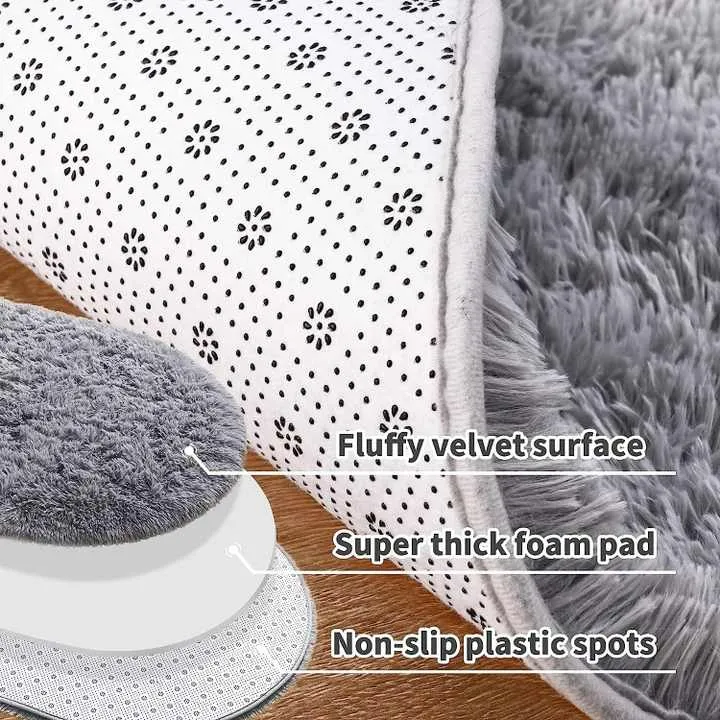
The predominant fiber employed in navy blue faux fur area rugs is polypropylene (PP), although polyester and acrylic fibers are also utilized, often in blends. Polypropylene is favored due to its inherent resistance to moisture, stains, and fading, coupled with its relatively low cost. The fiber undergoes a texturization process – typically utilizing crimping and cutting techniques – to achieve the desired fur-like appearance and tactile properties. Dyeing occurs before the fiber is extruded, ensuring colorfastness and uniformity of the navy blue hue, achieved via precise control of pigment concentrations and dye penetration rates. Manufacturing typically involves a tufting process, where the textured fibers are mechanically inserted into a primary backing material, usually polypropylene woven or non-woven fabric. Pile height, ranging from 20mm to 60mm, is a crucial parameter controlled during tufting, impacting the rug’s overall softness and density. A secondary backing, often made of latex or jute, is then applied to provide structural integrity and prevent slippage. Key parameter control during manufacturing includes maintaining consistent fiber denier (fineness), precise tufting density (stitches per inch), and uniform adhesive application to ensure a durable and aesthetically pleasing finished product. The selection of appropriate UV stabilizers during polypropylene production is critical to prevent degradation and color fading upon prolonged exposure to sunlight.

Performance & Engineering
Performance evaluation of navy blue faux fur area rugs necessitates analyzing several key engineering characteristics. Compressive strength, determined via ASTM D3574, dictates the rug's ability to withstand foot traffic and retain its pile height over time. Tensile strength, assessed according to ASTM D4157, is crucial for evaluating the integrity of the backing material and its resistance to tearing. Colorfastness to light, evaluated via ISO 105-B02, is paramount to preventing fading and maintaining the aesthetic appeal of the navy blue color. Static load deflection, measuring the rug's resistance to indentation under sustained weight, influences its long-term performance and perceived comfort. Flammability testing, adhering to standards such as DOC-FF1-70 (US) or EN 13501-1 (Europe), determines the rug's fire resistance and smoke development characteristics, critical for safety compliance. Environmental resistance is evaluated through tests like accelerated weathering (ASTM G154) to simulate the effects of UV exposure, moisture, and temperature fluctuations. Finally, the rug’s thermal resistance (R-value) contributes to its perceived warmth and impact on room temperature. Proper engineering of the pile density and backing material contributes significantly to the overall structural integrity and resilience of the rug.
Technical Specifications
| Parameter | Units | Typical Value (Low-End) | Typical Value (High-End) |
|---|---|---|---|
| Pile Height | mm | 20 | 60 |
| Fiber Density | oz/yd² | 800 | 1500 |
| Backing Material | - | Polypropylene Woven | Jute/Latex Composite |
| Tensile Strength (Backing) | lbs | 80 | 150 |
| Colorfastness to Light (ISO 105-B02) | Grey Scale Rating | 4 | 6-7 |
| Flammability (DOC-FF1-70) | Flame Spread Index | 75 | 50 |
Failure Mode & Maintenance
Navy blue faux fur area rugs are susceptible to several failure modes. Pile Crushing: Prolonged compression from foot traffic leads to irreversible deformation of the polypropylene fibers, reducing pile height and diminishing the luxurious feel. Fiber Shedding: Initial shedding is common, but excessive shedding indicates poor fiber bonding or a low-quality manufacturing process. Color Fading: Prolonged exposure to direct sunlight causes UV degradation of the dyes and polymer matrix, resulting in fading, especially noticeable in the navy blue pigment. Delamination: Weak adhesive bonding between the pile and backing can cause delamination, leading to separation and structural failure. Matting: Accumulation of dirt, dust, and debris within the pile can cause matting, reducing the rug's appearance and tactile qualities. Staining: Although polypropylene is stain-resistant, oil-based stains can penetrate the fibers if not addressed promptly. Maintenance recommendations include regular vacuuming (using a suction-only vacuum head to avoid damaging the fibers), prompt spot cleaning with a mild detergent and water solution, avoiding direct sunlight exposure, and professional cleaning every 12-18 months. Periodic rotating of the rug can help distribute wear and minimize pile crushing in high-traffic areas. For delamination, professional re-gluing may be possible, but severe cases typically necessitate rug replacement.
Industry FAQ
Q: What is the difference between polypropylene and polyester faux fur, and how does it affect durability?
A: Polypropylene generally exhibits superior durability and stain resistance compared to polyester. Polyester fibers tend to be softer initially but are more prone to crushing and matting under sustained pressure. Polypropylene's inherent resilience and resistance to moisture contribute to a longer lifespan, particularly in high-traffic areas. However, high-quality polyester blends can offer a good balance of softness and durability.
Q: How does the pile height influence the cleaning requirements of the rug?
A: Higher pile heights (e.g., 50-60mm) trap more dirt and debris, requiring more frequent and thorough vacuuming. Lower pile heights (e.g., 20-30mm) are easier to clean and maintain, but may not offer the same level of luxurious comfort. Regular vacuuming, regardless of pile height, is essential to prevent matting and maintain the rug's appearance.
Q: What fire safety standards are relevant for faux fur area rugs, and what do the ratings signify?
A: Relevant fire safety standards include DOC-FF1-70 (US) and EN 13501-1 (Europe). DOC-FF1-70 assesses flame spread and smoke development. A lower Flame Spread Index indicates better fire resistance. EN 13501-1 provides a classification system (A1 to F) based on contribution to fire, with A1 being the most fire-resistant and F being the least.
Q: What is the impact of UV exposure on the navy blue color, and how can it be mitigated?
A: UV exposure can cause fading of the navy blue dye due to photochemical degradation of the dye molecules. Mitigation strategies include incorporating UV stabilizers during the fiber manufacturing process, minimizing direct sunlight exposure (e.g., using curtains or blinds), and periodically rotating the rug to distribute UV exposure evenly.
Q: Is it possible to repair a delaminated faux fur rug, and what is the expected lifespan of a properly maintained rug?
A: Minor delamination can sometimes be repaired by a professional using appropriate adhesives. However, extensive delamination typically indicates irreparable damage. A properly maintained navy blue faux fur area rug, with regular cleaning and minimal UV exposure, can be expected to last between 5-10 years, depending on traffic levels and the quality of the initial materials and construction.
Conclusion
Navy blue faux fur area rugs offer a versatile and aesthetically pleasing flooring solution, providing a soft, comfortable surface while addressing ethical concerns associated with genuine fur. Their performance characteristics are fundamentally determined by the interplay of fiber composition (primarily polypropylene), manufacturing processes (tufting, dyeing, and backing), and adherence to relevant industry standards (ASTM, ISO, EN). Understanding the potential failure modes – pile crushing, fiber shedding, color fading, and delamination – is crucial for informed procurement and proactive maintenance.
Future development in this sector may focus on enhancing the durability of the fibers through advanced polymer engineering, incorporating bio-based or recycled materials to improve sustainability, and developing innovative backing technologies to prevent delamination and enhance structural integrity. The continued optimization of dyeing processes will also be critical to achieving greater colorfastness and resistance to fading, ensuring long-lasting aesthetic appeal.