

sheepskin faux fur rug Performance Analysis

Introduction
Sheepskin faux fur rugs represent a significant segment within the broader synthetic textile floor covering market. Technically positioned as a substitute for genuine sheepskin, these rugs are engineered to replicate the aesthetic and tactile properties of natural sheepskin while offering advantages in cost, ease of maintenance, and ethical sourcing. Their core performance characteristics center on providing thermal insulation, a soft surface for tactile comfort, and visual appeal as a decorative element. The market demand is driven by increasing consumer preference for animal-free alternatives and the versatility of faux fur rugs for diverse interior design applications. The product’s performance is critically assessed based on fiber composition, pile density, backing material, and the durability of the faux fur fibers against abrasion, compression, and environmental factors. A primary industry pain point revolves around maintaining a consistent aesthetic quality and ensuring long-term performance durability, particularly concerning fiber shedding and matting.
Material Science & Manufacturing
The predominant raw material for sheepskin faux fur rugs is polyester, though acrylic and polypropylene are also utilized, albeit less frequently. Polyester is favored due to its inherent softness, resilience, dyeability, and relatively low cost. Manufacturing commences with the production of these synthetic fibers, typically via melt spinning. The resulting fibers are then processed through a cut-pile or loop-pile weaving or knitting process to create the fur-like texture. The critical parameter control lies in fiber denier (fineness) – lower denier equates to greater softness, but reduced durability – and fiber crimp, which dictates the curl and volume of the “fur”. A backing material, commonly jute or polypropylene fabric, is applied using a latex adhesive. Post-production processes involve brushing and shearing to achieve the desired pile height and aesthetic consistency. Chemical compatibility of the latex adhesive with the synthetic fibers is paramount to prevent degradation and ensure long-term bonding. Fiber quality is evaluated through tensile strength testing (ASTM D2256) and elongation at break analysis. Dyeing processes utilize disperse dyes for polyester, with stringent control of temperature and dye concentration to achieve consistent coloration and prevent color bleeding during use and cleaning. Manufacturing defects can stem from inconsistent fiber distribution, inadequate adhesive application, or dye inconsistencies, which all impact the perceived quality and lifespan of the product.
Performance & Engineering
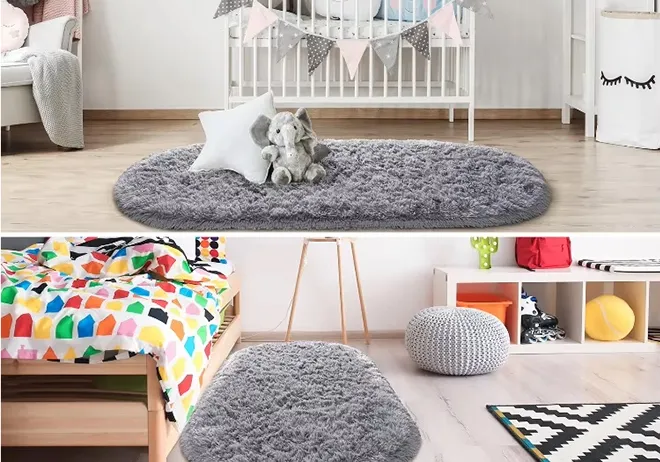
Performance of sheepskin faux fur rugs is evaluated across several engineering criteria. Thermal insulation is a key attribute, measured by its R-value (thermal resistance). Pile density and fiber height directly correlate to R-value; higher density and height offer greater insulation. Compressive strength is critical, as the rug will be subjected to foot traffic and furniture weight. This is tested via indentation force deflection (IFD) measurements. Abrasion resistance is assessed using methods like the Taber Abraser (ASTM D4966), quantifying fiber loss under repeated rubbing. Environmental resistance necessitates evaluating colorfastness to light (ASTM D1654) and resistance to moisture and mildew. The backing material provides structural integrity, and its tensile strength is vital to prevent delamination. The engineered performance must meet relevant flammability standards (e.g., California Proposition 65 for formaldehyde emissions and DOC-FF 1-70 flammability standard). The overall structural integrity is governed by force analysis considering both static loads from furniture and dynamic loads from foot traffic. Failure to adequately address these parameters can result in premature matting, fiber shedding, and loss of thermal insulation.
Technical Specifications
| Parameter | Units | Typical Range | Test Method |
|---|---|---|---|
| Pile Height | mm | 20-60 | ASTM D3654 |
| Pile Density | g/m² | 800-2000 | ASTM D3884 |
| Fiber Composition | % | 100% Polyester (Typical) | FTIR Spectroscopy |
| Tensile Strength (Fiber) | cN/tex | 50-100 | ASTM D2256 |
| Elongation at Break (Fiber) | % | 20-50 | ASTM D2256 |
| Colorfastness to Light | Rating (1-5) | 4-5 | ASTM D1654 |
Failure Mode & Maintenance
Common failure modes in sheepskin faux fur rugs include fiber shedding, matting, and delamination. Fiber shedding is primarily attributed to low fiber denier, inadequate fiber anchoring within the backing, and repeated abrasion. Matting occurs due to the compression of fibers under sustained load, leading to a flattened appearance. Delamination, the separation of the pile from the backing, is typically caused by adhesive failure, often stemming from insufficient adhesive application, improper adhesive curing, or incompatibility between the adhesive and the backing material. Oxidation of the polyester fibers over time can lead to brittleness and increased shedding. Regular vacuuming, using a brush attachment to avoid excessive pulling on the fibers, is crucial for preventative maintenance. Spot cleaning with mild detergent and cold water is recommended. Avoid harsh chemicals and excessive wetting. Professional cleaning is advisable for thorough cleaning and revitalization of the pile. Preventative measures include rotating the rug periodically to distribute wear evenly and using rug pads to minimize compression and protect the backing. Inspection for loose fibers and prompt removal can minimize further shedding. Addressing spills immediately prevents staining and potential fiber damage.
Industry FAQ
Q: What is the impact of different backing materials on the longevity of a faux fur rug?
A: The backing material significantly influences longevity. Jute offers breathability and a natural feel but is susceptible to moisture damage and rot. Polypropylene is more durable and resistant to moisture but offers less breathability. The tensile strength and dimensional stability of the backing directly correlate with the rug's resistance to delamination and overall structural integrity. A higher quality backing will extend the rug’s lifespan, particularly in high-traffic areas.
Q: How does the denier of the polyester fiber affect both the feel and the durability of the rug?
A: Lower denier fibers (finer fibers) provide a softer, more luxurious feel, mimicking the tactile properties of genuine sheepskin. However, these finer fibers have lower tensile strength and are more prone to shedding and abrasion. Higher denier fibers are more durable but can feel coarser. A balance between denier and fiber crimp is necessary to achieve both desired softness and acceptable durability.
Q: What are the key considerations when selecting a faux fur rug for a high-traffic area?
A: For high-traffic areas, prioritize a rug with a higher pile density, a robust polypropylene backing, and a medium-to-high fiber denier. Consider rugs specifically designed for commercial use, which often undergo more rigorous testing for abrasion resistance and colorfastness. Regular and thorough vacuuming is also essential to minimize wear and maintain appearance.
Q: Are there specific flammability standards that faux fur rugs need to meet, and how are these tested?
A: Yes, faux fur rugs are subject to flammability regulations, varying by region. In the US, California Proposition 65 regulates formaldehyde emissions. DOC-FF 1-70 is a common flammability standard assessing the rug’s resistance to ignition and flame spread. These are tested by exposing the rug to a flame source and measuring the flame height, burn rate, and afterglow time.
Q: How does the dyeing process affect the long-term color stability of the faux fur rug?
A: The dyeing process is crucial for color stability. Disperse dyes are typically used for polyester, and proper dye fixation is essential to prevent color bleeding and fading. Inadequate dye penetration or insufficient washing after dyeing can lead to color migration during use or cleaning. Colorfastness testing (ASTM D1654) assesses the rug’s resistance to fading under exposure to light.
Conclusion
Sheepskin faux fur rugs represent a complex interplay of material science, manufacturing engineering, and performance characteristics. Achieving a durable and aesthetically pleasing product necessitates careful control of fiber properties, backing material selection, adhesive application, and dyeing processes. The key to long-term performance lies in understanding the inherent failure modes – fiber shedding, matting, and delamination – and implementing preventative maintenance practices.
Future development in this sector is likely to focus on utilizing recycled polyester fibers to enhance sustainability, exploring new fiber technologies to improve durability and softness, and developing more robust adhesive systems to prevent delamination. Continued innovation in textile engineering will be critical to meeting evolving consumer demands for high-quality, animal-free alternatives to genuine sheepskin.