


faux fur hide rug Technical Analysis
Introduction
Faux fur hide rugs represent a synthetic alternative to genuine animal hide rugs, primarily utilized for interior decoration. These rugs are constructed from synthetic fibers designed to mimic the appearance and tactile properties of natural fur. Their position within the textile and home furnishings supply chain involves fiber production (typically acrylic or polyester), yarn formation, knitting or weaving into a hide-shaped base, and finishing processes to achieve desired texture and coloration. Core performance characteristics center around aesthetic appeal, softness, thermal insulation, and durability under moderate foot traffic. Unlike natural hides, faux fur rugs offer advantages relating to ethical sourcing, hypoallergenic properties, ease of cleaning, and often, a lower cost of acquisition. The industry faces challenges in achieving a realistic fur texture, improving resistance to matting and crushing, and addressing concerns about microplastic shedding during use and washing. This guide provides an in-depth technical analysis of faux fur hide rugs, encompassing material science, manufacturing, performance, failure modes, and relevant industry standards.
Material Science & Manufacturing
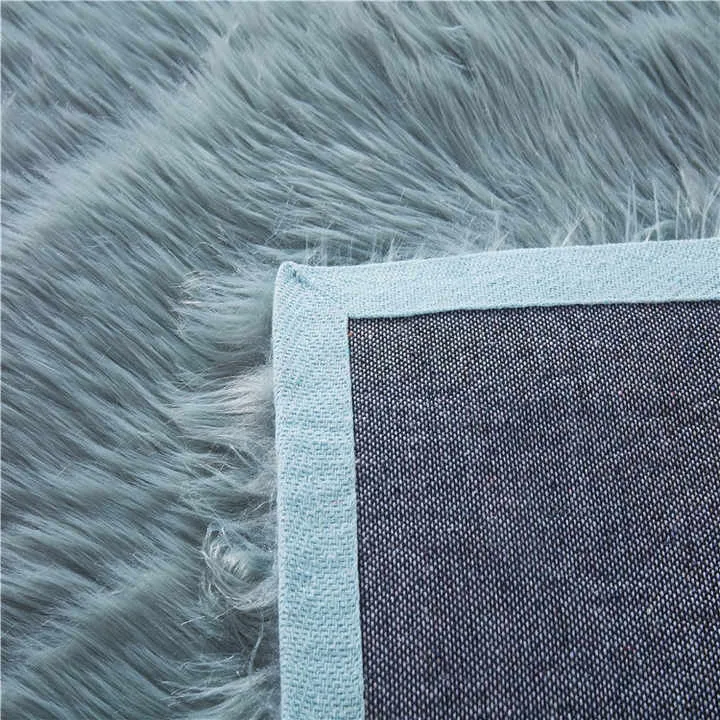
The primary raw materials in faux fur hide rug production are acrylic, polyester, or polypropylene fibers. Acrylic fibers, known for their wool-like feel, are frequently used to simulate the bulk and texture of natural fur. Polyester offers improved durability, resilience, and resistance to shedding, while polypropylene is a cost-effective option with good stain resistance but generally lower tactile quality. The denier (fiber thickness) of these fibers significantly impacts the final product’s softness and realism; lower denier fibers (e.g., < 1.5 D) create a finer, more luxurious feel. The manufacturing process typically begins with fiber extrusion, where molten polymer is forced through spinnerets to form continuous filaments. These filaments are then drawn and crimped to enhance bulk and texture. The yarn is subsequently knitted or woven into a base fabric, often a non-woven polypropylene backing for structural integrity. A crucial step is the pile formation process, where the fibers are tufted or looped into the base, creating the fur-like appearance. The density of tufts/loops directly correlates with the rug's density and perceived quality. Finishing treatments, including brushing, shearing, and dyeing, are applied to achieve the desired color, texture, and sheen. Parameter control during extrusion (temperature, flow rate), yarn formation (tension, crimp frequency), and tufting/weaving (stitch rate, pile height) are critical for ensuring consistent product quality. Chemical compatibility of dyes with the chosen fiber is paramount to prevent color fading and maintain long-term aesthetic appeal. Furthermore, anti-static treatments are commonly applied to reduce static cling and dust accumulation.
Performance & Engineering
The performance of faux fur hide rugs is heavily influenced by several engineering factors. Load-bearing capacity, though typically not a primary concern for rugs, is dictated by the base fabric's tensile strength and the pile's density. Foot traffic exerts compressive stress on the pile, leading to potential matting and crushing over time. The resilience of the fibers – their ability to recover from deformation – is a key determinant of the rug’s longevity. Environmental resistance encompasses factors like UV exposure, temperature fluctuations, and moisture. Acrylic fibers exhibit relatively poor UV resistance, leading to color fading and degradation upon prolonged exposure to sunlight. Polyester and polypropylene demonstrate improved UV stability. Moisture resistance is generally good for all three fiber types, but prolonged exposure to high humidity can promote mildew growth on the backing material. Compliance requirements vary by region, but commonly include flammability standards (e.g., California Proposition 65 regarding flame retardants) and VOC emission limits (e.g., CARB Section 93120). Force analysis reveals that the shear strength of the tuft-to-backing bond is a critical factor in preventing fiber loss during use. Pile height and density affect thermal insulation; higher pile density generally provides greater warmth. Furthermore, anti-slip backing materials are often incorporated to enhance safety and prevent the rug from sliding on smooth surfaces. The choice of backing material influences overall dimensional stability and resistance to delamination.
Technical Specifications
| Fiber Composition | Pile Height (mm) | Pile Density (Tufts/in²) | Base Material | Tensile Strength (N/cm) | UV Resistance (Grey Scale Rating) |
|---|---|---|---|---|---|
| 100% Acrylic | 25-30 | 150-200 | Polypropylene Non-woven | 100-150 | 4-5 |
| 100% Polyester | 35-40 | 200-250 | Jute Backing with Latex | 180-220 | 6-7 |
| 80% Polyester / 20% Acrylic | 20-25 | 180-220 | Felt Backing | 150-190 | 5-6 |
| 100% Polypropylene | 15-20 | 120-160 | Polypropylene Non-woven | 80-120 | 7-8 |
| High-Density Polyester Microfiber | 40-50 | 250-300 | Memory Foam Backing | 250-300 | 7-8 |
| Recycled Polyester | 25-30 | 160-210 | Recycled Rubber Backing | 130-170 | 5-6 |
Failure Mode & Maintenance
Faux fur hide rugs are susceptible to several failure modes. Matting and crushing of the pile are common due to compressive stress from foot traffic and furniture. This is exacerbated by low fiber resilience and inadequate pile density. Fiber shedding is another frequent issue, particularly with acrylic fibers, resulting from abrasion and weak tuft-to-backing bonds. Delamination of the backing material can occur if the adhesive bond fails, leading to structural instability. Color fading is prevalent with acrylic fibers exposed to UV radiation. Oxidation can degrade the fibers over time, reducing their flexibility and increasing their susceptibility to breakage. Microplastic shedding during washing is an emerging environmental concern, as synthetic fibers release tiny particles into wastewater. Maintenance recommendations include regular vacuuming to remove dust and debris, spot cleaning with mild detergent and water, and avoiding prolonged exposure to direct sunlight. Professional cleaning is recommended for deep cleaning and stain removal. To mitigate matting, rotating the rug periodically and avoiding placing heavy furniture directly on the pile is advised. Addressing fiber shedding involves using a gentle brush to fluff the pile and avoiding harsh scrubbing. For delamination, adhesive re-application (using a suitable rug adhesive) may provide a temporary solution, but complete replacement is often necessary. Regular inspection for wear and tear allows for proactive maintenance and extends the rug’s lifespan.
Industry FAQ
Q: What is the difference between acrylic and polyester faux fur in terms of durability and cleaning?
A: Polyester generally offers superior durability and resistance to abrasion compared to acrylic. It's less prone to shedding and maintains its shape better over time. For cleaning, polyester is more forgiving and can withstand more vigorous cleaning methods without significant damage. Acrylic is more sensitive to harsh chemicals and may require more delicate cleaning procedures. Polyester also exhibits better stain resistance.
Q: How can I minimize microplastic shedding from a faux fur rug during washing?
A: Using a laundry bag specifically designed to capture microplastics is the most effective method. Washing on a gentle cycle with cold water and a liquid detergent (rather than powder) can also reduce shedding. Avoid using fabric softener, as it can break down the fibers and increase shedding. Consider hand washing for delicate rugs.
Q: What is the impact of pile height and density on the rug’s performance?
A: Higher pile height generally provides a softer, more luxurious feel and better thermal insulation. However, it can also make the rug more susceptible to matting. Higher pile density contributes to a fuller appearance, increased durability, and improved resistance to crushing. It also traps more dirt, requiring more frequent vacuuming.
Q: What backing materials are commonly used, and what are their pros and cons?
A: Polypropylene non-woven is a cost-effective and durable option, providing good structural integrity. Jute backing offers a natural aesthetic and improved breathability but is less resistant to moisture. Felt backing is soft and comfortable but lacks significant durability. Memory foam backing provides enhanced cushioning and comfort. Rubber backing offers superior slip resistance but can be less environmentally friendly.
Q: What UV protection treatments are available for faux fur rugs, and how effective are they?
A: UV protection treatments typically involve applying a chemical coating to the fibers that absorbs UV radiation. While these treatments can significantly improve UV resistance, they are not permanent and will gradually degrade over time with exposure. The effectiveness of the treatment depends on the concentration of the UV absorber and the type of fiber. Polyester exhibits inherently better UV resistance than acrylic, even without treatment.
Conclusion
Faux fur hide rugs offer a compelling alternative to natural hides, providing aesthetic appeal, affordability, and ethical sourcing. Their performance characteristics are dictated by fiber selection, manufacturing processes, and finishing treatments. Understanding the material science behind these rugs – particularly the properties of acrylic, polyester, and polypropylene – is crucial for selecting a product suited to specific applications. Addressing potential failure modes, such as matting, shedding, and delamination, through proactive maintenance and informed purchasing decisions ensures longevity and sustained aesthetic value.
Future advancements in faux fur technology will likely focus on improving fiber realism, enhancing durability, and mitigating microplastic shedding. The development of bio-based synthetic fibers and more sustainable manufacturing processes will further enhance the environmental profile of these products. Continued research into UV protection treatments and innovative backing materials will contribute to improved performance and extended product lifespan. Ultimately, a comprehensive understanding of the technical aspects outlined in this guide is essential for both manufacturers and consumers in the faux fur hide rug industry.