


luxe faux rabbit fur rug Technical Analysis
Introduction
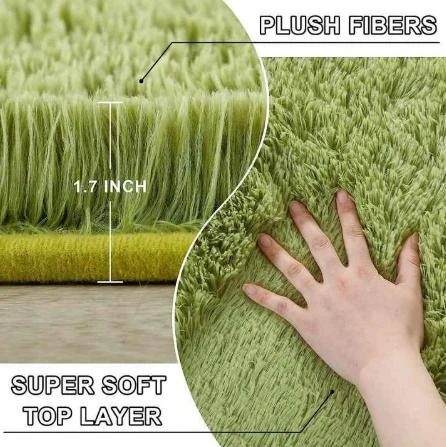
Luxe faux rabbit fur rugs represent a significant advancement in interior textile engineering, offering a compelling alternative to traditional animal-derived fur products. Positioned within the broader synthetic flooring and decorative textile market, these rugs aim to replicate the aesthetic and tactile qualities of rabbit fur while addressing ethical and sustainability concerns. The core performance characteristics center around providing thermal comfort, visual appeal, and a soft surface texture. However, achieving a convincing replication of natural fur requires careful attention to fiber selection, pile construction, and finishing treatments. The industry currently faces challenges in balancing aesthetic fidelity with durability, cleaning performance, and cost-effectiveness. This guide provides an in-depth technical analysis of luxe faux rabbit fur rugs, covering material science, manufacturing processes, performance considerations, failure modes, and relevant industry standards.
Material Science & Manufacturing
The construction of luxe faux rabbit fur rugs typically involves a multi-stage process beginning with the production of synthetic fibers. Predominantly, these rugs utilize modified polyester fibers – specifically, micro-denier polyester – to emulate the fineness and softness of rabbit fur. Polypropylene is also used, offering a lower cost option, though generally with reduced tactile quality. The raw polyester undergoes extrusion, where molten polymer is forced through spinnerets to create continuous filaments. These filaments are then crimped and textured to increase bulk and create a more fur-like appearance. The crimping process is critical, utilizing techniques like air jet texturing or false-twist texturing to induce permanent bends in the fibers.
Manufacturing the rug itself involves tufting or weaving these prepared fibers into a backing material. Tufting is the more common method, employing needles to insert the fibers through a primary backing, typically polypropylene or jute. The density of the tufting – measured in stitches per inch (SPI) – directly impacts the rug’s pile height and overall density. Following tufting, a layer of adhesive is applied to secure the fibers, and a secondary backing material (often felt or latex) is laminated to provide additional stability and cushioning. A critical parameter in the manufacturing process is dye application. Due to the hydrophobic nature of polyester, dye penetration can be challenging. Disperse dyes are commonly used, requiring elevated temperatures and carrier agents to achieve colorfastness. Finishing treatments, such as brushing and shearing, are applied to refine the pile, enhance the softness, and create the desired aesthetic.
Performance & Engineering
The performance of a luxe faux rabbit fur rug is evaluated based on several key engineering parameters. Pile resilience – the ability of the fibers to spring back after compression – is crucial for maintaining the rug’s plush appearance and resisting matting. This is influenced by fiber denier, crimp frequency, and the type of texturing applied. Tensile strength, particularly of the backing material, determines the rug's resistance to tearing and delamination under stress. The backing’s resistance to elongation is also important, preventing distortion of the rug’s shape.
Environmental resistance is another critical factor. Exposure to ultraviolet (UV) radiation can cause fading and degradation of the polyester fibers. The addition of UV stabilizers during the fiber manufacturing process can mitigate this effect. Furthermore, the rug's resistance to moisture absorption is vital to prevent mold and mildew growth. While polyester is inherently hydrophobic, the backing material can retain moisture if not adequately treated. Cleaning performance is also a key consideration. The rug’s susceptibility to staining and the effectiveness of various cleaning agents are important factors for consumers. Compliance requirements, such as flammability standards (e.g., California Proposition 65), must also be met. Force analysis during manufacturing and usage highlights the stresses applied to the tufting, adhesives, and backing materials. Optimizing these components ensures long-term structural integrity.
Technical Specifications
| Parameter | Unit | Typical Value | Test Method |
|---|---|---|---|
| Pile Height | mm | 30-60 | ASTM D593 |
| Pile Density | stitches/in² | 80-150 | Visual Count |
| Fiber Material | - | Polyester (Micro-denier) | FTIR Spectroscopy |
| Backing Material | - | Polypropylene/Jute | Visual Inspection |
| Tensile Strength (Backing) | N/mm | 20-40 | ASTM D4157 |
| Colorfastness to Light | Grade | 4-5 | ISO 105-B02 |
Failure Mode & Maintenance
Luxe faux rabbit fur rugs are susceptible to several failure modes. Pile crushing and matting occur due to repeated compression, particularly in high-traffic areas. This is exacerbated by low pile density and inadequate fiber resilience. Fiber shedding is common, especially during initial use, as loose fibers become dislodged. Delamination – separation of the pile from the backing – is a more serious failure, often caused by inadequate adhesive bonding or stress concentrations. Oxidation of the polyester fibers can lead to discoloration and embrittlement over time, especially with prolonged exposure to UV radiation and elevated temperatures.
Maintenance is crucial to prolonging the rug's lifespan. Regular vacuuming with a brush attachment helps remove dust and debris, preventing fiber matting. Spot cleaning with a mild detergent and water is recommended for spills. Avoid harsh chemicals or abrasive cleaners, as they can damage the fibers. Professional cleaning is advisable for deep cleaning and stain removal. To mitigate oxidation, it’s recommended to avoid direct sunlight exposure for extended periods. Periodic rotation of the rug can distribute wear evenly, reducing localized crushing and matting. In case of delamination, localized re-adhering with a suitable rug adhesive can provide a temporary fix, but complete replacement may be necessary for extensive damage.
Industry FAQ
Q: What is the primary difference between polyester and polypropylene faux fur rugs in terms of durability?
A: Polyester generally exhibits superior abrasion resistance and resilience compared to polypropylene. While polypropylene is more cost-effective, it tends to flatten more quickly under foot traffic and is more susceptible to damage from sharp objects. Polyester fibers retain their shape and texture for a longer period, making them a more durable option for high-traffic areas. However, the specific denier and texturing process significantly impact the actual durability of both materials.
Q: How does the backing material affect the overall performance and lifespan of the rug?
A: The backing material provides structural support and prevents the pile from separating. Polypropylene backings are lightweight and moisture-resistant but offer less dimensional stability. Jute backings are more breathable and environmentally friendly, but are susceptible to moisture damage and can shrink over time. Latex backings provide excellent adhesion and cushioning but can be prone to cracking and degradation with age. The backing's tensile strength and elongation properties are critical for resisting tearing and distortion.
Q: What are the common causes of color fading in faux fur rugs and how can it be prevented?
A: Color fading is primarily caused by exposure to ultraviolet (UV) radiation. The dye molecules in the polyester fibers break down over time when exposed to sunlight. To prevent fading, utilize UV stabilizers during the dye application process. Additionally, minimizing direct sunlight exposure by placing the rug away from windows or using curtains can significantly reduce the rate of fading.
Q: What cleaning methods are recommended for maintaining the appearance and hygiene of a luxe faux rabbit fur rug?
A: Regular vacuuming with a brush attachment is essential for removing dust and debris. Spot cleaning should be performed immediately for spills, using a mild detergent and cool water. Avoid harsh chemicals, bleach, or abrasive cleaners, as these can damage the fibers. For deep cleaning, professional rug cleaning services are recommended. Ensure the rug is thoroughly dried after cleaning to prevent mold and mildew growth.
Q: How does pile height and density influence the tactile experience and performance of the rug?
A: Higher pile heights generally provide a plusher, more luxurious feel. However, very high piles can be more prone to matting and require more frequent maintenance. Pile density – the number of fibers per unit area – directly impacts the rug’s overall thickness and resilience. Higher density piles offer better support and resistance to crushing, leading to a longer lifespan and improved comfort underfoot. A balance between pile height and density is crucial for optimizing both tactile experience and performance.
Conclusion
Luxe faux rabbit fur rugs represent a sophisticated blend of material science and textile engineering, providing a viable and ethically conscious alternative to natural fur. The performance characteristics of these rugs are heavily influenced by fiber selection, manufacturing processes, and the quality of the backing materials. Achieving optimal durability, resilience, and aesthetic fidelity requires careful attention to detail throughout the entire production chain. Understanding the potential failure modes – including pile crushing, delamination, and oxidation – is crucial for implementing effective maintenance strategies and maximizing the rug’s lifespan.
Looking ahead, advancements in fiber technology – such as the development of more durable and UV-resistant polyester variants – will further enhance the performance of these rugs. Sustainable manufacturing practices, including the use of recycled materials and eco-friendly dyes, will become increasingly important. Continued research and development in tufting and weaving techniques will enable the creation of even more realistic and luxurious faux fur textures, catering to evolving consumer preferences for both comfort and ethical responsibility.