

soft shag rug Construction and Performance Analysis
Introduction
Soft shag rugs represent a significant segment within the broader floor covering industry, distinguished by their deep pile and plush texture. Positioned as a premium aesthetic and comfort element, shag rugs occupy a niche between utilitarian floor coverings and high-end textile art. Technically, they are constructed using various fiber types – primarily synthetic polymers – and secured to a backing material, typically jute or polypropylene. Core performance characteristics include pile height, density, fiber crimp, and overall weight, all influencing tactile sensation, durability, and aesthetic appeal. The industry faces challenges in balancing desired softness with acceptable levels of shedding, crush resistance, and ease of cleaning, increasingly demanding sustainable material sourcing and production processes. This guide provides an in-depth technical analysis of soft shag rug construction, performance, and long-term maintenance.
Material Science & Manufacturing
The fundamental material science of soft shag rugs centers on the polymeric fibers used to create the pile. Polypropylene (PP) is the most prevalent due to its cost-effectiveness, inherent stain resistance, and ability to be readily extruded into varying deniers and fiber shapes. Polyester (PET), offering superior softness and resilience but lower inherent UV resistance, is another common choice. Less frequently, nylon (PA6 or PA66) is used for higher durability applications, although its cost is significantly higher. Fiber crimp, induced during the extrusion process through specialized dies, is crucial for creating the desired bulk and texture. The backing materials primarily consist of jute, a natural fiber offering biodegradability and cost benefits, but susceptible to moisture absorption and mildew. Polypropylene woven or non-woven backings provide enhanced dimensional stability and moisture resistance. Manufacturing typically involves fiber extrusion, twisting (if applicable), tufting (inserting fibers into the backing), and subsequent shearing to achieve the desired pile height and density. Parameter control during tufting – gauge, pitch, and loops per inch – directly influences rug density and structural integrity. Latex or synthetic adhesive is applied to secure the fibers, followed by a secondary backing for added stability and comfort. Dyeing occurs either at the fiber stage (solution dyeing, providing superior colorfastness) or after tufting (piece dyeing). Proper heat setting is critical to stabilize the fiber configuration and prevent excessive shedding.
Performance & Engineering
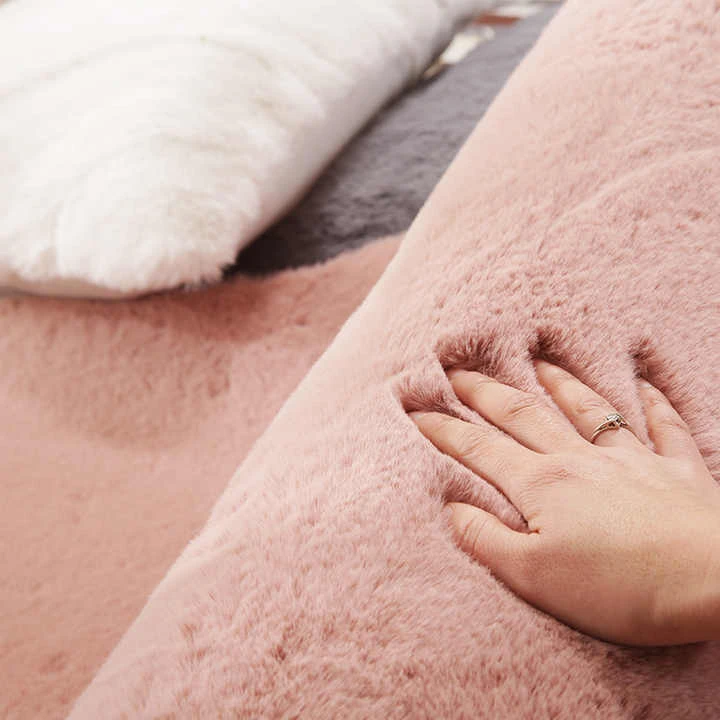
The performance of a soft shag rug is dictated by several engineering principles. Pile height, ranging from 25mm to over 100mm, directly impacts perceived softness and compression set. Higher piles offer increased comfort but are more prone to matting and crush resistance issues. Fiber density (weight per unit area, measured in grams per square meter) determines the rug’s overall weight and resilience. Force analysis reveals that the rug's ability to withstand compression and rebound is governed by the fiber’s Young’s modulus and Poisson’s ratio. Environmental resistance is a critical factor. UV exposure can cause color fading and fiber degradation, particularly in polyester and polypropylene. Moisture absorption by the backing can lead to mold and mildew growth, compromising structural integrity and indoor air quality. Flammability is addressed through treatments with fire retardants, often halogenated compounds or phosphate-based solutions, complying with relevant fire safety standards. Crush resistance is improved through fiber crimp and the selection of resilient fiber types. Compliance requirements involve adherence to VOC emission standards (controlling formaldehyde and other volatile organic compounds) and flammability regulations (e.g., California Technical Bulletin 117).
Technical Specifications
| Parameter | Polypropylene (PP) | Polyester (PET) | Nylon (PA6) | Jute Backing |
|---|---|---|---|---|
| Pile Height (mm) | 25-75 | 25-100 | 38-63 | N/A |
| Pile Density (g/m²) | 800-1500 | 1000-2000 | 1200-2500 | N/A |
| Fiber Denier | 200-800 | 300-1200 | 500-1500 | N/A |
| Moisture Absorption (%) | 0.1-0.5 | 0.4-0.8 | 3.5-4.5 | 12-15 |
| UV Resistance (Rating 1-5, 5=Excellent) | 2 | 3 | 4 | 1 |
| Crush Resistance (Rating 1-5, 5=Excellent) | 2 | 4 | 5 | N/A |
Failure Mode & Maintenance
Soft shag rugs are susceptible to several failure modes. Shedding is a common issue, particularly in the initial stages of use, due to loose fibers not fully secured during manufacturing. Pile crushing occurs under sustained pressure, permanently deforming the fibers and reducing the rug’s plushness. Fiber degradation, especially in polypropylene and polyester exposed to UV radiation, leads to embrittlement and color fading. Delamination – separation of the pile from the backing – arises from inadequate adhesive application or prolonged exposure to moisture. Mold and mildew growth on the jute backing is prevalent in humid environments. Stain penetration can occur if spills are not addressed promptly. Maintenance recommendations include regular vacuuming (using a suction-only cleaner to minimize fiber damage), prompt spot cleaning with appropriate detergents, professional cleaning every 12-18 months, and avoiding direct sunlight exposure. For delamination, re-adhering the pile with a suitable rug adhesive may provide a temporary solution, but complete replacement is often necessary. Addressing mold and mildew requires thorough cleaning and disinfection, potentially involving professional remediation services. Preventative measures include using rug pads to distribute weight and protect the backing, rotating the rug to equalize wear, and utilizing stain repellent treatments.
Industry FAQ
Q: What is the primary difference between polypropylene and polyester shag rugs in terms of long-term durability?
A: Polypropylene, while more cost-effective, tends to flatten and exhibit wear more quickly under heavy foot traffic. Polyester retains its pile height and resilience for a longer period, but is more susceptible to oil-based stains and UV degradation if not treated. Nylon offers the highest durability, but comes at a premium cost.
Q: How does the backing material impact the rug's lifespan and potential for mold growth?
A: Jute backings are biodegradable and offer good dimensional stability initially, but readily absorb moisture, creating an ideal environment for mold and mildew. Polypropylene backings are more water-resistant and offer superior protection against moisture damage, extending the rug's lifespan in humid conditions.
Q: What are the implications of different pile densities on the rug’s performance?
A: Higher pile densities generally translate to greater durability and resilience, as more fibers distribute the load. Lower densities offer a softer feel initially but are more prone to matting and wear. The ideal density depends on the intended use and traffic level.
Q: What fire retardant treatments are commonly used, and are they environmentally safe?
A: Historically, halogenated fire retardants were prevalent, but concerns about their environmental impact have led to increased adoption of phosphate-based treatments. While phosphate-based options are generally considered less harmful, thorough assessment of their specific composition and potential leaching is crucial.
Q: How can I minimize shedding in a new shag rug?
A: Initial shedding is unavoidable. Regular vacuuming (without beater bars) for the first few weeks helps remove loose fibers. Using a rug pad can also reduce fiber displacement. High-quality rugs with denser piles and stronger tufting tend to shed less overall.
Conclusion
Soft shag rugs represent a complex intersection of material science, manufacturing processes, and performance engineering. Achieving optimal balance between desired aesthetics, comfort, and durability requires careful consideration of fiber type, pile construction, backing material, and environmental factors. Understanding the potential failure modes and implementing proactive maintenance strategies are critical for extending the rug’s lifespan and preserving its aesthetic appeal.
Future developments in soft shag rug technology will likely focus on sustainable materials, advanced fiber treatments for enhanced stain and UV resistance, and innovative backing systems for improved moisture management and dimensional stability. The demand for eco-friendly and high-performance floor coverings will continue to drive innovation in this segment of the textile industry.