


big white faux fur rug Performance Analysis
Introduction
The big white faux fur rug represents a significant segment within the broader decorative textiles market, positioned as a cost-effective and ethically sourced alternative to natural fur. These rugs are predominantly utilized in residential and light commercial spaces, functioning primarily as floor coverings for aesthetic enhancement and tactile comfort. Technically, they are composite materials, consisting of a backing material and a pile comprised of synthetic fibers mimicking the appearance and feel of animal fur. Core performance characteristics are assessed by pile density, fiber quality, durability against abrasion and compression, and resistance to staining and shedding. The industry faces challenges concerning consumer perception of quality relative to genuine fur, the long-term sustainability of synthetic materials, and maintaining consistent performance across varying manufacturing processes. This guide provides a comprehensive technical analysis of big white faux fur rugs, covering material science, manufacturing processes, performance characteristics, failure modes, and relevant industry standards.
Material Science & Manufacturing
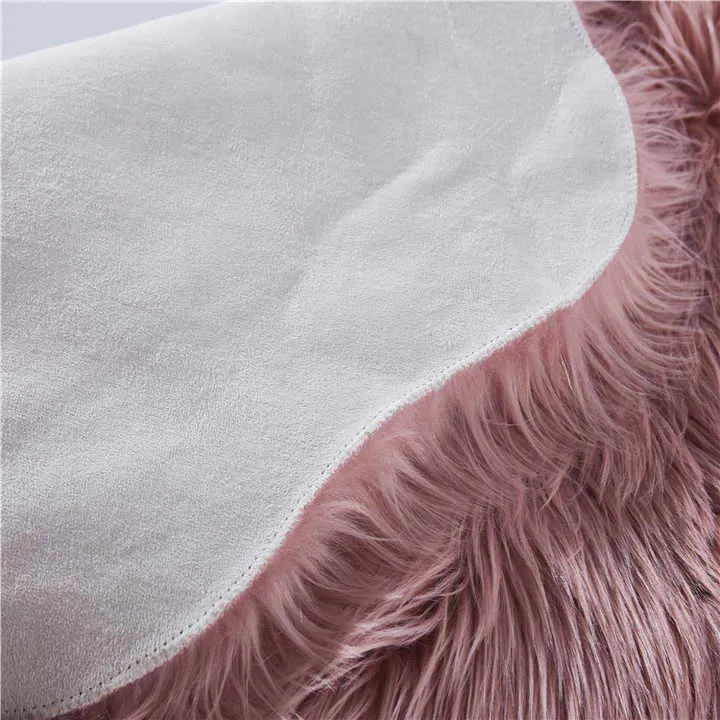
The production of big white faux fur rugs hinges on the selection of both backing materials and pile fibers. Backing materials commonly include jute, polypropylene (PP), or polyester fabrics, selected for their tensile strength, dimensional stability, and cost-effectiveness. Jute provides a natural fiber base, offering breathability but limited durability in moist environments. Polypropylene and polyester offer superior resistance to moisture, mildew, and abrasion. Pile fibers are overwhelmingly comprised of modacrylic, acrylic, or polyester microfibers. Modacrylic provides a soft, luxurious texture closely resembling real fur, exhibiting good flame retardancy and resilience, but is generally more expensive. Acrylic offers a balance of cost and aesthetic appeal, but possesses lower abrasion resistance. Polyester provides durability and stain resistance, although it can lack the inherent softness of modacrylic. The manufacturing process typically involves tufting or weaving. Tufting involves inserting fibers through a primary backing material using needles, followed by applying a secondary backing for increased structural integrity and dimensional stability. Weaving, while less common due to higher production costs, results in a denser, more durable pile. Key parameter control during manufacturing includes fiber denier (fiber thickness), pile height, stitch density, and backing material weight. Dyeing is commonly conducted using solution dyeing or piece dyeing, with solution dyeing offering superior colorfastness. The integrity of the bonding agent between the pile and backing is critical; typically, a latex-based adhesive is employed, requiring precise application and curing parameters.

Performance & Engineering
The performance of a big white faux fur rug is dictated by its ability to withstand compressive forces, resist abrasion and wear, and maintain aesthetic qualities over time. Force analysis reveals that the pile height and density directly influence the rug’s resilience and ability to recover from indentation. Higher pile heights and densities provide enhanced cushioning and a more luxurious feel, but also increase susceptibility to matting. Abrasion resistance is critical, particularly in high-traffic areas. The fiber type significantly impacts this parameter; polyester exhibiting the highest abrasion resistance, followed by acrylic and modacrylic. Environmental resistance encompasses factors such as UV degradation, moisture absorption, and stain resistance. Prolonged exposure to UV radiation can cause color fading and fiber embrittlement. Moisture absorption, particularly in jute-backed rugs, can lead to mildew growth and structural damage. Stain resistance depends on the fiber's inherent properties and any applied surface treatments. Compliance requirements often relate to flammability (meeting standards such as California Technical Bulletin 117) and VOC emissions (Volatile Organic Compounds). Functional implementation considers the rug’s intended application; high-pile rugs are often utilized for decorative purposes, whereas lower-pile, more durable rugs may be suitable for areas with higher foot traffic.
Technical Specifications
| Parameter | Unit | Typical Value (Low End) | Typical Value (High End) |
|---|---|---|---|
| Pile Height | mm | 20 | 60 |
| Pile Density | g/m² | 500 | 1500 |
| Fiber Type | - | Acrylic | Modacrylic |
| Backing Material | - | Jute | Polypropylene |
| Abrasion Resistance (Martindale Cycle) | Cycles | 5,000 | 20,000 |
| Colorfastness to Light | Grade (1-5) | 3 | 5 |
| Total Weight | kg/m² | 1.0 | 3.0 |
Failure Mode & Maintenance
Big white faux fur rugs are susceptible to several failure modes, primarily relating to wear and tear, environmental factors, and improper maintenance. Common failure modes include: 1) Pile Shedding: Loss of individual fibers due to abrasion or insufficient fiber anchoring. 2) Matting: Compaction of the pile, resulting in a flattened appearance, often caused by prolonged foot traffic. 3) Fiber Degradation: Embrittlement and discoloration of fibers due to UV exposure or chemical exposure. 4) Backing Delamination: Separation of the pile from the backing material, typically caused by adhesive failure. 5) Staining: Permanent discoloration of fibers due to spills or contaminants. 6) Mold/Mildew Growth: Development of fungal growth in jute-backed rugs exposed to moisture. Professional maintenance typically involves regular vacuuming to remove loose debris and prevent matting. Spot cleaning with a mild detergent and water is recommended for stain removal, avoiding harsh chemicals that can damage the fibers. For deeper cleaning, professional dry cleaning is advised. To mitigate failure modes, avoid direct sunlight exposure, rotate the rug periodically to distribute wear evenly, and address spills promptly. Prevention of excessive moisture exposure is crucial, particularly for rugs with jute backing. Periodic re-application of a latex-based adhesive may be necessary for rugs exhibiting signs of backing delamination.
Industry FAQ
Q: What is the primary difference between modacrylic and acrylic faux fur, and how does it impact cost and performance?
A: Modacrylic generally offers a softer, more luxurious feel and superior flame retardancy compared to acrylic. However, it’s significantly more expensive due to a more complex manufacturing process and higher raw material costs. Acrylic provides a more cost-effective solution, but exhibits lower abrasion resistance and a slightly less realistic texture. The choice depends on the desired balance between cost, aesthetics, and performance requirements.
Q: How does the backing material affect the overall lifespan and suitability of the rug for different environments?
A: The backing material significantly impacts durability and environmental suitability. Jute backing is breathable but prone to mildew in damp environments. Polypropylene and polyester backings offer superior moisture resistance, making them ideal for bathrooms or basements. A higher weight backing material generally indicates greater structural integrity and resistance to delamination.
Q: What specific testing methods are used to assess the abrasion resistance of faux fur rugs?
A: The Martindale abrasion test is the most commonly used method. This test involves subjecting the rug to repeated rubbing with an abrasive material, counting the number of cycles until significant wear or fiber breakdown occurs. Higher Martindale cycle counts indicate greater abrasion resistance. The Wyzenbeek test is another accepted method, but less frequently employed for faux fur.
Q: What are the key considerations regarding flammability standards for faux fur rugs intended for use in residential settings?
A: Compliance with flammability standards is paramount. In the United States, California Technical Bulletin 117 is a critical requirement, specifying acceptable levels of flame spread and smolder resistance. Similar standards exist in other regions, such as the BS 5867 Part 2 in the UK and EN 13501-1 in Europe. The fiber composition significantly influences flammability; modacrylic generally exhibits better flame retardancy than acrylic.
Q: What preventative measures can be taken to minimize pile matting and maintain the rug’s aesthetic appearance?
A: Regular vacuuming, preferably with a rotating brush attachment, is the most effective preventative measure. Avoid placing heavy furniture directly on the rug for prolonged periods. Rotate the rug periodically to distribute wear evenly. Promptly address spills to prevent staining and fiber damage. Consider using a rug pad to provide cushioning and reduce compression.
Conclusion
Big white faux fur rugs represent a sophisticated intersection of textile engineering and aesthetic design. Their performance characteristics are intrinsically linked to the selection of materials – from the backing providing structural integrity to the meticulously crafted synthetic pile fibers delivering the desired texture and appearance. Understanding the nuances of fiber properties, manufacturing processes, and potential failure modes is crucial for ensuring product durability and customer satisfaction.
Future developments in this sector are likely to focus on enhancing the sustainability of synthetic materials, improving abrasion resistance, and developing more effective stain-resistant treatments. Continued research into novel fiber technologies and adhesive bonding agents will also contribute to improved performance and longevity. Ultimately, the success of big white faux fur rugs relies on maintaining a balance between aesthetic appeal, functional performance, and responsible manufacturing practices.