

blue faux fur area rug Performance Analysis
Introduction
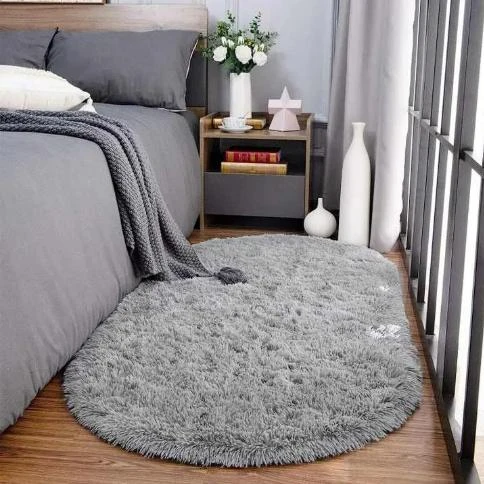
Blue faux fur area rugs represent a segment within the broader decorative textile industry, positioned as an accessible alternative to genuine animal fur. These rugs are primarily constructed for residential and light commercial applications, focusing on aesthetics and tactile comfort. Their market position is defined by cost-effectiveness, ease of maintenance, and ethical considerations – addressing the growing consumer demand for cruelty-free products. The core performance characteristics revolve around providing a soft, visually appealing surface covering, offering thermal insulation, and contributing to interior acoustic dampening. The rug's value proposition lies in replicating the luxurious feel of fur without the associated environmental and ethical concerns, catering to a consumer base prioritizing both style and responsible purchasing.
Material Science & Manufacturing
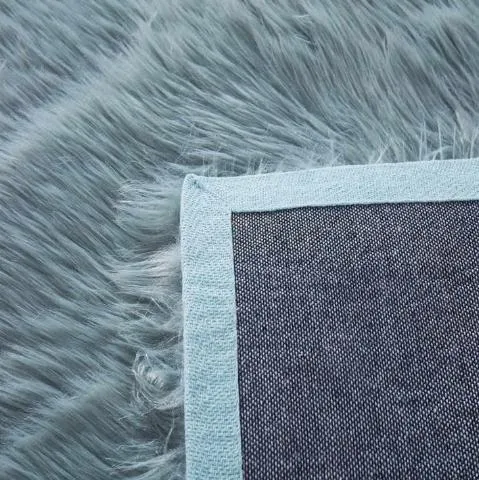
The foundational material of blue faux fur rugs is typically a blend of polyester and acrylic fibers, chosen for their ability to mimic the texture and sheen of animal fur. Polyester provides durability and resilience to abrasion, while acrylic contributes to the plushness and color retention. The base construction usually involves a woven or knitted backing material, commonly polypropylene or jute, offering structural integrity and dimensional stability. Manufacturing begins with the extrusion of the polyester and acrylic polymers. These are then processed into microfibers, often utilizing a split-fiber technology to increase surface area and enhance the tactile softness. The fibers are dyed using specialized chemical dyes to achieve the desired blue hue – colorfastness is critical, necessitating the use of high-quality, reactive dyes. The fur-like texture is created through a cut-pile weaving or knitting process. Cut-pile construction involves looping the fibers through the backing and then shearing them to create a dense, uniform surface. Key parameter control includes fiber denier (fineness), pile height, and fiber density. Maintaining consistent fiber density is crucial for uniform appearance and performance. Quality control measures assess dye penetration, fiber shedding, and dimensional accuracy throughout the manufacturing process. The backing is then adhered to the fiber surface using a latex or polyurethane adhesive, ensuring a secure and lasting bond.
Performance & Engineering
Performance assessment of blue faux fur area rugs centers on several key engineering considerations. First is pile resilience – the ability of the fibers to recover their original shape after compression. This is directly related to fiber denier and the density of the pile. Force analysis determines the load-bearing capacity of the rug and its resistance to indentation. Environmental resistance is paramount, specifically concerning UV stability and resistance to moisture. Prolonged exposure to ultraviolet radiation can cause color fading and fiber degradation. Acrylic fibers are more susceptible to UV damage than polyester, necessitating the addition of UV stabilizers during the manufacturing process. Moisture resistance is critical to prevent mildew and odor development. The inherent hydrophobic nature of polyester and acrylic provides a degree of protection, but the backing material (particularly jute) is vulnerable to moisture absorption. Therefore, backing treatments are often applied to enhance water repellency. Compliance requirements often involve flammability testing (meeting standards like California Proposition 69) and VOC emission standards (such as CARB Phase 2). The rug's thermal insulation properties are determined by its pile height and density, contributing to energy conservation by reducing heat loss from floors. Finally, consideration must be given to the rug’s slip resistance, either through a latex backing or the addition of a non-slip underlayment to prevent accidental falls.
Technical Specifications
| Parameter | Unit | Typical Value | Test Method |
|---|---|---|---|
| Pile Height | mm | 30-50 | ASTM D388 |
| Pile Density | grams/m² | 800-1500 | ISO 23939 |
| Fiber Composition | % | Polyester 80%, Acrylic 20% | FTIR Spectroscopy |
| Tensile Strength (Warp/Weft) | N/50mm | 200/150 | ASTM D5035 |
| Colorfastness to Light | Grade | 4-5 | ISO 105-B02 |
| Water Absorption | % | < 0.5 | AATCC 118 |
Failure Mode & Maintenance
Blue faux fur area rugs are susceptible to several failure modes. Fiber shedding is a common occurrence, particularly during initial use, resulting from loose fibers not fully embedded in the backing. This is exacerbated by high-traffic areas. Pile crushing, or a reduction in pile height, occurs due to repeated compression, leading to a flattened appearance. This is more pronounced with lower-density piles. Color fading is a significant concern, primarily caused by prolonged UV exposure, resulting in a dulling of the blue hue. Delamination, the separation of the pile from the backing, can occur due to adhesive failure, often induced by high humidity or excessive cleaning. Oxidation of the acrylic fibers can lead to embrittlement and cracking, especially in areas exposed to pollutants. Maintenance is crucial to extend the lifespan of the rug. Regular vacuuming (using a suction-only nozzle) is essential to remove loose debris and prevent fiber matting. Spot cleaning with a mild detergent and water is recommended for spills. Avoid harsh chemicals or abrasive cleaners, as these can damage the fibers. Professional cleaning is advisable every 12-18 months. To mitigate UV damage, consider rotating the rug periodically or using window coverings to reduce direct sunlight exposure. Avoid prolonged exposure to high humidity environments to prevent delamination and mildew growth.
Industry FAQ
Q: What is the expected lifespan of a blue faux fur area rug under moderate residential use?
A: Under moderate residential use (typical foot traffic, regular vacuuming, and occasional spot cleaning), a well-constructed blue faux fur area rug can be expected to maintain its aesthetic and functional properties for 5-7 years. However, lifespan is significantly affected by the quality of materials, pile density, and adherence to recommended maintenance practices.
Q: How does the backing material impact the rug's overall performance and durability?
A: The backing material provides structural support and dimensional stability. Polypropylene offers good moisture resistance and durability, while jute is more breathable but susceptible to moisture damage. A robust backing is critical to prevent delamination and maintain the rug's shape. Latex or polyurethane adhesives used to bond the pile to the backing also play a crucial role in long-term durability.
Q: What are the key differences between polyester and acrylic fibers in terms of performance characteristics?
A: Polyester generally offers superior durability, abrasion resistance, and UV stability compared to acrylic. Acrylic provides a softer, more plush feel and better color retention. A blend of both materials leverages the strengths of each, providing a balance of performance and aesthetics.
Q: Are there any flammability concerns associated with faux fur rugs, and what standards should be considered?
A: Faux fur rugs, being synthetic textiles, are inherently flammable. It's crucial to ensure the rug meets relevant flammability standards, such as California Proposition 69, which regulates the flammability of carpeting and rugs. Fire retardant treatments can be applied, but their effectiveness and longevity should be verified.
Q: How can I minimize shedding in a new blue faux fur rug?
A: Initial shedding is common in new faux fur rugs. Regular vacuuming (using a suction-only nozzle) for the first few weeks helps remove loose fibers. Avoid excessive agitation during cleaning. A rug pad can also help stabilize the fibers and reduce shedding over time.
Conclusion
Blue faux fur area rugs offer a compelling combination of aesthetic appeal, affordability, and ethical considerations. Their performance is dictated by the careful selection of materials – primarily polyester and acrylic – and the precision of the manufacturing processes employed. Understanding the key performance indicators, such as pile resilience, colorfastness, and resistance to environmental factors, is essential for evaluating product quality and longevity.
Proper maintenance, including regular vacuuming, spot cleaning, and UV protection, is paramount to maximizing the lifespan of these rugs. As consumer demand for sustainable and cruelty-free products continues to grow, blue faux fur area rugs are poised to remain a significant segment within the decorative textile market, with future innovations likely focusing on enhanced fiber technologies and improved manufacturing techniques to address existing limitations regarding shedding and durability.