

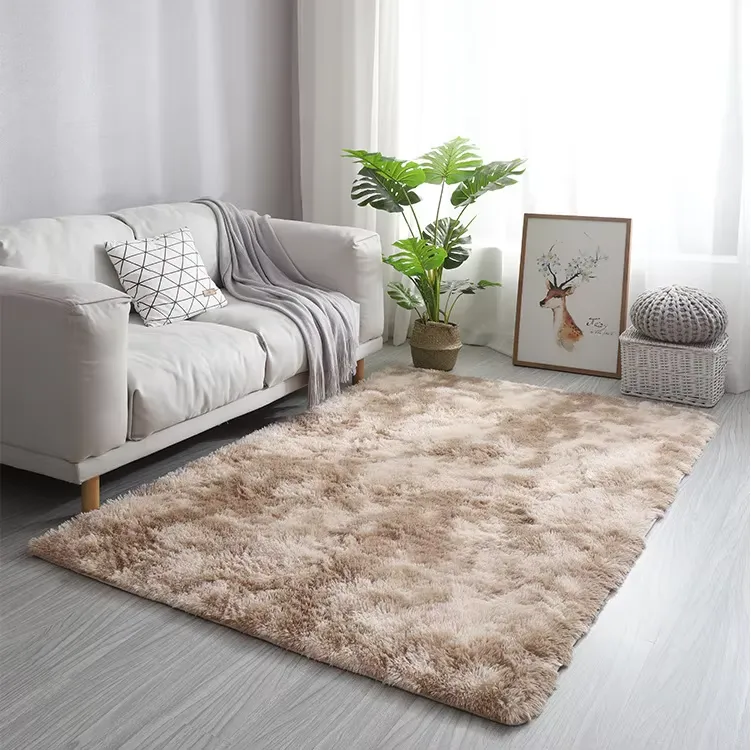
cream faux rug Performance Analysis

Introduction
Cream faux rugs represent a significant segment within the broader floor covering industry, serving as a cost-effective and aesthetically versatile alternative to natural fiber rugs. Technically positioned as a textile product utilizing synthetic polymers, these rugs function primarily to provide thermal insulation, acoustic dampening, and decorative surface covering. Their core performance characteristics revolve around simulated texture, durability, ease of maintenance, and resistance to staining and fading. Increasing demand stems from applications in residential and light commercial settings where aesthetic appeal and practicality are paramount. Key industry challenges include balancing cost with longevity, achieving realistic tactile qualities, and mitigating environmental impact associated with plastic-based materials.
Material Science & Manufacturing
The primary raw material for cream faux rugs is typically polypropylene (PP), often in the form of heat-set, bulked continuous filament (BCF) yarn. Polypropylene is chosen for its inherent stain resistance, low moisture absorption, and cost-effectiveness. Polyester is also utilized, offering a softer hand feel and better resilience, although at a higher cost. The physical properties of polypropylene include a density of approximately 0.91 g/cm³, a tensile strength ranging from 25-45 MPa, and a melting point of 160-170°C. Manufacturing begins with polymer extrusion and yarn formation via spunbond or meltblown processes. These yarns undergo texturing to enhance bulk and simulate the appearance of natural fibers. The rug construction itself utilizes several methods: tufting is the most prevalent, involving insertion of yarns into a primary backing material (typically polypropylene or jute). Loop pile, cut pile, and cut-and-loop pile constructions are common, influencing the rug’s texture and aesthetic. A secondary backing, often latex or polyurethane foam, is then applied to provide stability, cushioning, and further enhance durability. Critical parameter control involves maintaining consistent yarn denier, precise tufting density, uniform latex application weight, and controlled curing temperatures to ensure dimensional stability and prevent delamination. Dyeing is often achieved through solution dyeing (adding pigment during polymer extrusion) or post-extrusion dyeing, influencing colorfastness.
Performance & Engineering
The performance of cream faux rugs is largely governed by their resistance to wear, compression set, and environmental factors. Force analysis focuses on assessing the pile’s resilience – its ability to recover from compression – and the rug’s tensile strength, which dictates resistance to tearing. Pile weight (grams per square meter – GSM) directly influences durability and perceived luxury. Environmental resistance is paramount, particularly UV resistance to prevent fading, and resistance to common household chemicals and cleaning agents. Compliance requirements include flammability standards (such as passing the pill test), VOC emissions limits (to ensure indoor air quality – California Section 01350 is a common benchmark), and lead content regulations (RoHS compliance). Engineered performance aspects include the design of the pile construction to maximize foot traffic durability. For example, multi-level pile constructions and patterned designs can camouflage wear and tear. Backing material selection influences slip resistance (measured via the ASTM D2047 standard) and overall stability. The rug’s dimensional stability, measured by changes in length and width after washing, is crucial for preventing buckling or shrinkage. Furthermore, the colorfastness to light is tested according to ISO 105-B02.
Technical Specifications
| Parameter | Unit | Typical Value (Low End) | Typical Value (High End) |
|---|---|---|---|
| Pile Material | - | Polypropylene | Polyester |
| Pile Height | mm | 8 | 15 |
| Pile Weight | g/m² | 800 | 1800 |
| Total Weight | kg/m² | 1.2 | 2.5 |
| Tensile Strength (Warp) | N/5cm | 150 | 300 |
| Tensile Strength (Weft) | N/5cm | 150 | 300 |
| UV Resistance | Hours to 50% Shade Change | 200 | 1000 |
Failure Mode & Maintenance
Common failure modes for cream faux rugs include pile crushing (reduction in pile height due to repeated compression), delamination (separation of the primary and secondary backings), fiber shedding (loss of pile fibers), and color fading due to UV exposure. Fatigue cracking can occur in high-traffic areas, particularly at the edges of the rug. Oxidation of the polypropylene fibers can lead to brittleness and discoloration over extended periods. Staining, although generally resistant, can occur from oil-based substances or strong dyes. Maintenance is critical for extending the rug’s lifespan. Regular vacuuming (avoiding beater bars) removes abrasive particles that contribute to wear. Spot cleaning with a mild detergent and water is recommended for spills. Professional cleaning (hot water extraction) every 12-18 months can revitalize the pile and remove embedded dirt. To mitigate delamination, avoid excessive moisture exposure and ensure proper ventilation underneath the rug. UV protection can be enhanced by rotating the rug periodically and limiting direct sunlight exposure. Addressing failure proactively through timely cleaning and repair can significantly extend the functional life of the product.
Industry FAQ
Q: What is the impact of different backing materials on the longevity of a cream faux rug?
A: Backing materials significantly influence longevity. Latex backings are cost-effective but prone to cracking and disintegration over time, leading to delamination. Polyurethane foam backings offer superior durability, resilience, and moisture resistance, extending the rug’s lifespan. Jute backings, while biodegradable, are susceptible to moisture damage and insect infestation. The choice depends on the intended application and budget constraints.
Q: How does solution dyeing compare to post-extrusion dyeing in terms of colorfastness for polypropylene rugs?
A: Solution dyeing offers significantly superior colorfastness. The pigment is incorporated into the polymer melt before fiber formation, resulting in color that is intrinsic to the fiber itself. Post-extrusion dyeing involves applying dye to the finished yarn, which can fade over time with exposure to light and washing. Solution-dyed rugs exhibit excellent resistance to fading and bleaching.
Q: What are the key considerations when selecting a pile height for a high-traffic area?
A: Lower pile heights (8-10mm) generally perform better in high-traffic areas. They offer greater durability and resistance to crushing. Higher pile heights (12-15mm) provide a more luxurious feel but are more susceptible to matting and wear. Cut-and-loop pile constructions can offer a compromise, providing both durability and aesthetic appeal.
Q: What VOC emissions standards are commonly applied to faux rug manufacturing?
A: Several VOC emissions standards are relevant. California Section 01350 is a widely recognized benchmark, limiting emissions of volatile organic compounds. Green Label Plus certification (from the Carpet and Rug Institute) provides independent verification of low VOC emissions. European standards such as EN 16886 also address VOC emissions in flooring products.
Q: How can I assess the quality of the polypropylene yarn used in a faux rug?
A: Assessing yarn quality involves considering denier (fiber thickness – higher denier generally indicates greater durability), tenacity (tensile strength of the yarn), and uniformity. A consistent yarn structure, free from defects, is crucial. The presence of UV stabilizers in the polypropylene polymer is also an indicator of quality, ensuring resistance to fading.
Conclusion
Cream faux rugs represent a balance between aesthetic appeal, cost-effectiveness, and practical performance. Their manufacturing relies heavily on polypropylene and polyester fibers, carefully processed through tufting and backing techniques to achieve desired texture and durability. Understanding the interplay between material properties, construction methods, and environmental factors is critical for selecting a rug that meets specific application requirements and longevity expectations.
Future development in this area will likely focus on incorporating recycled materials, improving UV resistance through advanced polymer additives, and developing more sustainable backing materials. Continued refinement of manufacturing processes will also be essential for reducing production costs and minimizing environmental impact. The ability to consistently deliver high-quality, durable, and aesthetically pleasing faux rugs will be a key differentiator in a competitive market.