

dusky pink faux fur rug Performance Analysis
Introduction
Dusky pink faux fur rugs represent a significant segment within the broader decorative textile industry, serving as a consumer product bridging interior design and tactile comfort. These rugs are not inherently structural components in a building or engineering sense, but their manufacture and performance characteristics are governed by material science, fiber engineering, and increasingly, sustainability considerations. Positioned within the floor covering supply chain, they compete with natural fiber rugs (wool, cotton) and other synthetic options (polypropylene, nylon). Core performance attributes center around aesthetic appeal, perceived softness, durability against wear, ease of cleaning, and resistance to shedding. The market demand is driven by affordability, trend-driven color palettes (dusky pink being a current popular choice), and a desire for non-shedding, hypoallergenic alternatives to natural animal furs. This guide provides a detailed technical overview of these rugs, focusing on materials, manufacturing, performance, potential failure modes, and relevant industry standards.
Material Science & Manufacturing
The dominant material in dusky pink faux fur rugs is typically 100% polyester, though acrylic variations also exist. Polyester is chosen for its cost-effectiveness, ability to be dyed in vibrant colors (including the desired dusky pink shades), and inherent resistance to mildew and moths. The raw material, polyethylene terephthalate (PET), is derived from petroleum refining. Manufacturing begins with the polymerization of ethylene glycol and terephthalic acid to form polyester polymers. These polymers are then extruded into fibers, commonly using melt spinning. Fiber denier (fineness) is a critical parameter, typically ranging from 500 to 1500 denier for faux fur applications, influencing the softness and pile height. The manufacturing process distinguishes itself through the “needling” or “tufting” stage. In needling, barbed needles interlock the polyester fibers to create a non-woven fabric. Tufting involves inserting loops of yarn into a primary backing material, followed by coating with a secondary latex adhesive to secure the pile. Pile height significantly impacts aesthetics and comfort; typical ranges are 20mm to 60mm. The 'dusky pink' coloration is achieved through mass pigmentation during the polymer extrusion process or through subsequent dyeing of the fibers. Quality control during manufacturing focuses on fiber uniformity, dye lot consistency, and the secure anchoring of the pile fibers to the backing. Backing materials commonly employed are jute, polypropylene, or latex foam, impacting rug stability and slip resistance. Proper parameter control during extrusion (temperature, speed) and tufting/needling (needle density, stitch rate) are paramount to achieving a consistent and durable product.
Performance & Engineering
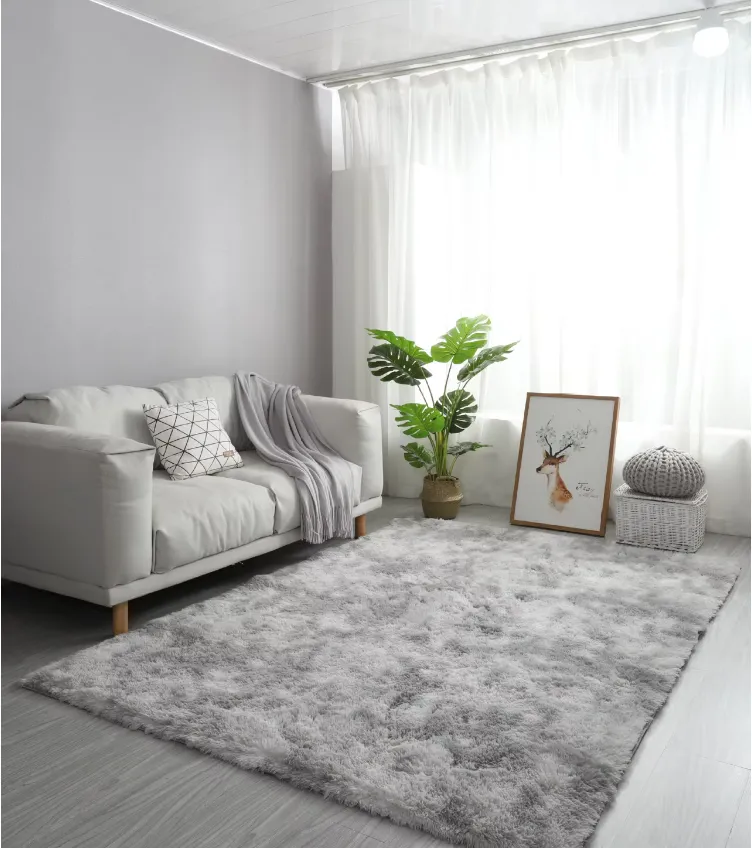
The performance of a dusky pink faux fur rug is fundamentally dictated by its ability to withstand compressive forces (foot traffic), tensile stresses (pulling or snagging), and environmental factors (UV exposure, temperature fluctuations, cleaning agents). Force analysis reveals that the load distribution is uneven, with concentrated stress points at frequently walked areas. The backing material plays a crucial role in distributing this load and preventing pile deformation. Environmental resistance primarily concerns colorfastness to light (UV degradation of the dye), and resistance to common household spills (water, coffee, wine). Polyester exhibits relatively good UV resistance compared to other polymers, but prolonged exposure will inevitably lead to fading. The rug’s performance concerning slip resistance is a safety consideration, often addressed by incorporating a latex or rubberized backing. Compliance requirements relate primarily to flammability (meeting standards for residential floor coverings) and the absence of harmful chemicals (phthalates, formaldehyde). Functional implementation involves considerations regarding rug size, shape, and intended placement. Larger rugs require more robust backing materials to prevent curling or buckling. The pile direction also influences aesthetics and the perceived texture underfoot. Tensile strength testing (ASTM D4157) measures the force required to break the fabric, while compression set testing (ASTM D395) assesses its ability to recover from deformation. The resilience of the fibers determines how well the rug maintains its pile height and appearance over time.
Technical Specifications
| Parameter | Unit | Typical Value | Test Method |
|---|---|---|---|
| Pile Material | - | 100% Polyester | Visual Inspection |
| Fiber Denier | Denier | 800-1200 | ASTM D1577 |
| Pile Height | mm | 30-50 | Visual Measurement |
| Backing Material | - | Jute/Latex/Polypropylene | Visual Inspection |
| Overall Thickness | mm | 10-20 | ASTM D1797 |
| Weight | g/m² | 800-1500 | ASTM D3841 |
Failure Mode & Maintenance
Dusky pink faux fur rugs are susceptible to several failure modes. The most common is pile shedding, resulting from fiber breakage and detachment from the backing. This is accelerated by high traffic areas and abrasive cleaning methods. Another potential failure is matting or crushing of the pile, reducing the rug's aesthetic appeal and comfort. This is caused by prolonged compressive forces. Color fading, stemming from UV exposure, is a gradual degradation impacting the rug’s appearance. Delamination of the backing material occurs when the adhesive bond weakens, leading to separation of the pile from the backing. This is often linked to humidity fluctuations and improper storage. Oxidation of the polyester fibers, while slow, can occur over extended periods, leading to brittleness and reduced flexibility. Maintenance recommendations focus on regular vacuuming (using a brush attachment to avoid excessive suction), spot cleaning with mild detergent and water, and avoiding harsh chemicals or abrasive cleaners. Professional cleaning is recommended annually. To mitigate shedding, avoid excessive rubbing or scrubbing. Protecting the rug from direct sunlight minimizes color fading. Promptly addressing spills prevents staining and reduces the risk of fiber degradation. Proper storage in a dry, well-ventilated area prevents mildew growth and delamination. Repairing minor delamination with rug adhesive can extend the rug’s lifespan.
Industry FAQ
Q: What is the difference between polyester and acrylic faux fur rugs in terms of durability?
A: Polyester generally exhibits superior abrasion resistance and tensile strength compared to acrylic. Acrylic fibers tend to pill more readily and are more susceptible to damage from snagging. While acrylic offers a softer initial feel, polyester maintains its shape and pile integrity better over time, leading to longer overall durability.
Q: How does the backing material impact the rug’s performance?
A: The backing material significantly influences the rug's stability, slip resistance, and overall durability. Jute provides a natural, breathable backing but can be susceptible to moisture damage. Latex offers good grip and cushioning but may degrade over time. Polypropylene is a synthetic option providing excellent moisture resistance and dimensional stability.
Q: What is the significance of fiber denier in faux fur rugs?
A: Fiber denier directly correlates with the softness and pile height of the rug. Lower denier fibers (finer) contribute to a softer, more luxurious feel, but they are typically less durable. Higher denier fibers are more robust but may feel slightly coarser. The optimal denier depends on the intended application and desired aesthetic.
Q: What are the flammability requirements for residential floor coverings?
A: Residential floor coverings must meet specific flammability standards, typically outlined in regulations such as the Federal Flammability Standard DOC-FF1-70 or equivalent regional standards. These standards assess the rug’s resistance to ignition and the rate at which flames spread across the surface.
Q: How can I prevent color fading in my dusky pink faux fur rug?
A: Minimizing exposure to direct sunlight is the most effective preventative measure. Use curtains or blinds to filter sunlight, and avoid placing the rug in areas with prolonged direct exposure. Regular rotation of the rug can also help distribute UV exposure more evenly. Using a UV protectant spray, although potentially altering texture, can offer added protection.
Conclusion
Dusky pink faux fur rugs, while primarily aesthetic products, demand careful consideration of material science and manufacturing processes to ensure acceptable performance and longevity. Polyester remains the dominant fiber choice due to its balance of cost, durability, and dyeability. The rug’s performance hinges on the interplay between pile height, fiber denier, backing material, and adherence to relevant safety and environmental standards. Understanding potential failure modes—shedding, matting, fading, and delamination—is crucial for implementing effective maintenance practices and maximizing the rug’s lifespan.
Future development in this sector is likely to focus on sustainable materials, such as recycled polyester or bio-based polymers, and improved manufacturing techniques to reduce waste and enhance durability. Innovations in backing materials offering superior slip resistance and moisture barrier properties are also anticipated. Further research into dye technologies to improve colorfastness and reduce environmental impact will be essential for meeting evolving consumer demands and regulatory requirements.