

dusty rose faux fur rug Performance Analysis

Introduction
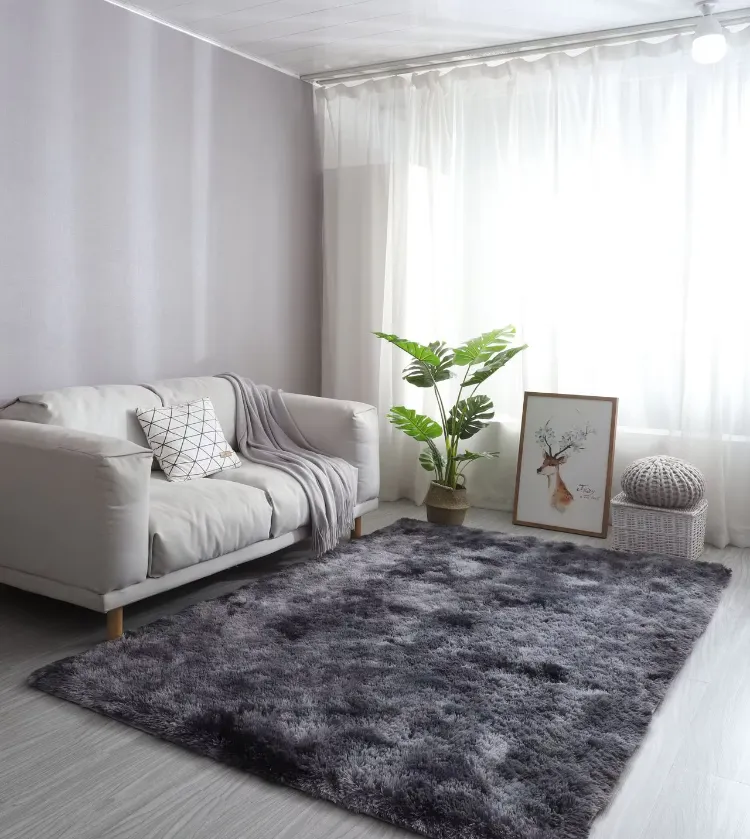
Dusty rose faux fur rugs represent a significant segment within the broader synthetic floor covering market, positioned as an accessible and aesthetically versatile alternative to natural animal hides. These rugs are constructed from synthetic fibers engineered to mimic the texture and appearance of fur, offering a soft, luxurious feel without the ethical and cost implications associated with genuine fur. Their technical positioning falls between low-cost, durable polypropylene rugs and the higher-end, often specialized, natural fiber rugs. Core performance characteristics revolve around pile height, density, fiber composition, backing material, and the aesthetic consistency of the color and texture. A key driver in the industry is achieving a convincing tactile experience alongside robustness against abrasion and consistent colorfastness. The primary pain point for manufacturers and consumers alike centers on durability – minimizing shedding and maintaining softness over prolonged use – and ensuring that the manufacturing process adheres to increasingly stringent environmental regulations regarding volatile organic compound (VOC) emissions and material sourcing.
Material Science & Manufacturing
The primary raw material for dusty rose faux fur rugs is typically polyester, often in the form of Polyethylene Terephthalate (PET). PET possesses good inherent softness, dyeability, and resilience, making it suitable for mimicking fur. Acrylic fibers are also utilized, prized for their wool-like feel but generally exhibiting lower abrasion resistance than polyester. The “dusty rose” coloration is achieved through mass pigmentation of the polymer during extrusion or through dyeing after fiber formation. Manufacturing commences with polymer production, followed by fiber extrusion. The extruded fibers are then cut to a specific length, often ranging from 30mm to 60mm to emulate fur. Critical parameters at this stage include fiber denier (thickness – typically 6-12 denier for softness) and crimp frequency (influencing pile loft and texture). Next is the tufting or weaving process. Tufting involves inserting the fibers into a primary backing material, typically polypropylene or jute. Weaving creates a more durable, interlocked structure but is generally more expensive. The rug then undergoes a shearing process to achieve a uniform pile height and density. Latex or polyurethane foam is commonly applied to the backing to provide cushioning and structural integrity. Finally, a secondary backing fabric, such as felt or non-woven polyester, is laminated to the foam layer for enhanced durability and dimensional stability. Maintaining consistent tension during tufting and precise control over shearing height are paramount to prevent uneven pile and shedding. Chemical compatibility between the fiber, backing, and adhesives is also crucial to avoid delamination and material degradation over time.
Performance & Engineering
Performance analysis of dusty rose faux fur rugs necessitates consideration of several key engineering factors. Abrasion resistance, measured via the Wyzenbeek test (ASTM D4157), determines the rug’s ability to withstand foot traffic and maintain pile integrity. A typical value for acceptable quality would be >500 cycles for residential use. Tensile strength of the fiber itself (ASTM D2256) is critical to resisting pulling and tearing; polyester fibers typically exhibit tensile strengths of 60-80 MPa. Pile density (mass per unit area, g/m²) directly impacts the perceived softness and luxury; higher density generally correlates with improved comfort. Environmental resistance is evaluated through colorfastness to light (AATCC 163) and wash fastness (AATCC 61). Dusty rose colorants are prone to fading under prolonged UV exposure, thus requiring UV stabilizers in the fiber formulation. Moisture absorption is a consideration; while polyester is hydrophobic, the backing material can absorb moisture, potentially leading to mold growth. Compliance requirements include adherence to flammability standards (e.g., California Proposition 65 regarding VOC emissions, EN 13501-1 for fire classification). Force analysis during manufacturing must account for the tensile loads applied during tufting and weaving to prevent fiber breakage and ensure consistent pile density. The backing material’s compression set is also important, as excessive compression can reduce cushioning and contribute to premature wear.
Technical Specifications
| Parameter | Unit | Typical Value (Range) | Test Method |
|---|---|---|---|
| Fiber Material | - | Polyester (PET) | Fiber Composition Analysis |
| Pile Height | mm | 30-60 | Visual Inspection / Ruler Measurement |
| Pile Density | g/m² | 800-1500 | ASTM D3891 |
| Fiber Denier | - | 6-12 | Microscopic Fiber Analysis |
| Abrasion Resistance (Wyzenbeek) | Cycles | >500 (Residential) | ASTM D4157 |
| Colorfastness to Light | Rating (1-5) | 4-5 (Grey Scale) | AATCC 163 |
Failure Mode & Maintenance
The most common failure modes for dusty rose faux fur rugs are shedding, matting, and color fading. Shedding occurs due to insufficient fiber locking during tufting or weaving, exacerbated by abrasion. Microscopic analysis often reveals broken fiber ends and weak adhesion to the backing. Matting arises from the collapse of the pile structure under sustained compression, reducing the rug's loft and softness. This is often linked to low pile density or inadequate backing support. Color fading is primarily caused by UV degradation of the dye molecules; the dusty rose hue is particularly susceptible. Other failure mechanisms include delamination of the backing layers due to adhesive failure, and fiber degradation from prolonged exposure to humidity and temperature fluctuations. Preventative maintenance includes regular vacuuming (using a suction-only nozzle to minimize fiber pull), avoiding direct sunlight exposure, and promptly addressing spills to prevent staining and fiber damage. Professional cleaning is recommended annually, utilizing a dry cleaning method to avoid excessive moisture absorption. For minor shedding, a gentle brushing can help realign the fibers. In cases of significant delamination, localized re-adhesion with a suitable polymer adhesive may provide a temporary solution, but complete replacement is often the most effective long-term remedy.
Industry FAQ
Q: What is the primary difference between polyester and acrylic faux fur rugs in terms of durability?
A: Polyester generally exhibits superior abrasion resistance and tensile strength compared to acrylic fibers. While acrylic offers a softer, wool-like feel, it is more prone to pilling, shedding, and fiber breakage under repeated use. Polyester maintains its structural integrity better over time, making it a more durable choice for high-traffic areas.
Q: How can the colorfastness of a dusty rose faux fur rug be improved?
A: Enhancing colorfastness involves utilizing UV-resistant dyes during fiber production and incorporating UV stabilizers into the polymer formulation. Applying a protective coating to the finished rug can also mitigate UV degradation. The choice of dye also plays a role; reactive dyes generally offer better colorfastness than direct dyes.
Q: What backing materials provide the best dimensional stability and prevent shrinkage?
A: Polypropylene and non-woven polyester backings are preferred for their excellent dimensional stability and resistance to shrinkage. Jute, while a more natural option, is prone to moisture absorption and dimensional changes. Latex foam provides cushioning but can degrade over time, contributing to backing instability.
Q: What are the environmental concerns associated with faux fur rug production and how are manufacturers addressing them?
A: Environmental concerns primarily revolve around VOC emissions during manufacturing, the use of petroleum-based polymers, and waste generation. Manufacturers are increasingly adopting water-based adhesives, utilizing recycled PET fibers, and implementing closed-loop manufacturing processes to minimize waste and reduce their carbon footprint. Compliance with standards like Oeko-Tex Standard 100 is also becoming more prevalent.
Q: How does pile density affect the perceived comfort and longevity of the rug?
A: Higher pile density generally translates to a softer, more luxurious feel underfoot. It also enhances the rug's ability to retain its shape and resist matting over time. However, excessively high pile density can increase manufacturing costs and potentially reduce breathability. An optimal range of 800-1500 g/m² typically balances comfort and durability.
Conclusion
Dusty rose faux fur rugs represent a compromise between aesthetic appeal, affordability, and practicality. Their performance is heavily influenced by the selection of raw materials – primarily polyester or acrylic – and the precision of the manufacturing process. Ensuring adequate fiber locking during tufting or weaving, utilizing UV-resistant colorants, and employing dimensionally stable backing materials are all crucial for maximizing durability and longevity. Addressing environmental concerns through sustainable material sourcing and reduced VOC emissions is also becoming increasingly important within the industry.
Looking ahead, advancements in fiber technology, such as the development of bio-based polymers and improved dye fixation techniques, will likely further enhance the performance and sustainability of these products. Continued research into alternative backing materials and innovative tufting methods will also contribute to increased durability and reduced manufacturing costs. The core challenge remains striking a balance between achieving a luxurious tactile experience and maintaining long-term structural integrity in a cost-effective and environmentally responsible manner.