

fake fur throw rug Performance Analysis

Introduction
Fake fur throw rugs represent a significant segment within the broader home textile industry, functioning as both decorative and functional elements. Primarily composed of synthetic fibers mimicking animal fur, these rugs offer an aesthetic alternative to genuine fur, addressing ethical concerns and offering increased affordability. Technically, they bridge the gap between conventional woven rugs and specialized upholstery fabrics. Their position in the value chain encompasses fiber production (typically acrylic or polyester), yarn extrusion, knitting or weaving processes, dyeing, finishing, and finally, assembly into the finished throw rug product. Core performance characteristics revolve around tactile softness, thermal insulation, aesthetic appeal, and durability against common household wear. The industry is increasingly focused on improving the realism of the fur texture, enhancing stain resistance, and incorporating sustainable manufacturing practices to reduce environmental impact.
Material Science & Manufacturing
The predominant raw materials for fake fur throw rugs are acrylic and polyester fibers. Acrylic fibers (polyacrylonitrile) are favored for their wool-like feel and excellent bulk, achieved through copolymerization and crimping during manufacturing. Polyester, particularly microdenier polyester, offers superior resilience, stain resistance, and colorfastness. The manufacturing process begins with polymer synthesis. For acrylic, acrylonitrile monomer undergoes polymerization, typically emulsion or suspension polymerization. Polyester is produced via esterification of ethylene glycol and terephthalic acid. These polymers are then extruded into fibers using melt spinning, controlling parameters such as spinneret size, cooling rate, and draw ratio to dictate fiber diameter and tenacity. The fibers are then processed into yarns using various techniques – bulk continuous filament (BCF) for increased loft and textured yarns for enhanced realism. The rug construction typically employs either knitting (e.g., pile knitting) or weaving (e.g., tufting) to create the fur pile. Critical parameters during knitting/weaving include stitch density, pile height, and gauge. Dyeing is usually performed at the yarn stage using disperse dyes for polyester and basic dyes for acrylic, ensuring penetration and color uniformity. Finishing treatments, like brushing and shearing, are applied to achieve the desired fur appearance and hand-feel. Backing materials, typically jute or polypropylene, provide structural integrity and prevent slippage. Quality control focuses on fiber denier, yarn strength, pile density, colorfastness, and dimensional stability.
Performance & Engineering
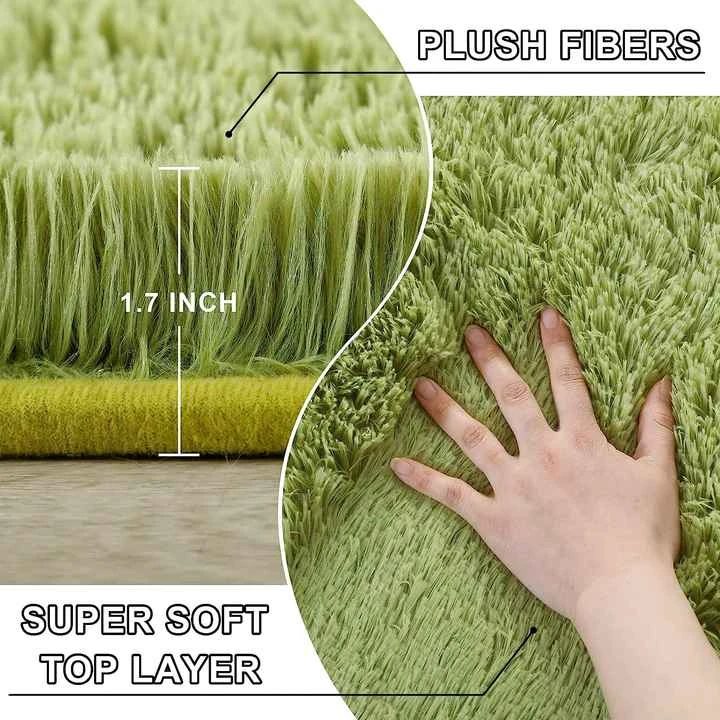
Performance of fake fur throw rugs is multifaceted. Thermal insulation is primarily governed by the fiber density and pile height. Higher pile heights trap more air, enhancing thermal resistance (measured in R-value or Tog rating). Mechanical properties are critical; abrasion resistance dictates durability under foot traffic. Testing involves the Taber Abraser method, quantifying wear based on weight loss. Tensile strength, particularly of the backing material, determines resistance to tearing. Fire resistance is a paramount safety concern. Fake fur, being synthetic, is generally flammable. Treatments with fire retardants (typically halogenated compounds or phosphorus-based chemicals) are employed to meet flammability standards (e.g., California Proposition 65). Environmental resistance involves assessing colorfastness to light (using Xenon arc lamps) and resistance to common household chemicals (stain testing using standardized solutions). Dimensional stability, particularly after washing, is crucial to prevent shrinkage or distortion. This is evaluated through washing cycles adhering to ISO 6330 standards. Compliance requirements necessitate adherence to flammability regulations, VOC emission limits (e.g., OEKO-TEX Standard 100), and labeling requirements regarding fiber content and care instructions. The pile density and fiber type also contribute to the rug’s ability to resist matting and maintain its appearance over time.
Technical Specifications
| Fiber Type | Pile Height (mm) | Pile Density (grams/m²) | Backing Material | Flammability (Pass/Fail - Standard Test) | Abrasion Resistance (Taber Cycles to 3% weight loss) |
|---|---|---|---|---|---|
| Polyester Microfiber | 30 | 600 | Jute with Latex Coating | Pass (California Proposition 65) | 200 |
| Acrylic | 50 | 800 | Polypropylene | Fail (Requires Flame Retardant Treatment) | 150 |
| Polyester | 20 | 400 | Non-woven Polyester | Pass (BS 476 Part 7) | 250 |
| Acrylic/Polyester Blend (60/40) | 40 | 700 | Jute with PVC Coating | Pass (ASTM D326) | 180 |
| Polyester Microfiber | 60 | 900 | Recycled Rubber | Pass (EN 13501-1) | 220 |
| Acrylic | 25 | 500 | Cotton Canvas | Fail (Requires Flame Retardant Treatment) | 120 |
Failure Mode & Maintenance
Fake fur throw rugs are susceptible to several failure modes. Matting, or fiber distortion, occurs due to repeated compression and abrasion, reducing the aesthetic appeal and fluffiness. This is exacerbated by low pile density and inferior fiber quality. Fiber shedding is common, particularly with acrylic fibers, resulting in a decrease in pile mass and potential clogging of vacuum cleaners. Delamination, where the pile separates from the backing, occurs due to inadequate adhesive bonding or excessive mechanical stress. Staining is a significant concern, particularly from oil-based liquids, as synthetic fibers can readily absorb these substances. Oxidation, caused by prolonged exposure to UV radiation, can lead to color fading and fiber embrittlement. Maintenance involves regular vacuuming to remove loose debris and prevent matting. Spot cleaning with mild detergent and water is recommended for spills. Avoid harsh chemicals or abrasive cleaners. Professional cleaning is advisable for deep cleaning and stain removal. To mitigate matting, rotate the rug periodically to distribute wear evenly. Storing the rug in a cool, dry place, away from direct sunlight, will prevent oxidation and color fading. Addressing delamination requires re-adhering the pile to the backing using appropriate adhesives, a process best performed by a professional.
Industry FAQ
Q: What is the primary difference between acrylic and polyester fake fur in terms of durability?
A: Polyester generally exhibits superior abrasion resistance and resilience compared to acrylic. While acrylic offers a softer, more wool-like feel, polyester fibers are less prone to shedding and retain their shape better under repeated use. Polyester also demonstrates better resistance to staining and fading, leading to a longer service life.
Q: How important is pile height in determining the thermal insulation properties of a fake fur throw rug?
A: Pile height is directly correlated with thermal insulation. A higher pile height traps more air, creating a greater insulating barrier. However, excessively high pile heights can compromise structural integrity and increase the risk of matting. The optimal pile height is a balance between thermal performance and durability.
Q: What flammability standards are typically applied to fake fur throw rugs, and what treatment options are available to meet these standards?
A: Common flammability standards include California Proposition 65, BS 476 Part 7, and ASTM D326. Most fake fur, being synthetic, requires treatment with flame retardants to pass these tests. Common treatments include halogenated compounds, phosphorus-based chemicals, and inherently flame-retardant fibers.
Q: What is the impact of the backing material on the overall performance and longevity of the rug?
A: The backing material provides crucial structural support and prevents slippage. Jute offers a natural, breathable backing, but is susceptible to moisture damage. Polypropylene is more durable and moisture-resistant. Non-woven polyester provides a lightweight and cost-effective solution. The choice of backing depends on the intended use and performance requirements.
Q: How does the manufacturing process contribute to the environmental impact of fake fur throw rugs, and what are some sustainable alternatives?
A: The manufacturing process involves the use of petrochemical-based polymers and potentially harmful dyes and chemicals. Sustainable alternatives include using recycled polyester fibers, employing water-based dyes, and implementing closed-loop manufacturing systems to minimize waste and water consumption. Bio-based polymers are also being explored as potential replacements for traditional synthetic fibers.
Conclusion
Fake fur throw rugs represent a complex interplay of material science, manufacturing engineering, and performance considerations. Successfully producing a high-quality product necessitates meticulous control over fiber selection, yarn processing, rug construction, and finishing treatments. Understanding the inherent failure modes – matting, shedding, delamination, and oxidation – is critical for developing effective maintenance strategies and prolonging the product’s lifespan. The industry is continually evolving, driven by demands for enhanced realism, improved durability, and sustainable manufacturing practices.
Future development will likely focus on utilizing advanced fiber technologies, such as bio-based polymers and inherently flame-retardant materials, to minimize environmental impact and enhance safety. Furthermore, advancements in tufting and knitting techniques will enable the creation of more intricate and realistic fur textures. Continued research into durable and eco-friendly adhesive systems will address the issue of delamination, improving the long-term performance of these products.