

fluffy fur rug Performance Analysis
Introduction
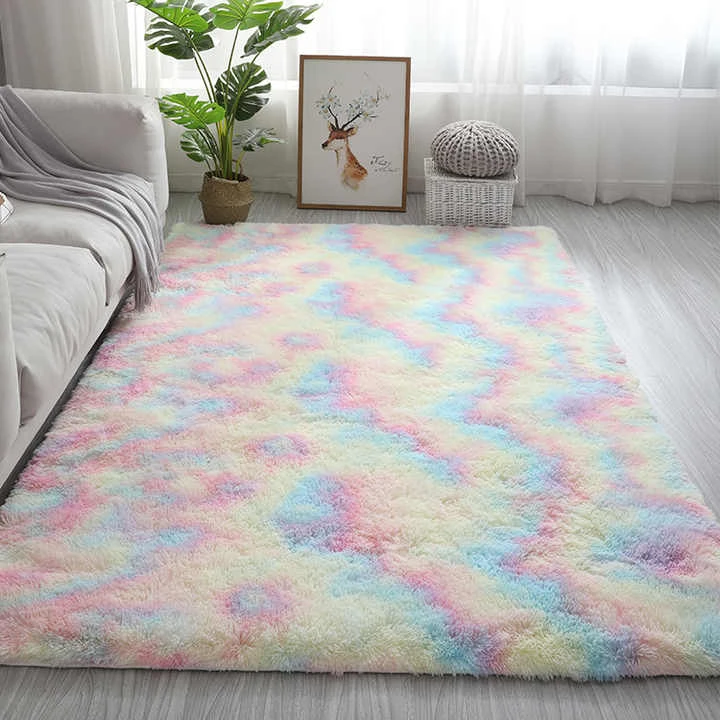
Fluffy fur rugs, often categorized as pile rugs, represent a significant segment within the broader floor covering industry. Their technical position lies in providing enhanced thermal insulation, acoustic dampening, and aesthetic appeal to both residential and commercial spaces. While visually characterized by a long, soft pile resembling animal fur, these rugs are typically constructed from synthetic fibers, though natural options exist. Core performance attributes include pile density (measured in ounces per square yard), pile height (in inches), fiber composition, and backing material. A primary industry pain point revolves around ensuring consistent fiber shedding rates and maintaining the aesthetic appearance – particularly avoiding matting – over extended use. The rugs' ability to retain their plushness and colorfastness under foot traffic and cleaning protocols dictates their lifecycle and perceived value. This guide will detail the material science, manufacturing processes, performance characteristics, potential failure modes, and maintenance procedures associated with fluffy fur rugs, encompassing applicable industry standards.
Material Science & Manufacturing
The dominant fiber material in fluffy fur rugs is polypropylene (PP), favored for its cost-effectiveness, stain resistance, and relatively soft texture. Polyester is also frequently used, offering superior color retention and a silkier feel, but typically at a higher cost. Less common materials include acrylic (known for its wool-like appearance but lower durability) and, in luxury applications, genuine sheepskin or rabbit fur. The choice of fiber directly impacts the rug's resilience, durability, and susceptibility to environmental degradation. Fiber denier, a unit of measure for the fineness of fibers, typically ranges from 200 to 600 denier for these rugs, with lower denier correlating to a softer, more luxurious feel. Manufacturing begins with fiber extrusion, where molten polymer is forced through spinnerets to create individual filaments. These filaments are then drawn (stretched) to align the polymer chains, increasing tensile strength and reducing elongation. The resulting yarn undergoes crimping, imparting bulk and resilience. Pile construction commonly employs tufting – inserting yarn loops into a primary backing material (typically polypropylene or jute) – followed by coating with a secondary backing (often latex or polyurethane) for structural integrity. Cutting the loops creates the characteristic ‘cut pile’ of a fluffy fur rug. Critical parameters during tufting include gauge (needle density, influencing pile density) and stitch rate (impacts pile height and overall rug density). Dyeing is usually performed on the yarn before tufting, using specialized dyes formulated for synthetic fibers to ensure colorfastness. Post-tufting processes include shearing to achieve uniform pile height, and quality control inspections for defects in tufting, dyeing, and backing adhesion.
Performance & Engineering
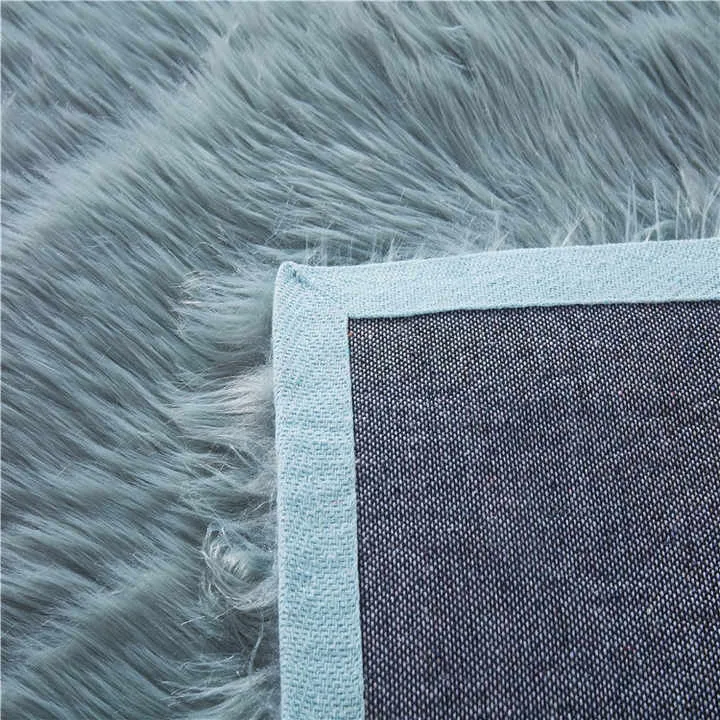
The performance of a fluffy fur rug is dictated by several key engineering considerations. Pile density significantly influences compressive strength and resilience. Higher density rugs generally exhibit better resistance to matting under foot traffic, but may also retain more dust and allergens. Pile height impacts thermal insulation – taller piles trap more air, providing greater warmth – and acoustic absorption, reducing noise reverberation. The backing material contributes to dimensional stability and resistance to delamination. Polyurethane backings are generally more durable and flexible than latex. Force analysis reveals that the majority of stress is concentrated on the pile fibers during foot traffic. Therefore, fiber tensile strength and elongation properties are crucial determinants of durability. Environmental resistance is primarily assessed in terms of lightfastness (resistance to fading upon UV exposure) and resistance to moisture and mold growth. Polypropylene exhibits good moisture resistance, but prolonged exposure to humidity can promote mold growth in the backing material. Compliance requirements vary by region, but often involve flammability testing (meeting standards such as California Technical Bulletin 117) and VOC emission testing (ensuring low levels of volatile organic compounds). The rug's ability to withstand repeated cleaning cycles (vacuuming, spot cleaning, professional cleaning) without significant fiber loss or color change is also a critical performance metric. Static electricity buildup can be a concern, particularly in dry climates; antistatic treatments are frequently applied to mitigate this issue.
Technical Specifications
| Parameter | Polypropylene (Typical) | Polyester (Typical) | Acrylic (Typical) | Sheepskin (Typical) |
|---|---|---|---|---|
| Fiber Denier | 400-600 | 300-500 | 200-400 | N/A - Natural Fiber |
| Pile Height (inches) | 1.5 - 2.5 | 1.5 - 2.5 | 1.0 - 2.0 | 1.0 - 3.0 |
| Pile Density (oz/sq yd) | 800 - 1200 | 900 - 1400 | 600 - 1000 | Variable - Dependent on Sheep Breed |
| Tensile Strength (psi) | 60-80 | 70-90 | 40-60 | 80-120 |
| Elongation at Break (%) | 150-200 | 120-180 | 80-150 | 50-80 |
| Moisture Absorption (%) | 0.1-0.5 | 0.4-0.8 | 1.0-2.0 | 30-40 |
Failure Mode & Maintenance
Fluffy fur rugs are susceptible to several failure modes. Fiber Shedding is common, particularly in the initial stages of use, and is exacerbated by low pile density and abrasive cleaning methods. Matting occurs due to fiber deformation under sustained pressure, leading to a flattened appearance. Crushing can result from heavy furniture or concentrated foot traffic. Color Fading is caused by UV exposure, especially with lower-quality dyes. Delamination refers to the separation of the backing materials from the pile, often due to moisture ingress or adhesive failure. Mold and Mildew Growth can occur in the backing if the rug remains damp for prolonged periods. Abrasion from foot traffic or vacuuming can damage the fiber surface, reducing its aesthetic appeal. Maintenance is crucial for prolonging the rug’s lifespan. Regular vacuuming (using a suction-only attachment to avoid snagging) removes dust and debris. Spot cleaning with a mild detergent and water is recommended for spills. Avoid harsh chemicals and excessive water. Professional cleaning (steam cleaning or dry cleaning) should be performed periodically. To prevent matting, rotate the rug regularly to distribute wear evenly. Protect from direct sunlight to minimize color fading. Address moisture issues promptly to prevent mold growth. Avoid placing heavy furniture directly on the rug, or use furniture pads to distribute the weight. For sheepskin rugs, specialized cleaning products designed for animal fibers are essential.
Industry FAQ
Q: What is the primary difference between polypropylene and polyester in fluffy fur rugs, and how does that impact cleaning?
A: Polypropylene is inherently more stain-resistant due to its hydrophobic nature, meaning it repels water and most liquids. Polyester, while softer and offering better color retention, is more prone to staining, particularly from oil-based substances. For cleaning, polypropylene rugs can typically be cleaned with water-based detergents, while polyester rugs may require specialized cleaning agents to avoid discoloration or damage.
Q: How can I minimize fiber shedding in a new fluffy fur rug?
A: Initial fiber shedding is normal. Vacuum the rug frequently (2-3 times per week) during the first few weeks to remove loose fibers. Avoid vigorous vacuuming or using beater bars, as this can exacerbate shedding. Ensure the rug is placed on a proper rug pad, as this provides cushioning and reduces fiber stress. Consider a low-pile density rug if shedding is a major concern, though this may compromise the plushness.
Q: What rug pad material is best suited for a fluffy fur rug, and why?
A: A felt or hybrid (felt & rubber) rug pad is generally recommended. Felt provides cushioning and prevents the rug from shifting, while the rubber component offers additional grip and prevents slippage. Avoid rubber pads with a strong chemical odor, as this can transfer to the rug fibers. The pad thickness should be appropriate for the pile height – thicker piles require thicker pads.
Q: How do I address mold growth in the backing of a fluffy fur rug?
A: Mold growth indicates prolonged moisture exposure. First, thoroughly dry the rug. If the mold is superficial, you can attempt to remove it with a solution of mild detergent and water, followed by thorough drying. However, if the mold is extensive or deeply embedded, professional cleaning is essential. To prevent recurrence, ensure the rug is placed in a well-ventilated area and avoid placing it on damp floors.
Q: What flammability standards are commonly applicable to fluffy fur rugs?
A: In the United States, California Technical Bulletin 117 is a common flammability standard. This tests the resistance of the rug to ignition and flame spread. Internationally, standards such as BS 5809 (United Kingdom) and DIN 4102 (Germany) are also relevant. Compliance with these standards is often required for sale in specific markets.
Conclusion
Fluffy fur rugs, while valued for their comfort and aesthetic appeal, require careful consideration of material selection, manufacturing processes, and maintenance practices to ensure longevity and optimal performance. The core technical challenges center around minimizing fiber shedding, preventing matting, and protecting against environmental degradation. Understanding the interplay between fiber properties, pile construction, and backing materials is crucial for selecting a rug that meets specific application requirements.
Future developments in this area may focus on the utilization of recycled and bio-based fibers to improve sustainability, as well as the development of more durable and stain-resistant coatings. Continued research into advanced tufting technologies and backing materials will further enhance the performance and lifecycle of these popular floor coverings. Adherence to relevant industry standards is paramount for ensuring product safety and quality.