

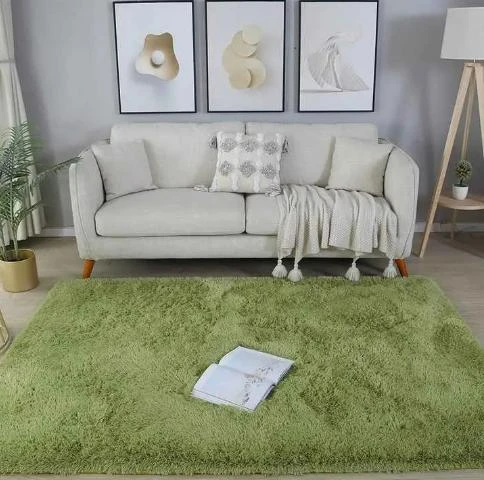
green faux sheepskin rug Performance Engineering
Introduction
Green faux sheepskin rugs represent a synthetic alternative to traditional sheepskin, primarily constructed from acrylic or polyester fibers. Positioned within the broader flooring and home textile industry, they serve as decorative and comfort-enhancing elements, often utilized in living rooms, bedrooms, and children’s spaces. Their technical significance lies in providing a soft, aesthetically pleasing surface without the ethical and maintenance concerns associated with genuine animal products. Core performance characteristics center around pile height, fiber density, colorfastness, and resistance to shedding and staining. The industry faces challenges related to achieving a realistic sheepskin texture, enhancing durability, and minimizing environmental impact through sustainable material sourcing and manufacturing processes.
Material Science & Manufacturing
The predominant raw materials in green faux sheepskin rug production are acrylic and polyester fibers. Acrylic offers a closer approximation to the loft and texture of natural wool due to its inherent crimp and bulk. Polyester, while generally less expensive, provides superior resistance to abrasion and crushing. The dyeing process utilizes reactive dyes to achieve the desired green coloration; dye penetration and colorfastness are critical parameters. Manufacturing typically involves a knitted or woven base fabric, onto which the synthetic fibers are tufted or flocked. Tufting involves inserting fibers through the base, securing them with a latex backing. Flocking employs electrostatic charge to adhere fibers to an adhesive-coated base. Critical process control parameters include fiber denier (fineness), pile height (loop or cut), backing material composition (typically jute or polypropylene), and adhesive strength. Quality control focuses on fiber content verification (through chemical analysis), pile density measurements, and assessment of color consistency using spectrophotometry. Environmental considerations in manufacturing include wastewater treatment to remove dyes and chemical residues, and minimizing energy consumption during fiber production and tufting/flocking processes.
Performance & Engineering
Performance evaluation of green faux sheepskin rugs centers on several key engineering principles. Compressive strength dictates the rug's ability to retain its loft under sustained pressure, crucial for areas with high foot traffic. Tensile strength of the base fabric and fiber tufts determines resistance to tearing and pulling. The coefficient of friction between the pile surface and footwear impacts slip resistance, an important safety consideration. Environmental resistance is characterized by UV stability (to prevent fading), resistance to mold and mildew growth (especially in humid environments), and flammability performance (meeting relevant fire safety standards). Compliance requirements include adherence to flammability standards like California Proposition 65 and the EU REACH regulation concerning restricted substances. Force analysis considers the distribution of loads across the pile structure and the stresses experienced by the backing material. Engineered considerations also extend to the selection of backing materials that provide dimensional stability and prevent shrinkage or warping. The long-term performance is dictated by the resistance of the polymer fibers to hydrolysis and oxidation, impacting color retention and fiber integrity.
Technical Specifications
| Parameter | Acrylic Fiber | Polyester Fiber | Unit |
|---|---|---|---|
| Pile Height | 20-30 | 15-25 | mm |
| Fiber Density | 800-1200 | 600-1000 | g/m² |
| Tensile Strength (Base Fabric) | > 200 | > 250 | N/5cm |
| Colorfastness to Light (Grey Scale Rating) | 4-5 | 5-6 | - |
| Water Absorption | < 1.0 | < 0.5 | % |
| Flammability (Pass/Fail - ASTM D2859) | Pass | Pass | - |
Failure Mode & Maintenance
Common failure modes in green faux sheepskin rugs include fiber shedding, matting (loss of pile loft), discoloration (due to UV exposure or staining), and delamination of the backing. Shedding is often attributed to insufficient fiber anchoring during tufting/flocking and low fiber tenacity. Matting occurs from repeated compression and abrasion, reducing fiber resilience. Discoloration results from dye degradation or staining from spills. Delamination arises from inadequate adhesion between the pile and the backing material, exacerbated by temperature fluctuations and humidity. Failure analysis techniques include microscopic examination of fiber structure, tensile testing of fiber tufts, and adhesive bond strength measurements. Preventative maintenance includes regular vacuuming to remove dirt and debris, spot cleaning of spills with mild detergent, and avoiding direct sunlight exposure to minimize UV degradation. For delamination, professional re-gluing may be necessary, utilizing adhesives compatible with both the pile and backing materials. Periodic rotation of the rug helps distribute wear and tear, extending its lifespan. Proper storage when not in use (rolled, not folded) prevents permanent creasing and pile distortion.
Industry FAQ
Q: What is the primary difference in durability between acrylic and polyester faux sheepskin rugs?
A: Polyester generally exhibits superior abrasion resistance and resilience compared to acrylic. Acrylic, while offering a softer feel and closer visual resemblance to natural sheepskin, is more susceptible to crushing and wear over time. Therefore, polyester is preferable for high-traffic areas.
Q: How does the backing material impact the overall performance and longevity of the rug?
A: The backing material provides structural integrity and prevents stretching or warping. Jute backings are more environmentally friendly but less durable and moisture resistant. Polypropylene backings offer greater durability and moisture resistance, but are less sustainable. The adhesive used to bond the pile to the backing is also critical; a strong, flexible adhesive prevents delamination.
Q: What are the key considerations for stain resistance in green faux sheepskin rugs?
A: Stain resistance depends on the fiber type and any applied stain-resistant treatments. Polyester generally exhibits better inherent stain resistance than acrylic. Pre-treatment with a fluorocarbon-based stain repellent can significantly enhance stain protection, but these treatments require periodic reapplication.
Q: Are there any specific fire safety regulations that apply to faux sheepskin rugs?
A: Yes, several regulations may apply, including California Proposition 65 regarding formaldehyde emissions, and flammability standards like ASTM D2859. Compliance with these regulations is essential for product safety and market access.
Q: How can I minimize shedding in a new faux sheepskin rug?
A: Initial shedding is common with new rugs. Regular vacuuming (using a suction-only vacuum head, not a beater bar) will help remove loose fibers. Avoid excessive rubbing or agitation, and consider using a rug pad to provide additional grip and reduce fiber movement.
Conclusion
Green faux sheepskin rugs offer a viable and increasingly sophisticated alternative to natural sheepskin, driven by ethical concerns and consumer demand for accessible luxury. The performance of these rugs is intrinsically linked to material selection – specifically the choice between acrylic and polyester – and the meticulous control of manufacturing processes like tufting, flocking, and dyeing. Understanding the interplay between fiber properties, backing materials, and environmental resistance is critical for ensuring product durability and longevity.
Future development will likely focus on enhancing the realistic texture of faux sheepskin, utilizing advancements in fiber technology and manufacturing techniques. The incorporation of recycled materials and biodegradable polymers will further address sustainability concerns, aligning with growing consumer preferences for environmentally responsible products. Continued refinement of stain-resistant treatments and improved adhesion methods will also contribute to extending the service life and maintaining the aesthetic appeal of these rugs.