

Overcoming the Physical Limitations of Organic Flooring Materials
Choosing synthetic athletic flooring optimizes the long-term operational performance of contemporary mixed-use architectural projects. In today's commercial real estate market, urban facility layouts must adapt to fluctuating operational requirements, frequently transitioning from professional athletic training zones to high-density commercial exhibitions within a tight timeframe. This fluid environmental paradigm forces architects to look beyond conventional domestic coverings and prioritize advanced material science at the structural substrate layer to guarantee safety, noise mitigation, and decades of structural integrity.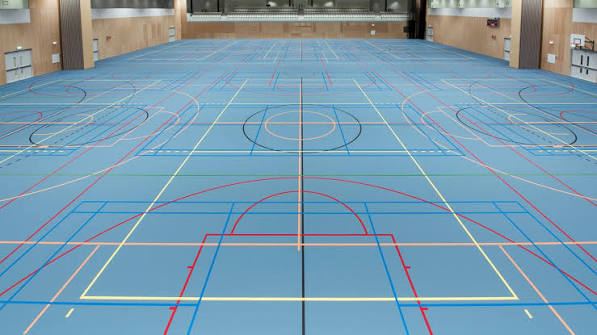
The primary challenge in high-traffic commercial zoning lies in managing continuous kinetic friction and concentrated heavy static loads. Standard residential materials, such as thin laminates or ceramic tiles, lack the inherent elasticity required to absorb localized kinetic impacts, leading to early structural fatigue, macro-cracking, and expensive replacement cycles. By contrast, specialized synthetic surfaces are engineered using multi-layered, cross-linked polymer matrices that systematically disperse mechanical stress vectors horizontally across the entire surface layout, thereby safeguarding the underlying concrete foundation from structural decay.
Overcoming the Physical Limitations of Organic Flooring Materials
For centuries, organic hardwoods were considered the standard choice for expansive indoor arenas, but modern climate realities and long-term operational cost calculations have revealed significant structural vulnerabilities. Hardwood installations remain highly reactive to environmental humidity fluctuations, resulting in ongoing structural expanding, buckling, and warping if climate control systems experience even brief mechanical failures. Additionally, the intensive lifecycle maintenance, including routine sanding, re-sealing, and the recurring application of chemical varnishes, introduces long-term operational liabilities and substantial facility downtime.
To eliminate these architectural risks, forward-thinking facility managers are increasingly implementing advanced thermoplastic options that mimic high-end design aesthetics while entirely eliminating environmental sensitivities. These engineered materials utilize a specialized ultraviolet-cured polyurethane coating that creates an absolute non-porous shield against moisture ingress, chemical stains, and deep abrasions. Furthermore, the incorporation of specialized fiberglass reinforcement layers within the composite guarantees absolute dimensional stability, meaning the floor layout will not expand or contract under severe thermal shifts.
Moreover, the visual versatility offered by advanced custom printing techniques allows these synthetic composites to integrate seamlessly into upscale commercial developments. Property owners no longer need to sacrifice the warm texture of natural wood grain or the sleek look of industrial stone to achieve mechanical durability. The high-definition decorative layer is securely embedded beneath a heavy-duty transparent wear layer, ensuring that brand logos, architectural patterns, and safety boundary markings remain crisp and vibrant despite decades of relentless foot traffic and rolling equipment loads.
Acoustic Architecture and Underfoot Ergonomics
In multi-level commercial complexes or academic institutions, acoustic dampening is as critical as structural durability. Rigid, low-grade flooring alternatives provide no internal sound insulation, creating acoustic echo chambers that amplify footstep impacts and structural vibrations across building floors. High-performance synthetic flooring solves this environmental issue via integrated high-density micro-cellular foam backings. This specialized foam structure acts as an acoustic decoupling layer, capturing impact sound transmission and dropping ambient noise levels to meet international commercial building codes.
From an ergonomic perspective, this microscopic foam layer provides critical shock absorption that reduces muscle strain and joint fatigue for occupants, athletes, and personnel walking the floor daily. The material balance achieved through advanced extrusion processes ensures that the floor remains rigid enough to support rolling equipment, heavy display fixtures, and intense physical activities without experiencing permanent indentation or structural compression failures over extended operational periods. This exact equilibrium between deflection and stability is a testament to modern industrial polymer engineering.
Supply Chain Standardization and Lifecycle Procurement
Integrating high-tier surface specifications like vinyl sports flooring manufacturers requires an institutional shift in global procurement strategies. Specifiers must bypass general trading entities and form strategic partnerships with an advanced supplier equipped with robust internal quality control systems. Aligning directly with a premium manufacturer ensures that the customized surface layers meet stringent fire-retardant parameters, zero-VOC emissions criteria, and rigorous anti-bacterial health standards required for public spaces.
Ultimately, investing in highly engineered synthetic solutions safeguards commercial real estate assets. By sourcing from a high-quality provider that utilizes state-of-the-art laboratory testing, developers can drastically minimize maintenance overhead, ensure compliance with international safety protocols, and deliver a resilient, beautifully designed environment that supports the multi-functional requirements of future urban architecture.