

plush fur rug Performance Engineering
Introduction
Plush fur rugs, categorized within the broader textile floor coverings industry, represent a significant segment due to their aesthetic appeal and comfort. Technically, they are constructed from synthetic or natural fibers designed to mimic the look and feel of animal fur. Their position in the value chain extends from raw material production (polymer synthesis for synthetics, animal husbandry/harvesting for natural fur), through yarn extrusion/spinning, weaving/knitting/tufting, dyeing/finishing, and finally, retail distribution. Core performance characteristics revolve around pile height, density, fiber type, and backing material, all influencing durability, comfort, and aesthetic qualities. The industry faces ongoing challenges related to sustainability, flammability regulations, and maintaining consistent quality control in production, particularly concerning fiber shedding and colorfastness. Demand is driven by interior design trends favoring textured and luxurious home furnishings.
Material Science & Manufacturing
The primary materials utilized in plush fur rug production are polypropylene, polyester, acrylic (synthetic), and occasionally, real animal fur (sheepskin, rabbit, etc.). Polypropylene (PP) is favored for its cost-effectiveness, stain resistance, and good resilience. Polyester offers superior softness and color retention. Acrylic provides a wool-like feel but tends to pill more readily. Real fur is subject to ethical concerns and higher production costs. The manufacturing process typically begins with polymer synthesis for synthetic fibers, followed by extrusion to create filaments. These filaments are then drawn and textured to achieve the desired pile characteristics. The core manufacturing techniques are tufting, weaving, and knitting. Tufting, the most prevalent method, involves inserting yarns through a primary backing material, followed by coating with a secondary backing (latex or polyurethane foam) for dimensional stability. Weaving interlaces warp and weft yarns, creating a more durable, but often less plush, pile. Knitting produces a looped pile structure. Parameter control is critical: extrusion temperature and speed affect fiber diameter and strength; tufting density dictates pile weight and feel; and dyeing requires precise control of temperature, pH, and dye concentration to ensure uniform color saturation and prevent fiber damage. Backing material composition significantly impacts slip resistance and longevity. Latex provides affordability but can degrade over time, while polyurethane offers superior durability and resistance to cracking.
Performance & Engineering
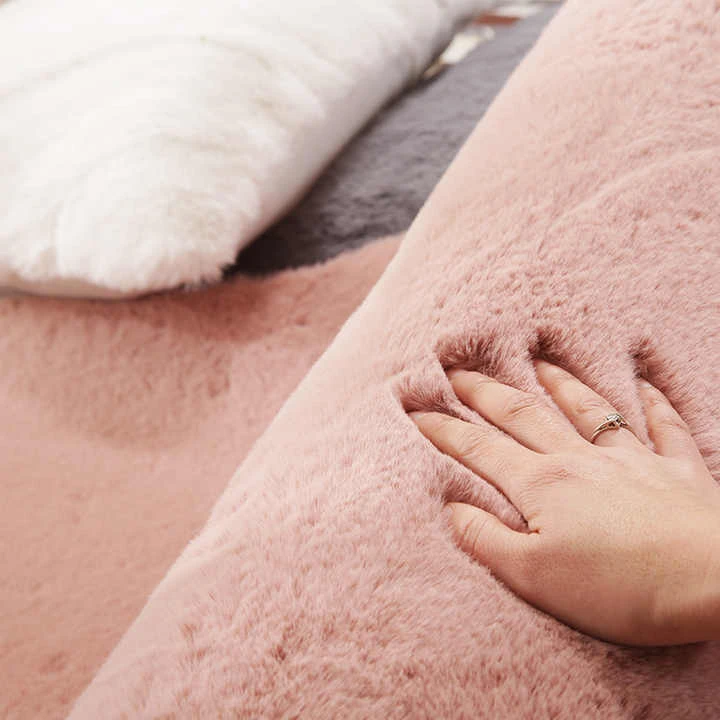
The performance of a plush fur rug is dictated by several engineering considerations. Pile height and density directly correlate with perceived softness and thermal insulation. Higher piles generally offer greater comfort but are more susceptible to matting and compaction. Fiber tensile strength determines resistance to abrasion and tearing. A crucial aspect is evaluating the rug's ability to withstand foot traffic, measured by the Wyzenbeek abrasion test (ASTM D4157). Environmental resistance focuses on colorfastness to light (ASTM D1654) and washfastness (AATCC 163). Flammability is a major safety concern, governed by standards such as DOC-FF1-70 (US) and EN 13501-1 (Europe). The rug backing plays a vital role in preventing slippage, assessed by the slip resistance test (ASTM D2047). Force analysis includes evaluating the pile recovery after compression – a measure of its resilience. Furthermore, the rug’s dimensional stability is tested to ensure minimal shrinkage or distortion after cleaning or exposure to humidity. Proper engineering involves selecting fiber types and backing materials that optimize these performance attributes while adhering to stringent safety regulations. Considerations must also be given to the long-term effects of UV exposure on synthetic fibers, as this can lead to fading and degradation of material properties.
Technical Specifications
| Parameter | Polypropylene (PP) | Polyester | Acrylic | Sheepskin (Real Fur) |
|---|---|---|---|---|
| Pile Height (mm) | 25-50 | 20-60 | 30-55 | 30-80 |
| Pile Density (g/m²) | 800-1200 | 1000-1500 | 700-1100 | 600-1000 |
| Tensile Strength (N/mm²) | 40-60 | 60-80 | 30-50 | 50-70 (varies with skin quality) |
| Water Absorption (%) | 0.1-0.5 | 0.4-1.0 | 1.5-3.0 | 25-35 |
| Flammability (DOC-FF1-70) | Pass | Pass | Marginal | Fail (requires treatment) |
| Colorfastness to Light (Grade 1-5) | 4-5 | 4-5 | 3-4 | 3-4 (requires UV protection) |
Failure Mode & Maintenance
Common failure modes in plush fur rugs include fiber shedding, matting, crushing, color fading, and delamination of the backing. Fiber shedding is inherent in cut-pile constructions, but excessive shedding indicates poor fiber quality or inadequate tufting. Matting occurs due to repeated compression and loss of fiber resilience. Crushing results from prolonged pressure, particularly from heavy furniture. Color fading is caused by UV exposure and the use of substandard dyes. Delamination of the backing leads to loss of structural integrity and potential for cracking. Oxidation of polypropylene fibers over extended periods can lead to brittleness. Maintenance is crucial for extending the rug’s lifespan. Regular vacuuming (using a suction-only nozzle) removes dirt and debris that contribute to abrasion. Spot cleaning with mild detergent and water addresses spills promptly. Professional cleaning (steam cleaning or dry cleaning) is recommended annually. Avoid excessive moisture and direct sunlight. Rotate the rug periodically to distribute wear evenly. For real fur rugs, specialized cleaning and conditioning are required to maintain the leather backing and fur fibers. Promptly addressing spills and preventing prolonged exposure to humidity are crucial. Repairing minor delamination with rug adhesive can extend the rug's usability.
Industry FAQ
Q: What is the primary difference between polypropylene and polyester in terms of long-term durability for a high-traffic area?
A: While both are durable, polyester generally exhibits superior resilience and retains its pile shape better under prolonged compression compared to polypropylene. Polypropylene, while cost-effective, is more prone to flattening in high-traffic areas over time, leading to a noticeable difference in appearance and feel. However, advancements in polypropylene fiber technology are continuously improving its performance characteristics.
Q: How does the backing material influence the overall lifespan of the rug, and what are the benefits of polyurethane over latex?
A: The backing provides structural support and prevents slippage. Latex is a cheaper option but degrades over time, becoming brittle and prone to cracking, leading to delamination. Polyurethane is significantly more durable, resisting cracking, and maintaining its flexibility for a longer period. It also offers better resistance to moisture and mold growth, extending the rug’s lifespan, especially in humid environments.
Q: What flammability standards are most relevant for plush fur rugs sold in the US and Europe?
A: In the US, DOC-FF1-70 is the primary flammability standard for floor coverings. In Europe, EN 13501-1 is the governing standard, classifying fire performance. Rugs must pass these tests to be legally sold in respective markets. Compliance often involves treating the rug with flame retardant chemicals, which may have environmental implications.
Q: How can we minimize color fading caused by sunlight exposure?
A: Using rugs manufactured with UV-stabilized fibers is the most effective preventative measure. Regularly rotating the rug to distribute sun exposure evenly can also help. Consider using window coverings (blinds, curtains) to filter direct sunlight. Avoid placing rugs in areas with prolonged, direct sunlight exposure whenever possible.
Q: What are the environmental considerations related to plush fur rug production and disposal?
A: Synthetic fiber production relies on fossil fuels. Disposal of synthetic rugs contributes to landfill waste. Increasingly, manufacturers are exploring recycled materials and biodegradable backing options. Real fur rugs raise ethical concerns regarding animal welfare. Responsible sourcing and end-of-life recycling programs are crucial for minimizing the environmental impact.
Conclusion
Plush fur rugs, while offering aesthetic and comfort benefits, represent a complex interplay of material science, manufacturing processes, and performance engineering. Selecting the appropriate fiber type, backing material, and adhering to stringent quality control measures are critical for ensuring durability, safety, and longevity. The industry continually evolves, driven by demands for sustainability, improved performance, and compliance with increasingly stringent regulations.
Future advancements will likely focus on the development of bio-based synthetic fibers, biodegradable backing materials, and more efficient manufacturing processes that minimize waste and energy consumption. Furthermore, enhanced testing methodologies are needed to accurately predict long-term performance and address emerging concerns related to microplastic shedding from synthetic fibers. Understanding these technical aspects is paramount for both manufacturers and consumers to make informed decisions and optimize the value proposition of plush fur rugs.