


taupe faux fur rug Performance Analysis
Introduction
Taupe faux fur rugs represent a significant segment within the broader decorative flooring market, positioned as an accessible and aesthetically versatile alternative to genuine animal fur. Their composition typically involves a base fabric, often polypropylene or polyester, onto which synthetic fibers – primarily acrylic or modacrylic – are meticulously attached. This construction seeks to emulate the luxurious feel and appearance of natural fur while addressing ethical concerns and offering a more cost-effective solution. Core performance characteristics revolve around providing a soft tactile experience, contributing to interior aesthetics, and offering a degree of thermal insulation. However, unlike natural fibers, faux fur presents unique challenges related to flammability, cleaning, and long-term durability, demanding precise manufacturing control and careful consideration of material selection. The rug industry faces constant pressure to reduce microplastic shedding and improve the sustainability profile of synthetic materials, making advancements in fiber technology and bonding agents crucial for continued market acceptance. This guide provides a comprehensive technical overview of taupe faux fur rugs, addressing material science, manufacturing processes, performance attributes, failure modes, and industry standards.
Material Science & Manufacturing
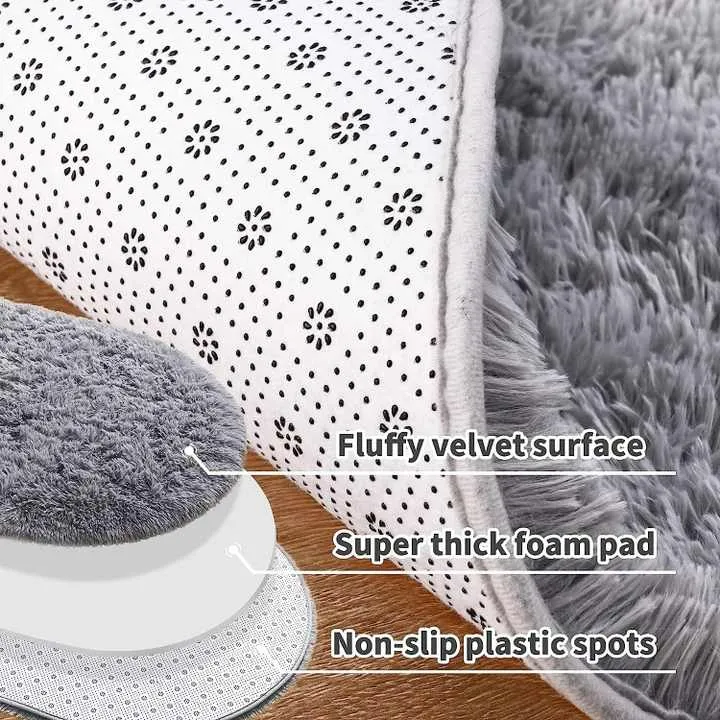
The foundational materials of a taupe faux fur rug dictate its performance characteristics. The base cloth is commonly 100% polypropylene (PP) or polyester (PET), chosen for their cost-effectiveness, dimensional stability, and resistance to mildew. Polypropylene is preferred for its lower moisture absorption, while polyester offers improved resilience and dye uptake. The ‘fur’ itself is predominantly composed of acrylic or modacrylic fibers. Acrylic provides a soft hand feel and good bulk, closely mimicking natural fur, but exhibits lower abrasion resistance. Modacrylic offers enhanced flame retardancy and better resistance to pilling, albeit at a higher cost. Dyeing is typically accomplished using acid dyes for acrylic and disperse dyes for polyester, requiring precise control of temperature, pH, and dye concentration to achieve a consistent taupe coloration and adequate colorfastness.
Manufacturing involves several key stages. Firstly, the base cloth is prepared, often with a non-slip backing applied using latex or polyurethane adhesives. This backing is critical for safety and prevents the rug from shifting on hard surfaces. Fiber tufting is the primary method for attaching the faux fur fibers. This process involves inserting needles through the base cloth, forming loops which are then cut to create a dense pile. Pile height is a key parameter, typically ranging from 20mm to 50mm, impacting the rug’s perceived luxury and thermal properties. Following tufting, the rug undergoes a shearing process to achieve a uniform pile length and create the desired aesthetic. Finally, a latex or synthetic rubber backing is applied, often with additional layers for enhanced durability and cushioning. Critical process parameters include needle gauge, fiber density, cutting height, and adhesive application rate. Inconsistent control of these parameters can lead to pile shedding, uneven color distribution, and premature wear. Quality control involves assessing pile density, color consistency, backing adhesion, and flammability according to industry standards.
Performance & Engineering
The performance of a taupe faux fur rug is dictated by a complex interplay of physical and mechanical properties. Pile density, measured in grams per square meter (gsm), directly correlates with the rug’s softness, resilience, and thermal insulation value (R-value). Higher gsm values generally indicate superior performance but also contribute to increased cost and weight. Abrasion resistance, assessed using methods like the Martindale rub test, is a crucial indicator of durability, particularly in high-traffic areas. Typical acrylic faux fur rugs exhibit a Martindale rating of 5,000-15,000 cycles. Flammability is a significant concern; acrylic fibers are inherently flammable and require treatment with flame retardants to meet safety standards. These treatments, often based on halogenated compounds or phosphorus-based chemicals, can impact the rug’s long-term stability and potentially release volatile organic compounds (VOCs). Environmental resistance is another key consideration. Prolonged exposure to sunlight can cause fading and degradation of the acrylic fibers, while moisture can promote mildew growth and weaken the backing adhesive. Force analysis during manufacturing and usage must consider the tensile strength of the base cloth and the shear strength of the fiber-to-base bonding. Compliance requirements vary by region, with regulations addressing flammability, VOC emissions, and child safety (e.g., lead content in dyes).
Technical Specifications
| Parameter | Unit | Typical Value (Low Range) | Typical Value (High Range) |
|---|---|---|---|
| Pile Height | mm | 20 | 50 |
| Pile Weight (GSM) | g/m² | 500 | 1200 |
| Fiber Composition | - | 100% Acrylic | 100% Modacrylic |
| Base Cloth Material | - | Polypropylene (PP) | Polyester (PET) |
| Abrasion Resistance (Martindale) | Cycles | 5,000 | 15,000 |
| Flammability (Ignition Delay) | Seconds | 2 | 5 |
Failure Mode & Maintenance
Taupe faux fur rugs are susceptible to several failure modes. Pile shedding is a common issue, particularly during initial use, resulting from loose fibers and inadequate fiber-to-base bonding. This can be exacerbated by abrasion and repeated foot traffic. Matting and crushing of the pile occur due to the deformation of acrylic fibers under sustained pressure. Fading and discoloration are prevalent with prolonged exposure to ultraviolet (UV) radiation, leading to a loss of aesthetic appeal. Delamination of the backing can occur if the adhesive bond weakens due to moisture or temperature fluctuations. Oxidation of acrylic fibers over time can cause them to become brittle and prone to breakage, leading to a decrease in pile density. Microplastic shedding during use and cleaning is a growing concern, contributing to environmental pollution. Maintenance should involve regular vacuuming with a low-suction cleaner to remove loose debris and prevent matting. Spot cleaning with a mild detergent and water is recommended for spills, avoiding harsh chemicals that can damage the fibers. Professional cleaning is advisable for deep cleaning and stain removal. To mitigate failure modes, avoid direct sunlight exposure, rotate the rug periodically to distribute wear, and use a rug pad to provide cushioning and prevent slippage. Regularly inspect the backing for signs of delamination and address any issues promptly.
Industry FAQ
Q: What is the primary difference in performance between acrylic and modacrylic faux fur fibers?
A: Acrylic offers a softer hand feel and better bulk for mimicking natural fur, making it more cost-effective. However, modacrylic provides significantly improved flame retardancy and greater resistance to pilling, extending the lifespan of the rug and enhancing safety. While acrylic is acceptable for low-traffic areas, modacrylic is preferred for higher-use environments.
Q: How do flammability standards impact the production and sale of faux fur rugs?
A: Faux fur rugs must meet stringent flammability requirements, such as those outlined in California Technical Bulletin 117 and similar regulations in other regions. This necessitates the application of flame retardant treatments, which adds cost and complexity to the manufacturing process. Manufacturers must carefully balance flame retardancy with potential environmental and health concerns related to the chemicals used.
Q: What is the significance of pile density (GSM) in determining the quality of a faux fur rug?
A: Pile density, measured in grams per square meter, directly correlates with the rug's softness, resilience, and thermal insulation properties. Higher GSM values generally indicate a more luxurious and durable product, providing a more comfortable walking surface and better thermal performance. However, excessively high GSM can also make the rug heavier and more expensive.
Q: How can microplastic shedding be minimized in faux fur rugs?
A: Microplastic shedding is a growing concern. Minimizing it involves selecting higher-quality fibers with stronger polymer chains, employing tighter tufting patterns to reduce fiber loss, and applying fiber locking technologies during manufacturing. Additionally, consumers can reduce shedding through regular vacuuming with HEPA filters and gentle washing practices.
Q: What type of backing is most durable and resistant to delamination?
A: A combination of latex and synthetic rubber (SBR) backing provides a balance of durability, flexibility, and adhesion. Polyurethane-based backings offer superior resistance to moisture and temperature fluctuations, further minimizing the risk of delamination. The quality of the adhesive used and the thoroughness of the application process are equally critical factors.
Conclusion
Taupe faux fur rugs represent a sophisticated intersection of textile engineering, material science, and aesthetic design. The performance of these rugs is fundamentally dependent on the selection of appropriate base cloth and fiber materials – predominantly polypropylene/polyester and acrylic/modacrylic, respectively – alongside precise control of manufacturing parameters like pile height, density, and adhesive application. Understanding the inherent limitations of acrylic fibers, particularly regarding flammability and UV degradation, is paramount for ensuring product safety and longevity. Addressing the emerging concern of microplastic shedding through innovative fiber technologies and responsible manufacturing practices will be crucial for the future sustainability of this product category.
Future developments are likely to focus on bio-based alternatives to traditional synthetic fibers, improving the recyclability of faux fur rugs, and enhancing the durability and resilience of existing materials. Advancements in flame retardant technology will aim to reduce the environmental impact of these treatments while maintaining effective fire protection. Continuous monitoring of industry standards and consumer preferences will be essential for manufacturers to remain competitive and meet the evolving demands of the decorative flooring market. The continued optimization of manufacturing processes to minimize waste and improve efficiency will also be a key driver of innovation.