

thick faux fur rug Performance Analysis
Introduction
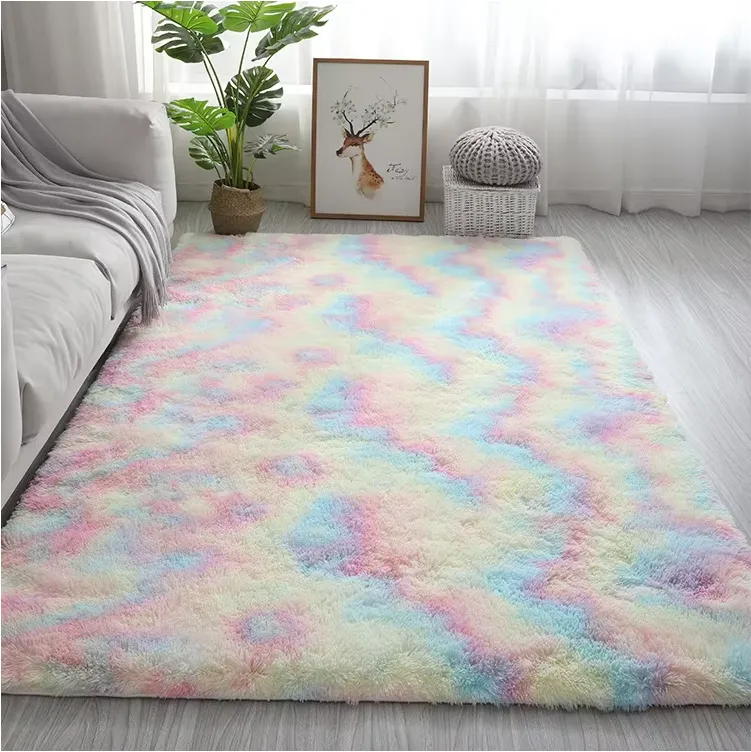
Thick faux fur rugs represent a significant segment within the broader floor covering industry, specifically categorized as synthetic textile products. They serve primarily as decorative and comfort-enhancing elements within residential and commercial interior spaces. Unlike natural fur rugs, these products utilize manufactured fibers designed to mimic the aesthetic and tactile properties of animal fur. Their technical positioning lies in offering a cost-effective, ethically sourced, and often more durable alternative to genuine fur. Core performance characteristics revolve around pile height, density, fiber composition, and backing construction, which directly influence softness, resilience, and longevity. The industry faces ongoing challenges related to maintaining consistent quality, reducing environmental impact through sustainable materials, and addressing concerns regarding flammability and off-gassing.
Material Science & Manufacturing
The foundation of thick faux fur rugs lies in synthetic fiber technology. Predominantly, the pile fibers are composed of acrylic, polyester, or polypropylene. Acrylic offers a soft, wool-like feel and good dyeability but exhibits lower resilience and abrasion resistance compared to polyester. Polyester provides excellent durability, stain resistance, and colorfastness, becoming increasingly favored. Polypropylene, while cost-effective, possesses lower heat resistance and can be susceptible to oil-based stains. The manufacturing process begins with polymer extrusion, creating the filament fibers. These filaments are then heat-set to achieve desired crimp and texture. The 'weaving' or 'knitting' process involves interlacing these fibers with a backing material – typically jute, polypropylene, or latex foam. Pile height is a critical parameter, ranging from 25mm to over 100mm, impacting the rug’s perceived thickness and luxury. Density, measured in ounces per square yard, directly correlates to perceived quality and durability. The backing material is often coated with a latex or synthetic rubber adhesive to secure the fibers. Key parameter control during manufacturing focuses on consistent fiber denier, uniform pile height, and adequate adhesive application to prevent fiber shedding. Quality control incorporates rigorous testing for colorfastness to light and washing, pile retention, and flammability.

Performance & Engineering
The performance of thick faux fur rugs is fundamentally linked to the mechanical properties of the constituent fibers and the structural integrity of the backing. Force analysis reveals that the pile fibers primarily undergo tensile and bending stresses during use. Higher fiber tenacity and elongation at break translate to improved resistance to tearing and deformation. The backing material experiences compressive stress from foot traffic and furniture weight. Environmental resistance is a critical factor. Exposure to ultraviolet (UV) radiation can cause fiber degradation, leading to color fading and reduced strength – particularly in acrylic fibers. Moisture absorption can promote mildew growth and weaken the backing material. Flammability is a major safety concern; most faux fur rugs are treated with flame retardants to meet industry standards. Compliance requirements include adherence to VOC emission regulations (volatile organic compounds) to minimize indoor air pollution. Engineering considerations include optimizing pile density and fiber crimp to maximize resilience and foot feel. Backing selection is crucial for preventing delamination and maintaining dimensional stability. The rug's ability to withstand repeated compression sets (simulating foot traffic) is a key performance indicator, measured through compression-recovery testing.
Technical Specifications
| Fiber Composition | Pile Height (mm) | Pile Density (oz/yd²) | Backing Material |
|---|---|---|---|
| 100% Polyester | 50 | 1200 | Polypropylene |
| 80% Acrylic, 20% Polyester | 75 | 1500 | Jute with Latex Coating |
| 100% Polypropylene | 30 | 800 | PVC |
| 90% Polyester, 10% Nylon | 60 | 1350 | Recycled Rubber |
| 100% Acrylic | 90 | 1800 | Felt with Latex Coating |
| 70% Polyester, 30% Acrylic | 40 | 1000 | Non-woven Fabric |
Failure Mode & Maintenance
Thick faux fur rugs are susceptible to several failure modes. Fiber shedding is a common issue, particularly during initial use, due to loose fibers not fully secured in the backing. This can be mitigated by regular vacuuming. Pile crushing occurs under sustained pressure, reducing resilience and altering the rug’s appearance. This is particularly prevalent in high-traffic areas. Delamination, the separation of the pile from the backing, is a critical failure mode often caused by inadequate adhesive application or moisture exposure. Oxidation and UV degradation can lead to color fading and fiber embrittlement, especially with acrylic fibers. Stain penetration is another concern; oil-based stains are particularly difficult to remove from polypropylene. Maintenance recommendations include regular vacuuming with a brush attachment to remove debris and revive the pile. Spot cleaning with a mild detergent and water is recommended for minor stains. Professional cleaning is advisable for deep cleaning and to prevent delamination. Avoid prolonged exposure to direct sunlight. Rotate the rug periodically to distribute wear evenly. For delamination, re-gluing with a suitable latex adhesive may provide a temporary solution, but complete replacement is often necessary for significant damage.
Industry FAQ
Q: What is the primary difference in performance between polyester and acrylic faux fur rugs in terms of durability?
A: Polyester generally exhibits superior durability compared to acrylic. Polyester fibers possess higher tensile strength and abrasion resistance, meaning they can withstand more wear and tear over time. Acrylic, while softer, is more prone to shedding, matting, and degradation from UV exposure. Therefore, polyester rugs are generally recommended for high-traffic areas.
Q: How does the backing material impact the overall lifespan of a faux fur rug?
A: The backing material is crucial for structural integrity. Jute backings are natural and breathable but prone to moisture damage and mildew. Polypropylene offers better water resistance but lower dimensional stability. Latex coatings provide good adhesion but can become brittle over time. Recycled rubber offers durability and eco-friendliness. A high-quality backing properly adhered to the pile is essential to prevent delamination and prolong the rug’s lifespan.
Q: Are faux fur rugs considered fire hazards, and what safety measures are typically implemented?
A: Most synthetic fibers are inherently flammable. Therefore, faux fur rugs are typically treated with flame retardant chemicals to meet flammability standards. However, these treatments can diminish over time with cleaning and wear. It’s crucial to look for rugs that meet relevant fire safety standards and avoid placing them near open flames or heat sources.
Q: What is the impact of pile height and density on the comfort and performance of a faux fur rug?
A: Pile height significantly affects the perceived softness and luxury of the rug; higher piles generally feel plusher. Pile density, measured in ounces per square yard, determines the rug's resilience and ability to recover from compression. A higher density equates to better durability and a more luxurious feel underfoot. A balance between height and density is ideal for optimal comfort and performance.
Q: How important are VOC emission standards when selecting a faux fur rug, particularly for indoor air quality?
A: VOC emission standards are critically important. During manufacturing, various chemicals are used, some of which can off-gas into the air, potentially impacting indoor air quality. Look for rugs certified by organizations like OEKO-TEX or GREENGUARD, which ensure that the rug has been tested for harmful VOC emissions and meets stringent safety standards.
Conclusion
Thick faux fur rugs offer a versatile and cost-effective alternative to natural fur, providing aesthetic appeal and comfort. Their performance is dictated by a complex interplay of fiber composition, manufacturing techniques, and backing construction. Understanding the nuances of these factors – from the tensile strength of polyester to the susceptibility of acrylic to UV degradation – is crucial for informed selection and longevity. Addressing potential failure modes like delamination and pile crushing through proper maintenance and material selection is paramount.
Future advancements in faux fur rug technology are likely to focus on sustainable materials (such as recycled polyester) and improved flame retardant treatments. Optimizing manufacturing processes to minimize VOC emissions and enhance durability will also be key. Continued research into fiber blends will further refine the balance between softness, resilience, and cost-effectiveness, solidifying the role of thick faux fur rugs as a prominent fixture in the interior design landscape.