

faux bunny fur rug Performance Analysis
Introduction
Faux bunny fur rugs represent a significant segment within the broader decorative textiles industry, specifically catering to the demand for comfortable, aesthetically pleasing, and ethically sourced floor coverings. These rugs are manufactured to mimic the look and feel of genuine rabbit fur, utilizing synthetic fibers to provide a comparable tactile experience without the animal welfare concerns. Technically, they fall under the classification of pile fabrics, typically employing a deep pile construction to enhance the plush aesthetic. Core performance characteristics include thermal insulation, sound absorption, and visual appeal. The industry faces increasing pressure to improve material sustainability, reduce microplastic shedding, and enhance durability to compete with more established rug materials like wool and polypropylene. This guide provides a comprehensive technical overview of faux bunny fur rugs, encompassing material science, manufacturing processes, performance parameters, failure modes, and relevant industry standards.
Material Science & Manufacturing
The foundation of faux bunny fur rugs lies in synthetic fiber technology. The most prevalent materials are polyester and acrylic, though polypropylene and modacrylic are also employed depending on desired properties and cost considerations. Polyester offers excellent durability, stain resistance, and colorfastness, making it a cost-effective choice for high-traffic areas. Acrylic, however, provides a softer, more luxurious feel that more closely replicates genuine rabbit fur. Fiber denier (fineness) is a critical parameter, typically ranging from 1-5 denier to achieve the desired softness and pile density.
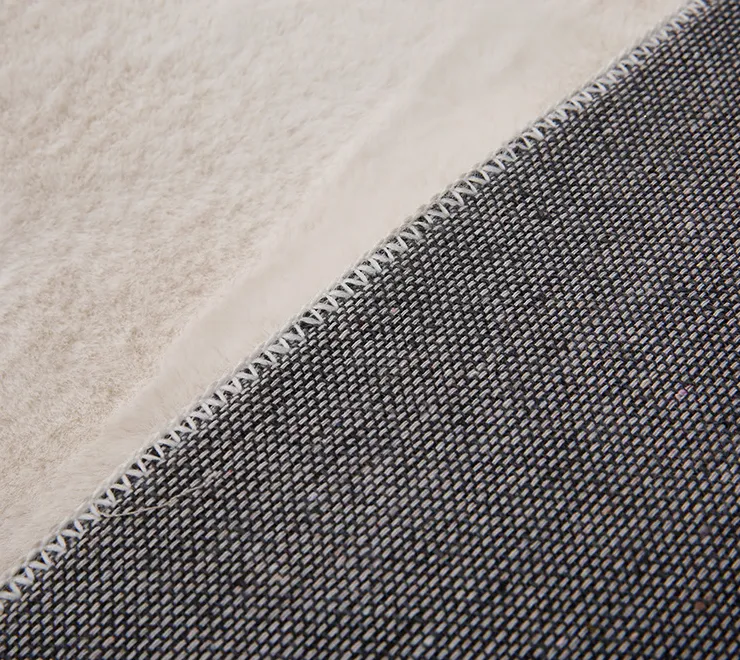
Manufacturing begins with fiber extrusion, where the polymer is melted and forced through spinnerets to form continuous filaments. These filaments are then drawn and textured to enhance bulk and crimp – essential for creating the fluffy appearance. The textured fibers are subsequently tufted into a primary backing material, commonly polypropylene or jute. Tufting density (stitches per square inch) directly correlates to pile height and overall rug density. A latex or synthetic rubber adhesive is then applied to secure the tufts to the backing.
A secondary backing, often felt or action backing, is laminated to the primary backing for added stability and dimensional integrity. Shearing is employed to create a uniform pile height, followed by brushing to achieve the desired “fluffiness” and simulate the natural lay of fur. Parameter control is vital at each stage. Maintaining consistent polymer viscosity during extrusion, precise temperature control during drawing, and accurate tufting gauge are paramount to ensuring product quality. Variations in these parameters can lead to uneven pile height, fiber breakage, and reduced rug lifespan.
Performance & Engineering
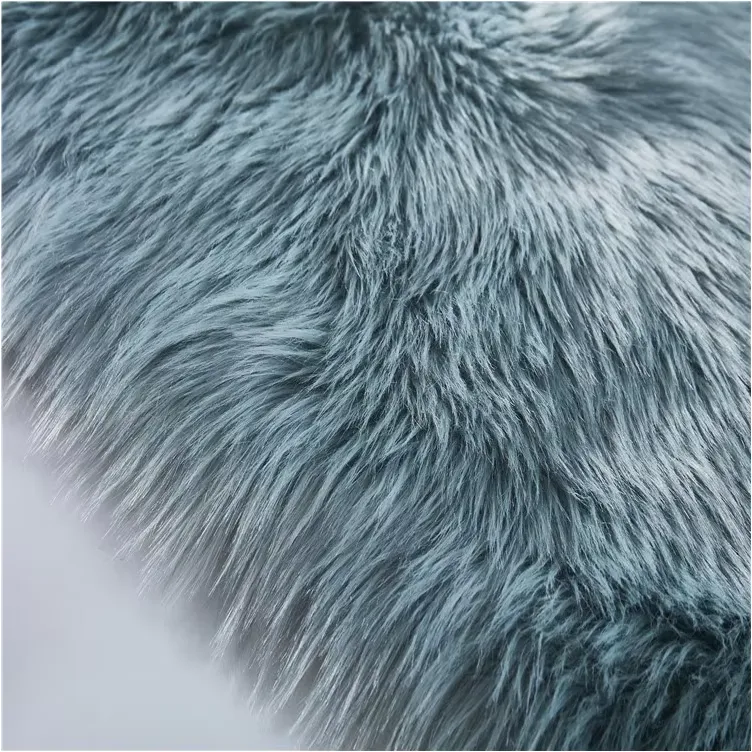
The performance of faux bunny fur rugs is largely dictated by their ability to provide thermal insulation, acoustic dampening, and withstand mechanical stress. Thermal resistance (R-value) is a key metric, typically ranging from 1.0 to 1.5 for standard constructions. This is determined by fiber density, pile height, and the backing material. Acoustic performance is assessed by Sound Transmission Class (STC) and Noise Reduction Coefficient (NRC) ratings. Higher pile heights and denser constructions generally yield better sound absorption.
Engineering considerations focus on ensuring dimensional stability and resistance to compression set. The rug’s ability to retain its shape and recover from indentation is crucial. This is influenced by the backing material’s resilience and the fiber’s inherent elasticity. Force analysis, including tensile strength and tear resistance, assesses the rug’s ability to withstand pulling forces and resist damage. These parameters are typically evaluated according to ASTM D5118 and ASTM D751 standards. Environmental resistance is also critical; exposure to UV radiation can cause fiber degradation and color fading, while moisture can promote mildew growth and compromise structural integrity. Therefore, UV stabilizers and moisture-resistant treatments are often incorporated during manufacturing.
Compliance requirements include flammability standards (e.g., California Proposition 65 for VOC emissions, and NFPA 701 for flame propagation), and increasingly, regulations concerning microplastic release during washing. The potential for microplastic shedding is a major industry pain point requiring ongoing research and development of fiber technologies and fabric constructions to mitigate this environmental impact.
Technical Specifications
| Parameter | Polyester | Acrylic | Polypropylene | Unit |
|---|---|---|---|---|
| Fiber Denier | 1-3 | 1-5 | 2-4 | dtex |
| Pile Height | 30-60 | 40-80 | 20-50 | mm |
| Tufting Density | 800-1200 | 600-1000 | 400-800 | stitches/sq.in |
| Tensile Strength | 60-80 | 40-60 | 50-70 | N |
| Water Absorption | 0.5-1.0 | 1.0-1.5 | 0.1-0.3 | % |
| R-Value (Thermal Resistance) | 1.2-1.4 | 1.0-1.3 | 0.8-1.1 | m²K/W |
Failure Mode & Maintenance
Faux bunny fur rugs are susceptible to several failure modes. Fiber shedding is a common issue, particularly during initial use, resulting from loose fibers becoming detached from the tufted construction. This is exacerbated by abrasion and repeated foot traffic. Pile crushing, or compression set, occurs when the fibers are flattened under sustained pressure, reducing the rug’s plushness and aesthetic appeal. This is most prevalent in high-traffic areas and can be mitigated by using high-resilience backing materials. Delamination, the separation of the primary and secondary backings, can occur due to adhesive failure, often triggered by moisture exposure or mechanical stress.
Oxidation and UV degradation can lead to fiber embrittlement and color fading, especially in rugs exposed to direct sunlight. Microplastic shedding, as mentioned previously, represents a long-term durability concern and potential environmental hazard. Maintenance recommendations include regular vacuuming (using a low-suction setting to minimize fiber extraction), spot cleaning with mild detergent and water, and avoiding prolonged exposure to direct sunlight. Professional cleaning is recommended periodically to remove embedded dirt and restore pile loft. For delamination, adhesive re-application by a professional is typically required. Addressing fiber shedding involves gentle brushing to remove loose fibers and minimizing abrasive activities on the rug’s surface.
Industry FAQ
Q: What is the primary difference between polyester and acrylic faux fur rugs in terms of durability and feel?
A: Polyester generally exhibits superior abrasion resistance and stain resistance, making it more durable for high-traffic areas. However, acrylic offers a significantly softer and more luxurious feel, closer to genuine rabbit fur, though it is less resilient and more prone to matting over time. The choice depends on the intended application and desired balance between durability and tactile comfort.
Q: How can microplastic shedding be minimized in faux fur rugs?
A: Mitigating microplastic shedding is a complex challenge. Strategies include utilizing higher-quality fibers with larger molecular weights, implementing tighter weaving or tufting constructions, applying fiber coatings to reduce shedding, and exploring biodegradable fiber alternatives. Washing these rugs in a laundry bag designed to capture microplastics is also recommended.
Q: What backing materials are most effective at preventing delamination?
A: Backings composed of synthetic rubber (e.g., styrene-butadiene rubber or SBR) generally offer the best adhesion properties and resistance to delamination. Jute backings, while more sustainable, are more susceptible to moisture damage and adhesive failure. A robust adhesive application process is also critical.
Q: What flammability standards are typically required for faux fur rugs sold in the US market?
A: Faux fur rugs sold in the US must comply with California Proposition 65 regarding VOC emissions and NFPA 701 for flame propagation. Specific requirements may vary depending on the intended end-use (e.g., residential vs. commercial).
Q: How does pile height affect the performance characteristics of a faux fur rug?
A: Increased pile height generally enhances thermal insulation and sound absorption, contributing to a more luxurious feel. However, higher piles are also more prone to crushing and matting, and can be more challenging to clean. Lower pile heights offer greater durability and ease of maintenance but provide less insulation and acoustic performance.
Conclusion
Faux bunny fur rugs represent a sophisticated intersection of textile engineering, material science, and consumer demand. The industry continually strives to balance aesthetic appeal, durability, cost-effectiveness, and, increasingly, environmental sustainability. Achieving optimal performance requires careful consideration of fiber selection, manufacturing processes, and adherence to relevant industry standards. Understanding the potential failure modes and implementing appropriate maintenance practices are essential for maximizing product lifespan and ensuring customer satisfaction.
Looking forward, innovation in fiber technology – particularly the development of biodegradable and microplastic-resistant materials – will be crucial for addressing the industry’s sustainability challenges. Further research into enhanced tufting techniques and backing materials will contribute to improved durability and dimensional stability. Ultimately, the continued success of faux bunny fur rugs will depend on the industry’s ability to deliver high-quality, ethically sourced, and environmentally responsible products.