

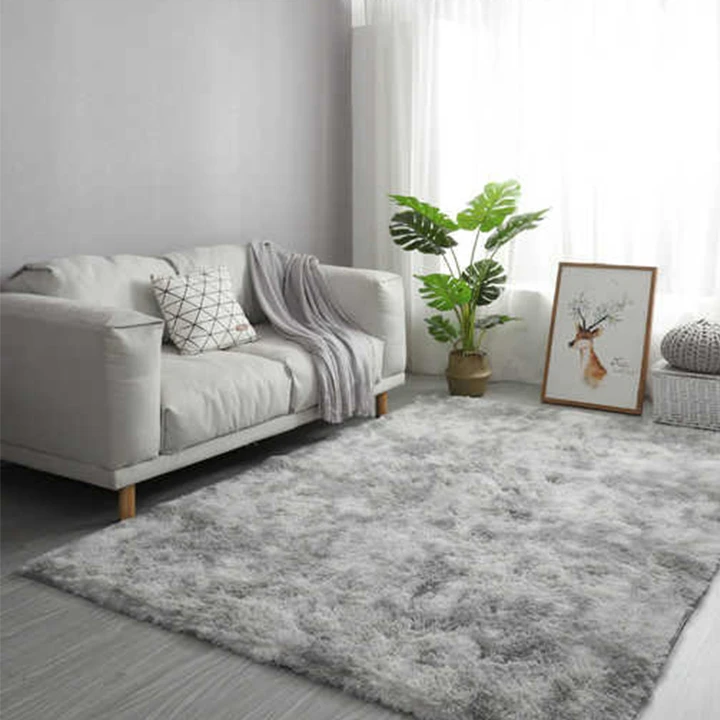
faux lambskin rug Performance Analysis
Introduction
Faux lambskin rugs represent a significant segment within the broader synthetic textile industry, positioned as a cost-effective and ethically sourced alternative to genuine sheepskin. These rugs are typically employed in residential, hospitality, and automotive applications, providing both aesthetic appeal and tactile comfort. The technical position within the supply chain involves raw material production – primarily petrochemical-derived polymers – followed by fiber extrusion, non-woven or knitted fabric construction, dyeing/finishing processes, and finally, rug fabrication. Core performance characteristics revolve around simulating the thermal insulation, softness, and visual texture of natural lambskin, while offering enhanced durability, ease of maintenance, and hypoallergenic properties. The industry faces ongoing challenges in balancing performance with environmental impact, specifically concerning microplastic shedding and end-of-life recyclability.
Material Science & Manufacturing
The primary raw material for faux lambskin rugs is typically polypropylene (PP), polyester, or acrylic fiber. Polypropylene, favored for its cost-effectiveness and inherent water resistance, boasts a density of 0.91 g/cm³ and a tensile strength ranging from 30-70 MPa depending on processing. Polyester, offering superior UV resistance and dyeability, exhibits a density of 1.38 g/cm³ and tensile strengths between 40-80 MPa. Acrylic, prized for its wool-like feel, has a density of 1.17 g/cm³ and tensile strengths typically between 45-75 MPa. Manufacturing processes primarily involve fiber extrusion – melt spinning is common – followed by either non-woven fabric formation (needle punching, thermal bonding) or knitted/woven construction. The "lambskin" texture is achieved through specialized fiber crimping, cutting, and finishing techniques. Critical parameters include denier (fiber thickness, measured in tex or denier), fiber length, crimp frequency, and bonding strength (for non-wovens). Dyeing commonly employs solution dyeing (incorporating pigment during extrusion) or post-extrusion dyeing using reactive dyes or disperse dyes. Finishing treatments include softening agents (silicones), anti-static treatments, and flame retardants. Quality control focuses on fiber uniformity, fabric weight, pile height consistency, and colorfastness to washing and light exposure.

Performance & Engineering
Performance of faux lambskin rugs is assessed across several key engineering properties. Thermal insulation is crucial, with R-values (thermal resistance) typically ranging from 0.8 to 1.5 depending on pile height and fiber density. Force analysis considers compression set – the permanent deformation after sustained loading – and resilience – the ability to recover after compression. Compressive strength, important for preventing matting, typically falls between 10-30 kPa. Environmental resistance focuses on UV degradation (assessed via accelerated weathering tests – ASTM D4365), moisture absorption (measured as Water Absorption Capacity – WAC, ISO 8524-2), and resistance to common household stains (evaluated per ISO 11965). Compliance requirements involve flammability standards (e.g., California Proposition 65, BS 5867), VOC emission limits (e.g., OEKO-TEX Standard 100), and restrictions on hazardous substances (e.g., REACH). Functional implementation demands consistent pile height and density for effective insulation and comfort, while maintaining dimensional stability during use and cleaning. Consideration of substrate materials (backing) impacts slip resistance (ASTM D2047) and overall durability.
Technical Specifications
| Parameter | Polypropylene (PP) | Polyester (PET) | Acrylic | Units |
|---|---|---|---|---|
| Density | 0.91 | 1.38 | 1.17 | g/cm³ |
| Tensile Strength | 30-70 | 40-80 | 45-75 | MPa |
| Elongation at Break | 150-400 | 20-50 | 100-300 | % |
| R-Value (Thermal Resistance) | 0.8-1.2 | 0.9-1.4 | 1.0-1.5 | (m²⋅K)/W |
| Pile Height | 20-60 | 20-60 | 20-60 | mm |
| Water Absorption Capacity (WAC) | <0.1 | <0.5 | <1.0 | % |
Failure Mode & Maintenance
Faux lambskin rugs are susceptible to several failure modes. Fiber degradation due to UV exposure leads to discoloration and reduced tensile strength, manifesting as fading and brittleness. Compression set, particularly in lower-quality foams used for backing, results in permanent matting and loss of cushioning. Pile shedding is a common occurrence, driven by mechanical abrasion and fiber fatigue; this contributes to microplastic pollution. Delamination – separation of the pile from the backing – is a critical failure, often initiated by adhesive failure or wear. Oxidation, particularly in polypropylene, can cause embrittlement and cracking over extended periods. Maintenance recommendations include regular vacuuming (using a low-suction setting to minimize fiber removal), spot cleaning with mild detergent and water, and avoiding direct sunlight exposure. For significant staining or delamination, professional cleaning is advised. Preventing localized high stress is critical; avoid placing heavy furniture directly on the rug for prolonged periods. Periodic rotation of the rug can distribute wear more evenly.
Industry FAQ
Q: What is the impact of pile density on the thermal performance of a faux lambskin rug?
A: Higher pile density generally correlates with improved thermal performance (higher R-value) due to increased air entrapment within the fibers. This air acts as an insulator, resisting heat transfer. However, excessively high density can also reduce the rug’s softness and compressibility.
Q: How does the choice of backing material affect the durability and slip resistance of the rug?
A: The backing material significantly impacts durability and slip resistance. Latex backing provides good grip but can degrade over time, becoming brittle. TPR (Thermoplastic Rubber) backing offers superior durability and slip resistance but is typically more expensive. Woven polypropylene backings provide excellent dimensional stability but may require an additional anti-slip layer.
Q: What are the key considerations for mitigating microplastic shedding from faux lambskin rugs?
A: Mitigating microplastic shedding involves fiber selection (opting for higher molecular weight polymers with greater fiber tenacity), tighter fabric construction (reducing fiber loosening), and the application of fiber-locking finishes. Regular vacuuming with a HEPA filter vacuum cleaner is also crucial.
Q: What are the typical flammability standards that faux lambskin rugs must meet?
A: Typical flammability standards include California Proposition 65 (regulating formaldehyde emissions), BS 5867 (British Standard for fire performance of fabrics), and NFPA 701 (Standard Methods of Fire Tests for Flame Propagation of Textiles and Films). Compliance is demonstrated through testing by accredited laboratories.
Q: How does the dyeing process influence the colorfastness and overall quality of the faux lambskin rug?
A: The dyeing process critically influences colorfastness and quality. Solution dyeing offers superior colorfastness as the pigment is incorporated directly into the fiber. Post-extrusion dyeing requires careful selection of dyes and fixation processes to ensure adequate color penetration and resistance to washing and light exposure. Poor dyeing can lead to color bleeding and fading.
Conclusion
Faux lambskin rugs represent a sophisticated balance of material science, manufacturing engineering, and performance requirements. The selection of appropriate polymers – polypropylene, polyester, or acrylic – dictates key characteristics such as durability, UV resistance, and tactile properties. Careful control of manufacturing parameters, from fiber extrusion to finishing treatments, is paramount for achieving desired performance attributes, including thermal insulation, compression set resistance, and dimensional stability. The industry’s continued focus on mitigating environmental impact, specifically microplastic shedding and end-of-life recyclability, will drive innovation in material selection and production processes.
Future developments will likely center around bio-based polymers as sustainable alternatives to petrochemical-derived materials. Advancements in fiber technology, such as the development of inherently flame-retardant fibers, will further enhance product safety and performance. Optimizing the balance between cost, performance, and sustainability remains the central challenge for manufacturers of faux lambskin rugs. Continued refinement of testing methodologies and standardization of performance metrics will also be crucial for ensuring consistent product quality and consumer confidence.