


shearling rugs Performance Analysis

Introduction
Shearling rugs represent a significant segment within the broader floor covering industry, distinguished by their use of sheepskin with the fleece intact. Technically, these rugs are categorized as animal-hide based textile products, positioned between woven rugs (e.g., wool, polypropylene) and synthetic pile carpets. Their core performance attributes – thermal insulation, tactile comfort, and aesthetic appeal – address specific market demands for luxury and functional flooring solutions. The increasing demand for natural and sustainable materials has further propelled shearling rugs into prominence, particularly within high-end residential and hospitality sectors. However, challenges related to sourcing ethical shearling, maintaining consistent quality, and addressing cleaning/maintenance complexities represent critical pain points for manufacturers and consumers alike. This guide details the material science, manufacturing processes, performance characteristics, and potential failure modes associated with shearling rugs, providing a comprehensive technical overview for industry professionals.
Material Science & Manufacturing
Shearling, the primary material, comprises a sheepskin tanned with the fleece still attached. The fleece itself is composed of complex keratin proteins, containing approximately 55% keratin, 30% lipid, and 15% water. The quality of the fleece is determined by fiber diameter, crimp, staple length, and density. Finer fibers (lower micron count) correlate with softer, more luxurious textures. Sheep breeds such as Merino, Icelandic, and Texel are favored for shearling production due to their fleece characteristics. The tanning process typically involves chrome tanning, vegetable tanning, or synthetic tanning agents. Chrome tanning, while efficient, raises environmental concerns regarding hexavalent chromium discharge. Vegetable tanning, using tannins from bark and plant extracts, is considered more eco-friendly but results in a firmer, less pliable shearling. Manufacturing involves several stages: skinning, fleshing (removing excess tissue), tanning, dyeing (optional), shearing to a uniform pile height, and finally, assembling the individual pieces into rug form. This assembly can be achieved through sewing, gluing, or a combination of both. Pile height is a critical parameter, ranging from short-pile (20-30mm) to long-pile (50-80mm), impacting both comfort and durability. Adhesives used must exhibit strong bond strength to the leather substrate and resistance to temperature and humidity fluctuations. Parameter control during tanning (pH, temperature, time) is vital to prevent fleece degradation and maintain suppleness.
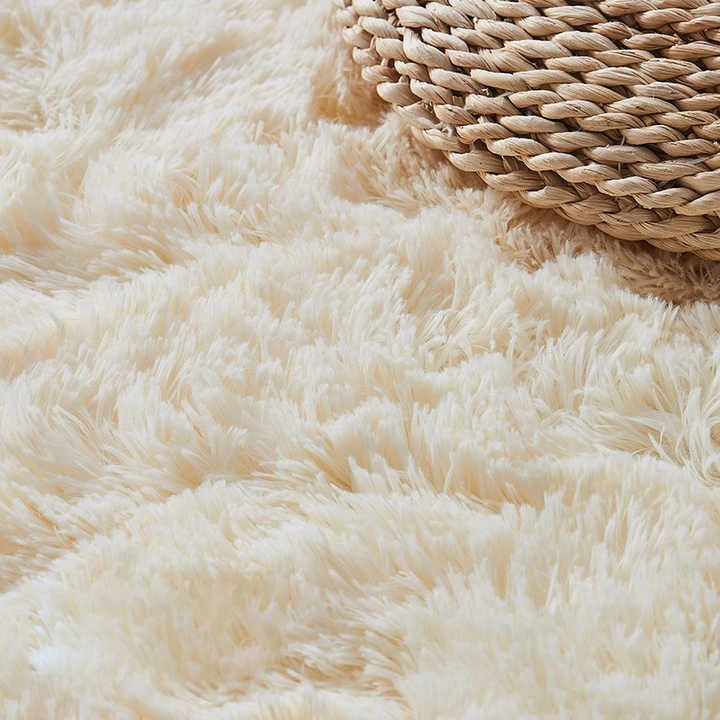
Performance & Engineering
The performance of a shearling rug is heavily influenced by its thermal insulation properties, stemming from the air pockets trapped within the fleece fibers. This provides a high R-value (thermal resistance), typically ranging from 1.5 to 2.5 per inch of pile height, making it an effective insulator against cold floors. Shearling’s inherent breathability allows for moisture vapor transmission, reducing condensation and maintaining a comfortable microclimate. However, the leather backing can be susceptible to damage from prolonged moisture exposure. Force analysis reveals that shearling rugs exhibit anisotropic behavior; load distribution differs significantly depending on the direction of force. Compressive strength is relatively low, making them prone to indentation under heavy furniture. Tensile strength, while moderate along the leather grain, is considerably weaker across the grain. Environmental resistance is a key concern. Shearling is vulnerable to moth damage (keratin protein is a food source), UV degradation (causing discoloration and fiber brittleness), and staining from spills. Anti-moth treatments (e.g., permethrin) and UV protectants are often applied during manufacturing. Compliance requirements vary by region, with fire safety standards (e.g., California Technical Bulletin 117) and VOC emission limits (e.g., OEKO-TEX Standard 100) being particularly relevant.
Technical Specifications
| Parameter | Unit | Typical Value (Short Pile) | Typical Value (Long Pile) |
|---|---|---|---|
| Fleece Fiber Diameter | Microns (µm) | 20-25 | 25-35 |
| Fleece Density | grams/m² | 300-400 | 400-500 |
| Pile Height | mm | 20-30 | 50-80 |
| R-Value (Thermal Resistance) | m²·K/W | 0.38-0.63 | 0.76-1.27 |
| Tensile Strength (Leather) – Along Grain | MPa | 20-30 | 20-30 |
| Moisture Vapor Transmission Rate (MVTR) | g/m²/24hr | 8000-12000 | 6000-10000 |
Failure Mode & Maintenance
Shearling rugs are susceptible to several failure modes. Fleece Matting: Over time, the fleece fibers can become compressed and matted due to foot traffic and pressure, reducing its loft and insulating properties. This is exacerbated by poor-quality fleece and inadequate underlayment. Leather Degradation: Prolonged exposure to moisture can lead to leather cracking, stiffness, and eventual disintegration. UV exposure causes discoloration and reduces leather pliability. Delamination: The adhesive bond between the fleece and leather backing can fail, particularly in areas subjected to high stress or temperature fluctuations. Moth Damage: Moths will feed on the keratin protein in the fleece, creating visible holes and weakening the rug structure. Staining: Spills (especially oil-based liquids) can permanently stain the fleece and leather. Maintenance is critical for extending the lifespan of a shearling rug. Regular vacuuming (using a brush attachment) removes dirt and debris. Spot cleaning with a mild detergent and water is recommended for spills, followed by thorough drying. Professional cleaning is advisable every 1-2 years. Mothproofing treatments should be reapplied periodically. Avoid direct sunlight exposure. The use of a rug pad provides cushioning, reduces wear, and prevents slippage. Addressing delamination requires re-gluing using a flexible adhesive specifically designed for leather and textiles.
Industry FAQ
Q: What is the primary difference between chrome-tanned and vegetable-tanned shearling rugs, and how does this impact their performance?
A: Chrome tanning provides a softer, more pliable shearling with improved resistance to shrinkage. However, the use of chromium compounds raises environmental concerns due to potential wastewater contamination. Vegetable tanning uses natural tannins, making it a more sustainable option, but the resulting shearling is generally firmer and less elastic. Vegetable-tanned rugs often exhibit a more rustic appearance and may require more conditioning to maintain suppleness.
Q: How does the micron count of the fleece affect the perceived luxury and durability of the rug?
A: Lower micron counts (finer fibers) correlate with a softer, more luxurious texture. These rugs are generally more comfortable underfoot but may be less durable than rugs made from coarser fleece. Finer fibers are more susceptible to wear and matting. A balance between micron count and fiber strength is crucial for optimal performance.
Q: What specific fire retardancy standards are most relevant for shearling rugs intended for commercial use (e.g., hospitality)?
A: In the United States, California Technical Bulletin 117 is a key fire safety standard. Globally, various standards exist, including BS 7176 (UK) and DIN 4102-1 (Germany). These standards assess the surface flammability and smolder resistance of the rug. Treatment with fire-retardant chemicals can improve performance, but must be compliant with VOC emission regulations.
Q: What are the best practices for preventing moth damage in shearling rugs during storage?
A: Shearling rugs should be thoroughly cleaned before storage. They must be stored in airtight containers or bags with mothballs or cedar chips. Regular inspection during storage is vital to detect early signs of infestation. Avoid storing in damp or humid environments. Professional mothproofing treatments can provide longer-lasting protection.
Q: Considering the anisotropic nature of shearling, how should rug pads be selected and positioned to optimize longevity and comfort?
A: Rug pads should provide cushioning and support, distributing weight evenly to minimize compression. For shearling rugs, a felt or rubber pad with sufficient thickness is recommended. The pad should extend beyond the rug’s perimeter to prevent edge wear and slippage. Given the anisotropic properties, consider positioning the rug to align the grain of the leather with the primary traffic flow to maximize tensile strength.
Conclusion
Shearling rugs offer a unique combination of comfort, aesthetic appeal, and thermal insulation, making them a desirable flooring solution across various applications. However, their performance and longevity are intrinsically linked to the quality of the raw materials, the precision of the manufacturing processes, and the implementation of effective maintenance practices. Understanding the material science – specifically the properties of keratin proteins and leather – is fundamental to addressing potential failure modes, such as fleece matting, leather degradation, and moth damage.
Future developments in shearling rug technology may focus on sustainable tanning methods (e.g., bio-based alternatives to chrome), enhanced water resistance treatments, and the incorporation of advanced fiber technologies to improve durability and reduce matting. The industry’s increasing focus on traceability and ethical sourcing will also drive innovation in sheepskin production and tanning processes, ensuring both product quality and environmental responsibility. Continued research into adhesive technologies will be crucial to improving long-term bonding between the fleece and leather backing.