

small faux fur rug Performance Analysis

Introduction
Small faux fur rugs represent a significant segment within the broader decorative textiles market, positioned as an affordable and ethical alternative to genuine animal fur. These rugs typically function as accent pieces, providing tactile comfort and visual appeal in residential and commercial spaces. Their construction involves attaching synthetic fibers to a backing material, commonly jute, felt, or latex. Core performance characteristics center on durability, ease of maintenance, aesthetic qualities (pile height, colorfastness), and adherence to flammability standards. The industry faces ongoing challenges related to consumer perception of quality, the environmental impact of synthetic fiber production (primarily polyester and acrylic), and competition from lower-cost alternatives. Understanding these factors is crucial for manufacturers, retailers, and consumers alike.
Material Science & Manufacturing
The primary raw materials for small faux fur rugs are synthetic fibers, predominantly polyester (polyethylene terephthalate – PET) and acrylic (polyacrylonitrile). Polyester offers good resilience, resistance to abrasion, and relative affordability. Acrylic provides a softer texture more closely mimicking genuine fur but generally exhibits lower durability and is more susceptible to matting. Backing materials vary significantly. Jute provides a natural, biodegradable base but lacks inherent dimensional stability. Felt (often a blend of synthetic fibers) offers improved stability but raises concerns regarding microplastic shedding. Latex (styrene-butadiene rubber – SBR) provides a non-slip surface and durable bonding but presents potential allergenicity issues.
Manufacturing typically involves these stages: Fiber extrusion – Polymer pellets are melted and forced through spinnerets to create continuous filaments. These filaments are then crimped to impart bulk and texture. Fabric Construction - The crimped fibers are woven, knitted, or tufted onto a primary backing material. Tufting is the most common method, where fibers are inserted through the backing using needles. Pile Formation - The tufted surface undergoes shearing to achieve the desired pile height and density. Back Coating - A secondary backing (often latex) is applied to stabilize the structure and provide a non-slip surface. Finishing – The rug is dried, inspected, and any necessary treatments (e.g., stain resistance) are applied. Parameter control is critical at each stage. Fiber denier (thickness) directly impacts softness and durability. Tuft density affects pile height and perceived quality. Latex coating weight influences slip resistance and dimensional stability. Consistent monitoring of these parameters is essential for maintaining product quality.
Performance & Engineering
Performance assessment of small faux fur rugs centers on several key aspects. Abrasion resistance, quantified using methods like the Taber abrasion test (ASTM D4966), determines the rug’s ability to withstand wear and tear. Pile crush recovery, assessing how quickly the pile returns to its original height after compression, indicates the rug’s resilience. Colorfastness to light and washing (ISO 105-B02 and ISO 105-C06, respectively) determines resistance to fading. Flammability is a crucial safety consideration, typically assessed according to standards like the Federal Flammability Standard FF 1-70. Force analysis, specifically tensile strength of the backing material, dictates the rug’s ability to resist tearing.
Engineering considerations include dimensional stability – the rug’s ability to maintain its shape under varying temperature and humidity conditions. This is particularly important for rugs with jute backings. Environmental resistance encompasses resistance to mildew and insect damage, especially in humid environments. Compliance requirements depend on the intended market. In the US, adherence to the Consumer Product Safety Improvement Act (CPSIA) is mandatory, particularly regarding lead content and phthalates. In Europe, REACH regulations restrict the use of certain hazardous chemicals. Proper selection of materials and manufacturing processes is paramount to ensure compliance and long-term performance.
Technical Specifications
| Parameter | Polyester Fiber Rug | Acrylic Fiber Rug | Typical Jute-Backed Rug |
|---|---|---|---|
| Pile Height (mm) | 20-40 | 30-50 | 25-35 |
| Fiber Density (grams/m²) | 800-1200 | 600-1000 | 700-1100 |
| Backing Material | Latex | Latex | Jute |
| Abrasion Resistance (Taber Cycles to Wear) | 500-1000 | 300-600 | 400-800 |
| Colorfastness to Light (ISO 105-B02 – Grey Scale Rating) | 4-5 | 3-4 | 4-5 |
| Flammability (FF 1-70 – Char Length (inches)) | <2.0 | <2.0 | <2.0 (with fire retardant treatment) |
Failure Mode & Maintenance
Small faux fur rugs are susceptible to several failure modes. Pile shedding is a common issue, particularly with lower-quality acrylic fibers. Matting and crushing occur due to repeated compression, reducing the rug’s aesthetic appeal and comfort. Delamination, the separation of the pile from the backing, can result from poor adhesive bonding or prolonged exposure to moisture. Oxidation of polyester fibers can lead to discoloration and loss of strength over time, especially with exposure to ultraviolet light. Latex backing can degrade with age, losing its flexibility and becoming brittle.
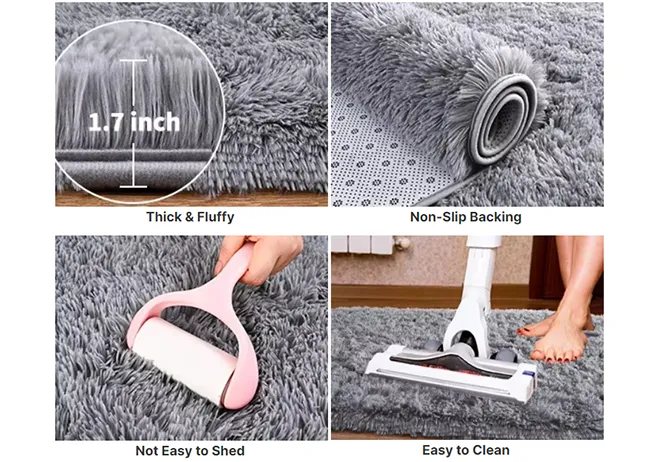
Maintenance recommendations are crucial for extending the rug's lifespan. Regular vacuuming (using a suction-only nozzle to avoid damaging the fibers) is essential to remove dust and debris. Spot cleaning with a mild detergent and water is recommended for spills. Avoid excessive wetting, as this can damage the backing. Professional cleaning is advisable for deep cleaning. Prevent prolonged exposure to direct sunlight to minimize oxidation. Rotate the rug periodically to distribute wear evenly. For rugs with jute backing, avoid damp environments and consider using a rug pad to improve airflow and prevent moisture buildup.
Industry FAQ
Q: What is the primary difference between polyester and acrylic faux fur, and how does it impact price and durability?
A: Polyester generally offers superior abrasion resistance and resilience compared to acrylic, resulting in a longer lifespan. However, acrylic often provides a softer, more luxurious feel that closely mimics genuine fur. Consequently, acrylic rugs are often positioned as a premium offering but typically command a lower price point due to their shorter expected lifespan.
Q: How do different backing materials affect the performance and environmental impact of faux fur rugs?
A: Jute is a natural, biodegradable option, but it lacks dimensional stability and can be prone to mildew in damp conditions. Felt provides better stability but is a synthetic material contributing to microplastic pollution. Latex offers excellent bonding and non-slip properties but can cause allergic reactions and isn't readily biodegradable.
Q: What flammability standards are typically applied to small faux fur rugs, and how are they achieved?
A: The Federal Flammability Standard FF 1-70 is commonly used in the US. Compliance is achieved through the use of inherently flame-retardant fibers or through the application of a flame-retardant treatment to the backing material. Testing confirms the char length remains below the specified limit.
Q: What are the common causes of pile shedding in faux fur rugs, and how can it be minimized?
A: Pile shedding is primarily caused by loose fibers that haven’t been fully secured during manufacturing or become detached through abrasion. Using high-quality fibers, employing a robust tufting process, and regular vacuuming can minimize shedding. Shedding is typically more pronounced in newly manufactured rugs and decreases over time.
Q: How can manufacturers mitigate the environmental impact of faux fur rug production?
A: Utilizing recycled polyester fibers, optimizing manufacturing processes to reduce waste, and sourcing backings from sustainable materials (like natural latex alternatives) can all reduce the environmental footprint. Exploring biodegradable backing options is also crucial.
Conclusion
Small faux fur rugs represent a complex intersection of material science, manufacturing processes, and performance requirements. The selection of appropriate fibers, backing materials, and manufacturing techniques directly impacts the rug’s durability, aesthetic appeal, and environmental impact. Understanding the inherent failure modes and implementing preventative maintenance strategies is crucial for maximizing the product’s lifespan and ensuring consumer satisfaction.
The industry is evolving towards more sustainable practices, with increased emphasis on recycled materials and biodegradable components. Continued innovation in fiber technology and manufacturing processes will be essential for addressing consumer demand for high-quality, environmentally responsible faux fur rugs. Adherence to relevant international standards and rigorous testing protocols is paramount for ensuring product safety and performance consistency.