


washable sheepskin rug Performance Analysis
Introduction
Washable sheepskin rugs represent a convergence of traditional comfort and modern practicality within the interior textile industry. Historically, sheepskin rugs were prized for their warmth and luxurious texture but suffered from limited maintenance options, demanding professional cleaning and being susceptible to damage from moisture. The introduction of washable sheepskin rugs addresses these core pain points, utilizing specialized tanning and backing technologies to permit machine washing without compromising the inherent qualities of the material. These rugs occupy a niche market serving residential and hospitality sectors prioritizing both aesthetics and hygiene. Their technical position lies between standard, non-washable sheepskin rugs and synthetic alternatives, offering a balance of natural fiber benefits and ease of care. Core performance characteristics include thermal insulation, moisture wicking, softness, and wash durability – factors crucial for consumer acceptance and longevity.
Material Science & Manufacturing
The foundation of a washable sheepskin rug lies in the quality and processing of the raw sheepskin. Typically, Australian or New Zealand sheepskins are preferred due to their dense, fine wool fibers. The raw skin undergoes several critical stages. Initially, the skin is fleshed, removing subcutaneous tissue. Next, it undergoes a tanning process. Traditional vegetable tanning is rarely employed due to its inflexibility; instead, chrome tanning or, increasingly, eco-friendly alternatives like aldehyde tanning are utilized to stabilize the protein structure of the hide and prevent decomposition. The crucial step for washability is the application of a specialized backing material. Common options include a polyurethane (PU) coating or a latex-based adhesive bonded to a fabric substrate (often polyester or cotton). This backing provides structural integrity during washing and prevents the leather from stretching or shrinking. Wool fiber characteristics – fiber diameter (measured in microns), fiber length, and crimp – significantly impact the rug’s texture and durability. Fine wool (below 20 microns) provides superior softness but may be less resilient. Manufacturing involves shearing, dyeing (often using acid dyes for wool), and cutting the skin to size. Quality control centers around assessing the uniformity of the wool pile, the adhesion strength of the backing, and the absence of defects in the leather. Precise temperature and pH control during tanning are critical to avoid irreversible damage to the protein structure.
Performance & Engineering
The performance of a washable sheepskin rug is dictated by the interplay between the wool’s inherent properties and the backing material’s engineering. Thermal resistance is a key metric, typically measured using a tog rating; higher tog values indicate greater insulation. Wool’s natural crimp creates air pockets, enhancing its insulating capabilities. Moisture management is another critical aspect. Wool can absorb up to 30% of its weight in water without feeling wet, due to its hydrophobic surface. The backing material must be permeable to allow moisture vapor transmission (MVTR) to prevent condensation and mildew growth. Tensile strength, both of the leather and the backing, is vital for resisting tearing during use and washing. Wash durability is assessed through repeated washing cycles according to standardized testing protocols (see Standards & Regulations). Force analysis considers the shear forces exerted on the backing during washing and drying. The rug’s overall dimensional stability is paramount; excessive shrinkage or stretching can lead to deformation and reduced lifespan. Compliance requirements vary by region, often involving flammability testing (e.g., California Proposition 65) and restrictions on harmful chemicals used in the tanning process (e.g., REACH regulations in Europe). The selection of the backing adhesive is crucial, demanding strong bonding characteristics that can withstand repeated wash cycles and temperature fluctuations.
Technical Specifications
| Parameter | Units | Typical Range | Test Method |
|---|---|---|---|
| Wool Fiber Diameter | microns (µm) | 18-35 | ASTM D3638 |
| Leather Thickness | mm | 3-6 | ISO 3378 |
| Backing Material | - | Polyurethane (PU) or Latex | Visual Inspection |
| Tensile Strength (Leather) | MPa | 20-40 | ISO 3377 |
| Tensile Strength (Backing) | N/mm | 15-30 | ISO 527-1 |
| Wash Durability (Dimensional Change) | % | < 5% after 5 washes | ISO 6330 |
Failure Mode & Maintenance
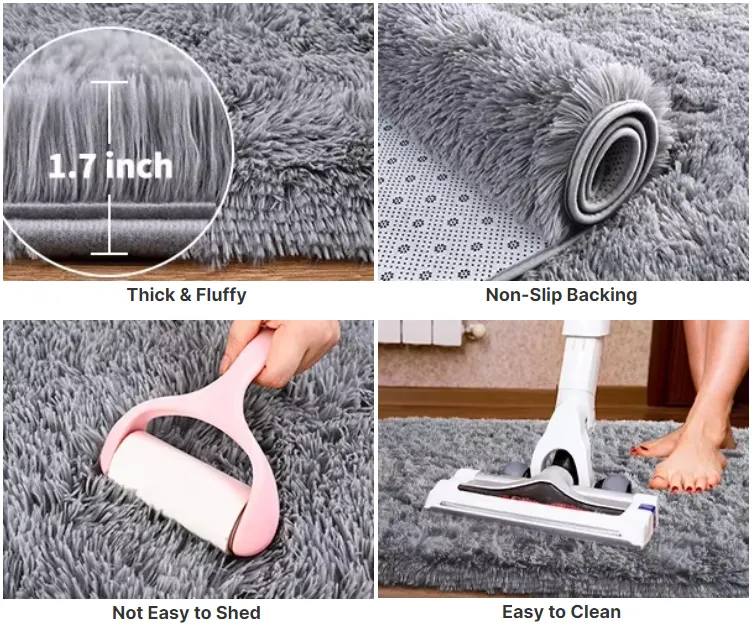
Washable sheepskin rugs, while designed for convenience, are still susceptible to failure modes. Common issues include delamination of the backing, wool fiber shedding, leather cracking, and dye bleeding. Delamination occurs when the adhesive bond between the leather and the backing weakens, often due to excessive wash temperatures or harsh detergents. Wool fiber shedding is a natural process, but can be accelerated by abrasive cleaning agents or repeated friction. Leather cracking arises from prolonged exposure to dryness, causing the leather to lose its pliability and become brittle. Dye bleeding is a concern with lower-quality dyes, leading to color transfer during washing. Preventative maintenance is crucial. Machine washing should be conducted on a gentle cycle with a mild, pH-neutral detergent specifically formulated for wool. Avoid using bleach or fabric softeners. Tumble drying should be done on a low heat setting or air-dried flat. Regular brushing helps to maintain the wool pile and prevent matting. Addressing stains promptly with a wool-specific cleaner is essential. For significant damage, such as large cracks in the leather, professional repair may be necessary. Inspecting the rug periodically for signs of wear and tear allows for timely intervention, extending its lifespan. The use of enzymes in detergents can degrade the protein structure of the leather over time; enzyme-free formulations are preferred.
Industry FAQ
Q: What differentiates a truly 'washable' sheepskin rug from one that is merely 'washable-friendly'?
A: A 'washable-friendly' rug may tolerate gentle handwashing, but a truly 'washable' rug is engineered to withstand multiple machine wash cycles without significant degradation of the leather or backing. This requires a robust adhesive bond, a dimensionally stable backing material, and a tanning process that minimizes shrinkage. Independent testing to standardized wash durability protocols (e.g., ISO 6330) is the key differentiator.
Q: How does the type of tanning process impact the washability of the sheepskin?
A: Chrome tanning is commonly used, offering good wash resistance, but eco-concerns are driving adoption of aldehyde tanning. Vegetable tanning is generally unsuitable as it renders the leather rigid and prone to cracking upon washing. The effectiveness of the tanning process directly correlates to the leather's ability to retain its shape and integrity when exposed to water and detergent.
Q: What is the optimal backing material for a washable sheepskin rug, considering cost and performance?
A: Polyurethane (PU) backings generally offer superior wash durability and flexibility compared to latex-based backings, but are typically more expensive. Latex is a viable option for lower-cost applications but may exhibit reduced resistance to delamination and cracking over time. The choice depends on the target price point and desired performance level.
Q: What detergents are safe to use on washable sheepskin rugs and which should be avoided?
A: Mild, pH-neutral detergents specifically formulated for wool or delicate fabrics are recommended. Avoid detergents containing bleach, enzymes, or fabric softeners, as these can damage the wool fibers, weaken the leather, or compromise the adhesive bond. Liquid detergents are preferable to powdered detergents, as powders can leave residue.
Q: What is the expected lifespan of a properly maintained washable sheepskin rug compared to a traditional, non-washable sheepskin rug?
A: A properly maintained washable sheepskin rug can have a lifespan comparable to, or even exceeding, that of a traditional rug. While traditional rugs require professional cleaning, which can be abrasive, the ability to machine wash a washable rug regularly removes dirt and debris more effectively, preserving the wool fibers and leather. With diligent care, a lifespan of 5-10 years is achievable for both types.
Conclusion
Washable sheepskin rugs represent a significant advancement in the textile industry, successfully addressing the long-standing limitations of traditional sheepskin by integrating robust manufacturing processes and material science. The selection of appropriate tanning methods, backing materials, and the implementation of stringent quality control measures are critical to achieving genuine washability and long-term durability. This technology not only expands the market for sheepskin rugs by offering increased convenience and hygiene but also contributes to a more sustainable consumption model by extending product lifespan and reducing the need for frequent replacements.
Future development will likely focus on enhancing the eco-friendliness of the tanning process, exploring biodegradable backing materials, and improving the resistance of dyes to bleeding during washing. Continued innovation in adhesive technologies will be vital to ensure the long-term integrity of the rug’s construction. Ultimately, the success of washable sheepskin rugs hinges on delivering a product that seamlessly blends the luxurious comfort of natural sheepskin with the practicality and ease of maintenance demanded by modern consumers.